

Lithoz to spotlight real-world ceramic AM parts at Formnext 2025

Lithoz, based in Vienna, Austria, has announced that its booth at Formnext 2025 will be entirely dedicated to real-life applications additively manufactured via its proprietary Lithography-based Ceramic Manufacturing (LCM) technology.
TRUSTED BY INDUSTRY’S BIGGEST NAMES
Discover how we help leading brands shape the industry conversation
| Contact us |
In particular, the showcase will emphasise the role of Lithoz’s global Ceramic 3D Factory network of experienced LCM contract manufacturers. This network is said to be a key driver of the current pace at which OEMs worldwide are adopting LCM-based ceramic Additive Manufacturing.
A build platform from the S320, filled with a range of forty-six ceramic cores used for building single crystal turbine blades for next-generation aircraft engines, will be a highlight. These demonstrators are representative of those produced by Safran Aircraft Engines, which recently installed three CeraFab System S65 Additive Manufacturing machines at its facility near Paris. The ultra-precision reproducibility of these cores’ complex designs at an industrial scale is something that Lithoz claims is only achievable via LCM. The blades feature delicately branched cooling channels, enabling improved temperature management.
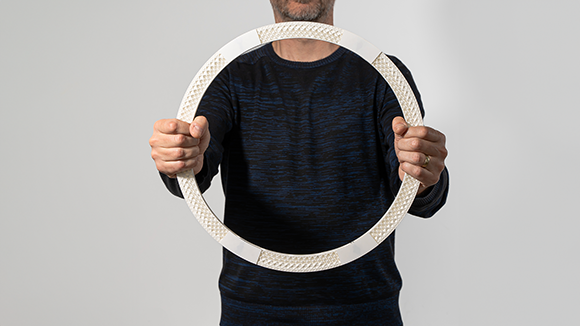
Directly adjacent, visitors can view a highly complex alumina atomic layer deposition (ALD) ring, designed by Plasway and serially produced by Alumina Systems. Using LCM Additive Manufacturing, the 380 mm diameter, lightweight ring features very thin walls and optimised flow channels. As a critical wear part in the semiconductor industry, the ring reportedly offers verifiably extended uptime of one to nine months, while trebling production output.
Another highly intricate customer component serially produced for the semiconductor industry is the gas injector for etching processes, manufactured by Bosch Advanced Ceramics on Lithoz CeraFab Additive Manufacturing machines in 2,000 units per year. Three inlet channels – each 6 mm in diameter – unfold into sixty-two openings inside the injector, separated from each other by walls as thin as 0.2 mm. In addition to the chemical resistance provided by the use of alumina, the flow-optimised design and reduced assembly effort are said to offer efficiency gains.
Also included in the company’s semiconductor display are ultra-precise aluminium nitride (AIN) cooling plates with intricate, three-dimensional internal lattice and gyroid structures that enable efficient heat transfer, compact form factors and targeted thermal regulation. Together with good electrical insulation, thermal stability and resistance to chemical erosion provided by AIN, these plates are said to offer long-term durability, precise performance and design customisation for the next generation of cooling solutions for demanding semiconductor-based technologies.
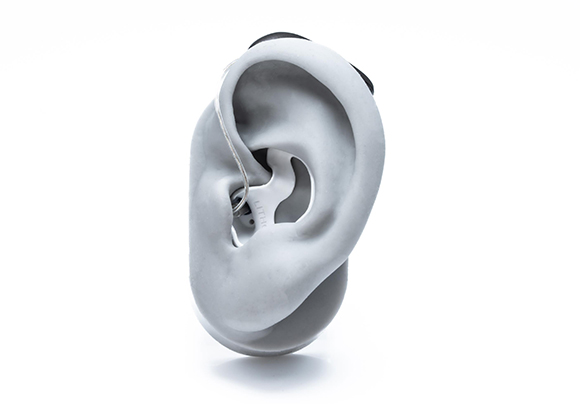
The medical and dental section of the Lithoz booth will premiere patient-specific ceramic earmoulds for hearing aids, designed and marketed by Swiss company OC GmbH and mass-customised by CADdent on Lithoz CeraFab S65 Medical Additive Manufacturing machines. In addition to the comfort of bespoke hearing aids, these ATZ otoplastics reportedly offer acoustically neutral sound characteristics compared to titanium pieces and improved biocompatible hygiene qualities compared to plastic.
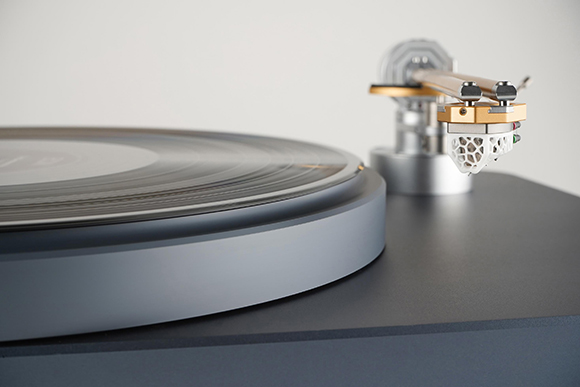
Lithoz will also premiere a monoblock turntable cartridge with moving coil technology. The Thales VORO cartridge for analogue turntables from HiFiction AG is encapsulated in an additively manufactured zirconia housing built as a single piece without support structures. Its shape is inspired by naturally occurring Voronoi skeleton structures. Developed and scaled to production by Steinbach AG, whose Formnext booth will feature the entire cartridge, the functional part‘s capsule is characterised not only by its geometry but, thanks to the use of high-strength zirconia, also by its resonance behaviour at the lowest possible weight. The integration of engineering design and advanced manufacturing saw the technology secure the Thales VORO the iF Design Award 2025.
“With this focus on real series applications from various industries, we are not only sending a clear signal about the growing relevance and adoption pace of ceramic Additive Manufacturing for OEMs in these turbulent times,” stated Johannes Homa, Lithoz CEO. “This concerted focus on premiering real-world components successfully scaled to industrial level on Lithoz CeraFab printers is our manifesto for serial production in ceramic 3D printing.”