

Redefining device design: The role of Metal Injection Molding in consumer electronics hinge mechanisms
The capabilities of Metal Injection Moulding have transformed the design of hinges, unlocking new possibilities in consumer electronics and beyond. By enabling the production of compact, durable, and highly complex components, the technology has allowed engineers to rethink functionality and aesthetics, especially in devices such as foldable smartphones, laptops, and wearables. In this comprehensive review, Dr Chiou Yau Hung (Dr Q) explores how MIM’s unique advantages have influenced hinge innovation, reshaped product design, and opened new frontiers for mechanical systems. [First published in Powder Injection Moulding International volume 19 issue 2, Summer 2025 | 15 min read | View on Issuu | Download PDF]

The growth of the Metal Injection Moulding industry in the Greater China region owes much to the production of hinge components and assemblies. As demand for compact, high-performance consumer electronics grows, hinges offer a compelling case study of how MIM continues to meet the evolving needs of modern manufacturing. These mechanisms have significantly expanded MIM’s presence across the 3C (computer, communication, and consumer electronics) sector and beyond, demonstrating the technology’s ability to deliver miniature, high-strength components in high volumes.
Hinges remain a key driver of demand for MIM technology, particularly in the 3C sector. Their use is being fuelled by growing demand for compact, durable mechanisms in foldable smartphones, tablets, wireless earbuds, and wearable devices – applications where conventional machining or casting often fall short in terms of design flexibility and cost-efficiency.
Though MIM is a decades-old process, it continues to be associated with innovation. Consumer electronics OEMs frequently highlight their use of MIM in marketing campaigns; Sony’s latest noise-cancelling headphones, shown in Fig. 1, are just one recent example. Examples such as these illustrate not just the innovation enabled by MIM, but also its commercial importance. This is reflected in the growth trends seen across the global MIM market.
MIM market overview
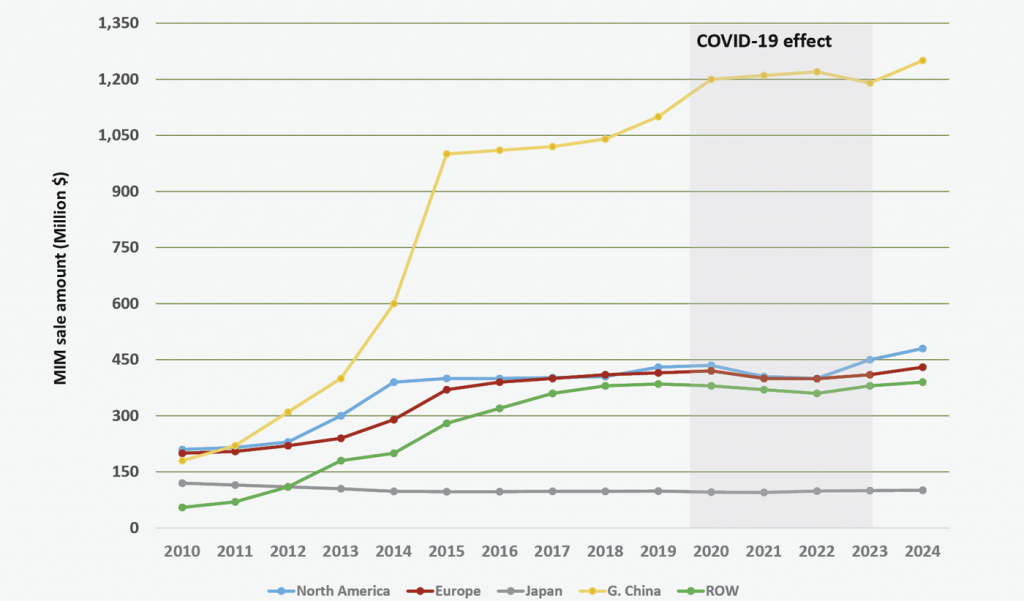
According to global market data, the MIM industry was projected to reach a value of $2.65–3.05 billion by the end of 2024, with the Greater China region – consisting of mainland China, Hong Kong, Macau and Taiwan – accounting for approximately $1.83 billion, or 60–69% of the total.
Although many other data sources suggest a higher market value, I believe that the trends shown in Fig. 2 are highly valuable as a reference. Despite the disruption caused by COVID-19, the MIM industry has shown notable resilience. As illustrated by the global market trends in Fig. 2, MIM’s development can be categorised into four distinct stages:
Stage 1: 1972-2009
The first stage saw innovation and the promotion of MIM, however, it did not achieve significant sales volume. At the time many engineers were still in the early stages of adopting the technology. Additionally, materials and equipment were unstable, resulting in MIM having a relatively low status among metal processing technologies.
Stage 2: 2010-2015
This period saw explosive growth driven by the widespread adoption of MIM in 3C products such as laptops, mobile phones, and tablets. Engineers in the 3C sector began to recognise the unique advantages of MIM and incorporated large volumes of MIM parts into their designs. This led to a significant increase in sales.
Stage 3: 2016-2019
Growth continued, though at a slower pace. Profits from the previous stage attracted more manufacturing companies to enter the MIM market, intensifying price competition and pushing costs down. Meanwhile, advancements and greater engagement from material and equipment suppliers helped sustain steady sales. As the industry matured, MIM began to challenge established manufacturing processes such as investment casting, die-casting, and machining.
Stage 4: 2020-2024
Following the intensified price competition of the previous stage, the MIM industry from 2020 to 2024 entered a plateau. This period is characterised by ongoing price bargaining between product manufacturers and MIM suppliers, leading to a more mature and polarised market.
Engineers designing 3C products became adept at using smaller, more precise MIM parts. Facing mounting pressure to deliver results, some MIM manufacturers integrated conventional metalworking methods to broaden their capabilities and meet diverse customer demands, further contributing to market polarisation. For example, precision folding-screen mobile phone hinges can incorporate between thirty and fifty MIM parts weighing less than 1 g each, while traditional hardware fixtures may rely on single MIM parts weighing over 300 g – sometimes up to 1,000 g. After decades of development, MIM has become indispensable for producing small metal parts.
Notably, 2024 saw a marked increase in MIM equipment sales in China; feedstock production systems, injection moulding machines, and debinding and sintering furnaces manufacturers reported figures nearly double those of 2023. However, signs of the market plateauing remain. Against this backdrop, it is timely to review the current landscape and key trends shaping the industry.
Where are we now?
Visits to leading MIM suppliers and manufacturers in 2025 revealed several insights. Firstly, powder prices have reached a low point, thanks to ongoing investments in Additive Manufacturing powder production, resulting in more MIM-grade powder availability. Production sites reported that the strong demand from 2024 has continued unabated.
While larger MIM parts still support traditional hardware applications, it is the 3C sector that drives the most significant growth. Once again, hinge components stand out as a key factor in the ongoing expansion of the MIM industry.
The impact of hinges on the MIM industry
Over the past decade, I have provided guidance to more than 100 MIM-related enterprises, including those involved in metal powder and raw materials, feedstock, equipment manufacturing, and MIM parts processing factories. In my experience, a significant portion of MIM products are being designed for use as hinges, with over 50% of parts featuring holes to accommodate shaft components.

One of the earliest MIM applications is the metal watchband (Fig. 3), which features a shaft passing through two MIM components with matching holes. This allows the two parts to rotate freely and thus demonstrate an early hinge module process.

Today, the use of hinge modules has expanded across major consumer product categories, and MIM has become one of the key manufacturing processes for the structural components used. Core functions are outlined in Table 1. A look at the early implementation of MIM in hinge modules reveals how the technology first gained traction in high-performance applications.
Early MIM progress
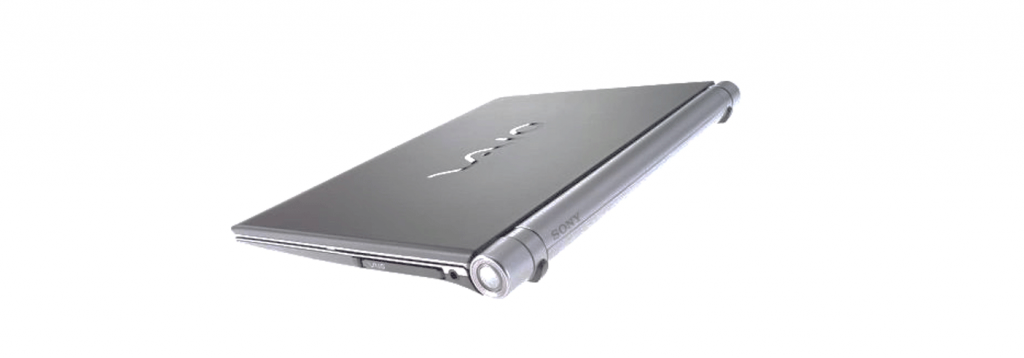
During 2004-2005, Sony became the first company to utilise Metal Injection Moulding to produce the hinge module for the X505 model in its VAIO laptop series (Fig. 4). The launch of X505 marked the first time an innovative manufacturing process such as MIM was applied to hinge modules. Through its lightweight and durable design, users were able to experience first-hand the benefits of MIM technology. It should be noted that while a Taiwanese individual filed the first patent for an MIM laptop hinge in the United States during that time, it was not produced.
Early foldable smartphones such as the Motorola V688 and Razr V3 series (Fig. 5) also featured fully functional MIM hinges, marking a significant milestone in the use of the technology in consumer electronics. These multi-joint hinge assemblies require precise MIM components, highlighting the technology’s vital role in enabling more complex and durable device designs.

Hinge modules are formed by assembling MIM hinge parts with traditionally processed components, including sheet metal stamping, turning, milling composites, die-cast, and liquid metal (LQMT) formed parts. This combination has driven a renewed surge in order volume for MIM manufacturing plants. Over fifty MIM manufacturers now produce complete hinge modules, while more than 100 specialise in individual parts.

Evolution of MIM hinge modules
The modern evolution of hinge components therefore began with the introduction of MIM. Fig. 7 shows key hinge products from 2002–2012. Initially, MIM manufacturing producers only supplied individual components such as cams, hinge plates, and fastening pieces to higher-level factories, which assembled these parts into complete hinge modules for use in various 3C products.

Since 2012, with the rise of tablet computers and wearable devices such as earphones, hinges have become a more prominent feature in product design. They are no longer just functional components but are now considered part of the products’ overall aesthetics. This shift has led to the use of more complex, multi-piece hinge designs. As demand for advanced hinge modules has grown, MIM manufacturers have expanded and improved their assembly capabilities to keep pace. This shift has created new business opportunities (Fig. 8) and enabled the development of a new generation of hinge designs that require greater mechanical complexity.
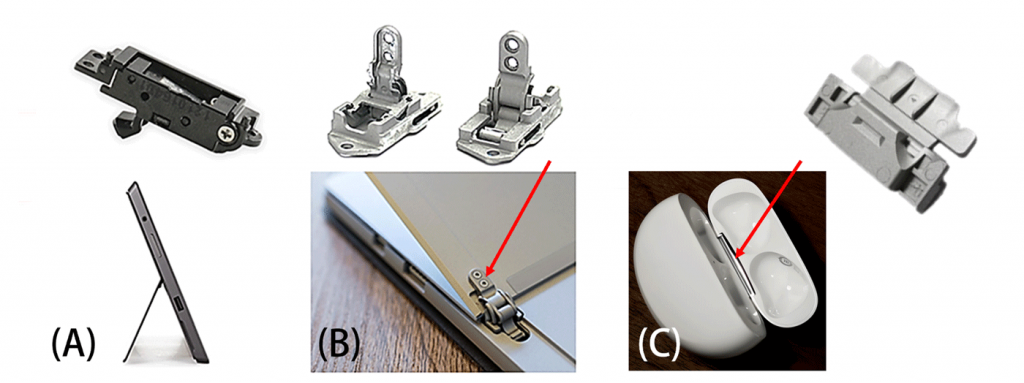
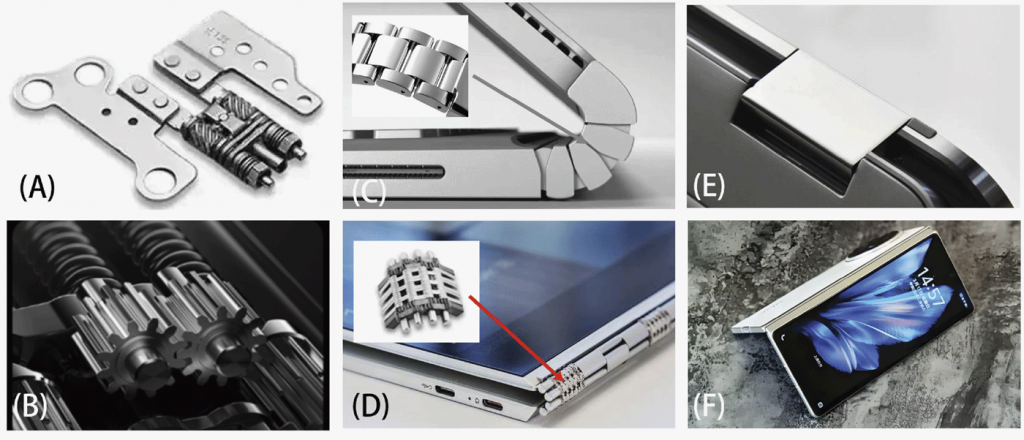
Since around 2018, influenced notably by companies such as Apple, many electronic product brands with skilled industrial designers have introduced increasingly complex and sophisticated hinge mechanisms. These hinge modules incorporate a large number of gears to enable the smooth rotation of the hinge, as well as more mechanisms resembling crab structures. Due to factors such as an excessive number of mechanical parts, inability to polish certain materials, and user safety issues, these hinge modules must be hidden and are unsuitable for exposure. During this period, decorative panels to manage the appearance of hinges began to be introduced. In other words, this added one more design requirement to the hinges (Fig. 9).
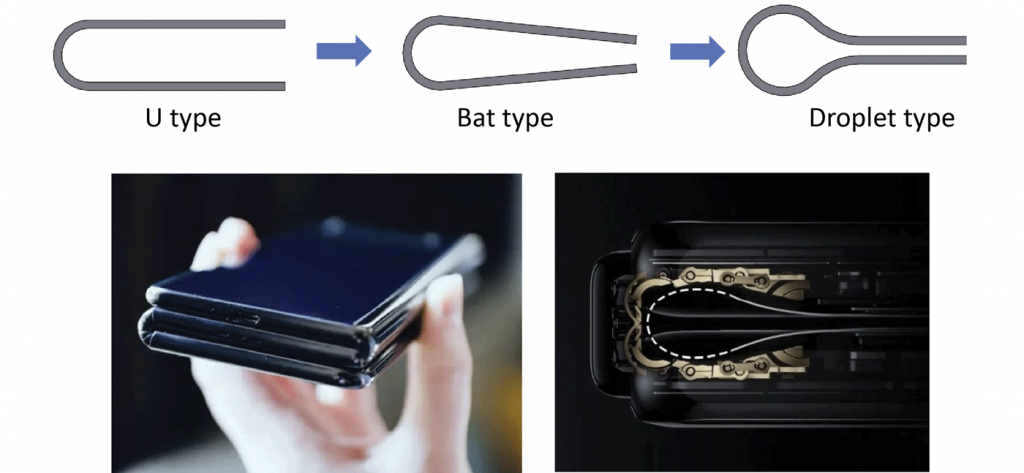
Finally, following the increasing adoption of foldable smartphones after 2020, a two-screen foldable smartphone now typically requires more than 100 parts, with over thirty of these being MIM components. In the case of a three-screen phone, the use of two hinge modules can involve upwards of sixty MIM parts. Such demand has greatly increased the requirements for MIM production capacity and manufacturing process capabilities. Furthermore, MIM parts have begun to be embedded into assemblies formed using other metal forming processes such as die-casting techniques, sheet metal processing and, more recently, liquid metal and bulk metal glass (BMG) technologies.
This surge in demand has created a new wave of business for MIM producers, significantly increasing the need for MIM production capacity and process capabilities. This uptick has gone a long way to compensate for the decline in Apple’s demand for MIM parts. As shown in Fig. 10, the evolution of foldable screen hinges reflects a growing use of MIM parts.
New materials for hinge modules
Although MIM has been in development for over fifty years, new materials continue to emerge to meet the evolving needs of products. This is one of the most fascinating aspects of MIM: the ability to design material formulations that allow for the production of hinge components from various materials using the same set of moulds. Additionally, the size of the hinge products can be adjusted by altering the powder loading. Once a verification process is completed, mass production can begin swiftly.
Here, I would like to acknowledge the significant contributions of BASF SE, a German company, in advancing MIM feedstock development. The company’s dedication to promoting the progress of the entire MIM industry and its willingness to share technical resources with numerous MIM professionals is greatly appreciated.
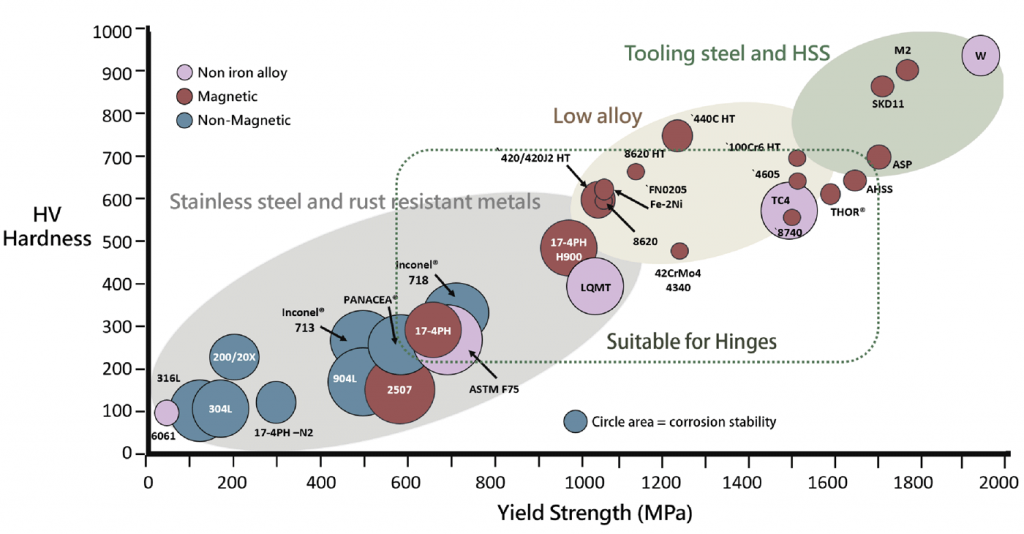
The materials within the green dotted line in Fig. 11 are all suitable for manufacturing MIM hinge parts, particularly low-alloy steels and hardenable stainless steels. With the exception of non-ferrous alloys, tungsten alloys, and some ASP series tool steels, materials that are too hard cannot withstand drop tests. This emphasises that the most suitable material is the best choice; it’s important not to focus solely on achieving high yield strength. Generally, a yield strength of less than 2,000 MPa is considered excellent. The Advanced High Strength Steel (AHSS) developed by Chinese powder manufacturers is also included. The current phase of material evolution still centres on iron-based alloys, with cost being the primary factor, followed by familiarity with these materials.
What opportunities lie ahead?
While material innovations continue to expand design flexibility, many in the industry are now looking ahead to future applications – especially as emerging technologies demand ever more compact and precise mechanisms.
You may be curious about how close we are to achieving robots with human-like limb movements becoming part of everyday life. The film Bicentennial Man, directed by Chris Columbus and starring Robin Williams, remains a notable depiction of realistic robot–human interaction.
While we may not yet be on the verge of AI robots serving humanity as portrayed in the film, robots with embodied intelligence are already becoming a reality. Although they do not yet possess the full flexibility seen on screen, hinge modules featuring MIM parts will play a crucial role in human-like robot development, and the demand for these components could soon surpass that of foldable smartphones. With MIM at the heart of so many precision assemblies, the future of robotics – and countless other applications – will depend on the continued refinement of this versatile manufacturing technology.
MIM’s collective ambition
Achieving a standardised component that can be produced reliably and consistently over a long time is a key aspiration for every expert in metal product technologies. For instance, stamping processes are commonly used for gaskets and metal brackets, while powder pressing is employed to produce precision gears. Additionally, specialised production methods are used for various screws and nuts.
Following over twenty years of development, the hinge module industry has begun to show significant promise. The unique characteristics of MIM enable hinge design engineers to create optimised, compact, and durable components. Beyond the aforementioned benefits, the use of increasingly precise hinge modules is also improving the accuracy of mechanical watches – devices that continue to serve daily functionality.
Prof Randall M German, a veteran in the MIM field, told us, “MIM manufacturing companies need both long-term orders and fashion orders.” Long-term orders may consist of small-volume batches, but they enable planned mass production. Trend orders, on the other hand, bring the thrill of rapid growth and greatly enhance MIM’s market visibility. The more people understand MIM technology, the deeper it can integrate into society and serve its people.

Acknowledgements
In the process of exploring the cutting-edge field of powder moulding technology, I have received a great deal of help and support from many people. Here, I would like to express my most sincere gratitude to them. Of course, I also want to thank readers around the world who support the MIM industry. Whether you are in Europe, Asia, Oceania, the Americas, or Africa, thank you all for your continuous attention to the MIM industry.
Author
Dr Chiou Yau Hung (Dr Q)
You neeD Technical Office
[email protected]
[email protected]