

MPIF Design Excellence Awards: New MIM and sinter-based Additive Manufacturing applications in the spotlight
Metal Injection Moulding is one of the most capable manufacturing processes for small precision components, yet it is also one of the least well known. This article presents 2024’s award-winning MIM parts from the Metal Powder Industries Federation's PM Design Excellence Awards. In addition, we also highlight the growing number of award-winning parts produced by sinter-based Additive Manufacturing. These examples present an opportunity for product designers and engineers to consider how they might use MIM and AM in their own projects. [First published in PIM International Vol. 18 No. 3, Autumn 2024 | 10 minute read | View on Issuu | Download PDF]
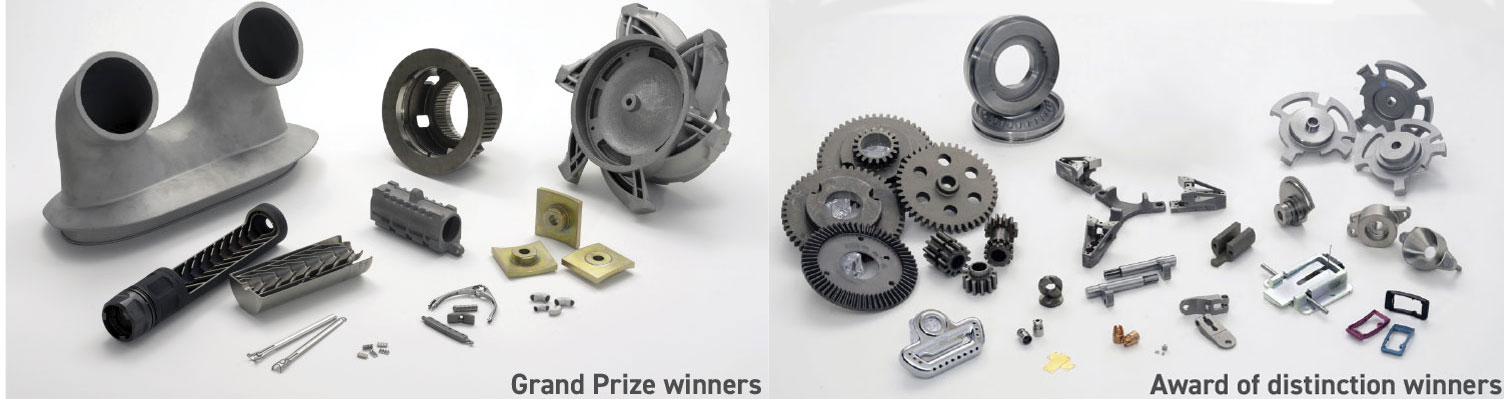
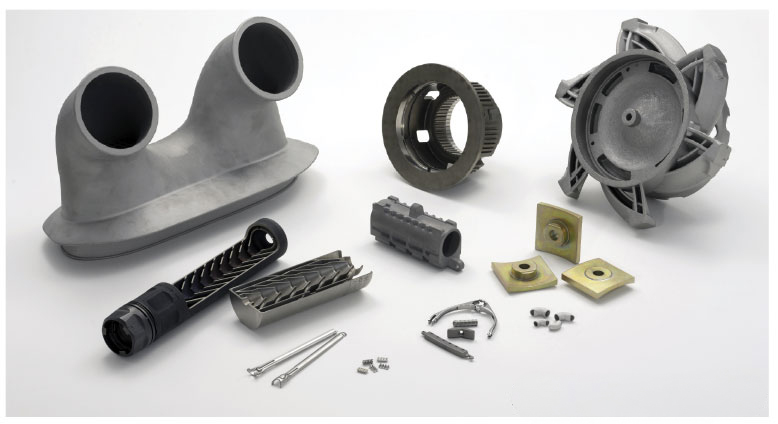
The winners of the 2024 PM Design Excellence Awards competition, sponsored by the Metal Powder Industries Federation (MPIF), were announced at PowderMet2024. Ten Grand Prizes and seventeen Awards of Distinction were presented in this year’s competition, and entries were divided into three categories: Conventional Press and Sinter PM, Metal Injection Molding, and metal Additive Manufacturing.
The winners demonstrate outstanding examples of the PM industry’s diversity and ability to meet critical requirements. From musical instruments to surgical devices, part manufacturers have demonstrated PM’s versatility and unique ability to challenge competing technologies.
This article highlights award winners in the MIM category, and parts in the AM category that are produced by a sinter-based process. It is encouraging to see MIM and sinter-based AM components finding applications in electric vehicles, as well as continuing to enjoy success in established markets.
Grand Prize Awards
Military/Firearms
In the Military/Firearms category for MIM components, a Grand Prize was awarded to TriTech Titanium Parts LLC, Detroit, Michigan, US, and its customer, Primary Weapons Systems, Boise, Idaho, for a titanium universal trunnion in an innovative rifle platform that provides quick barrel changing and allows one weapon to fire multiple calibers with minimal changeover of parts and time (Fig. 2).
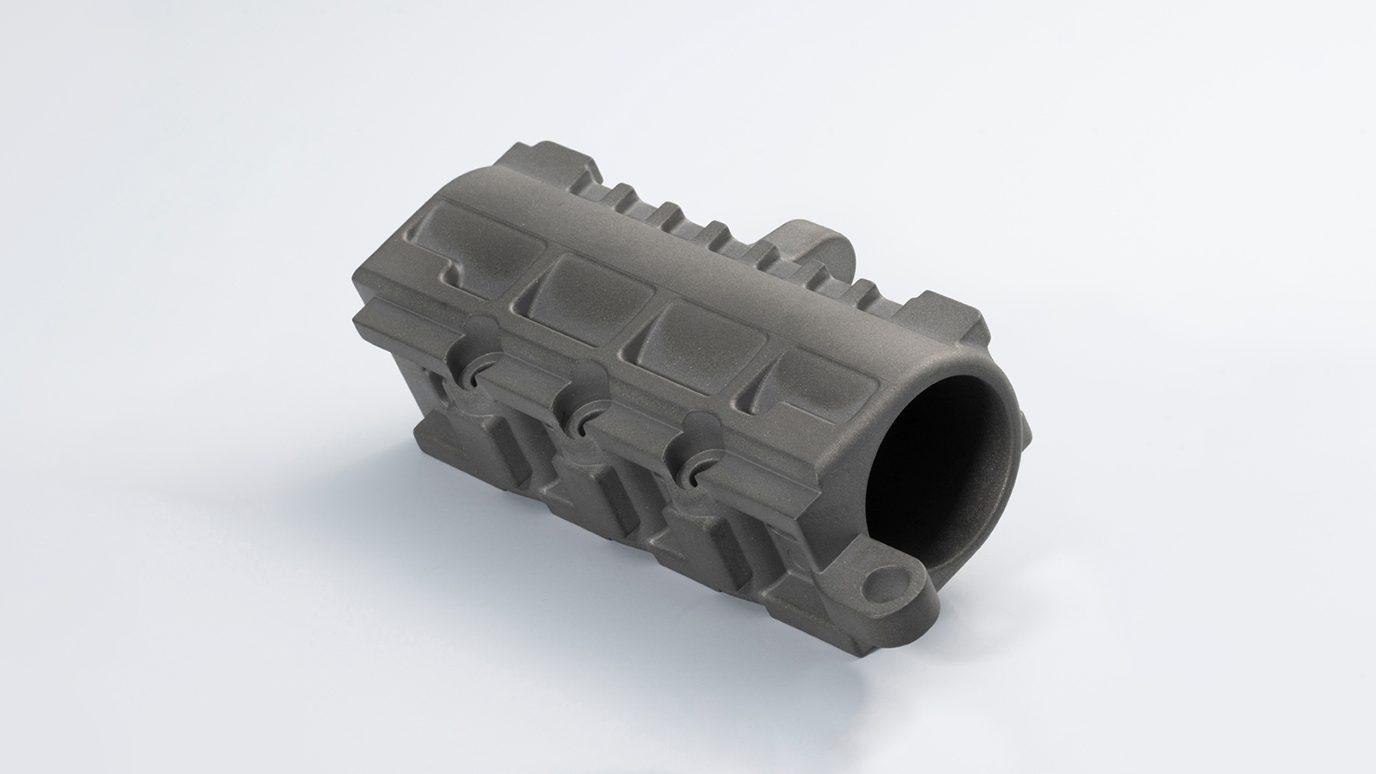
The trunnion requires annealing for post-machining ease but does not need Hot Isostatic Pressing (HIP) processing in order to meet customer performance requirements. CMM inspection was followed by a 20,000 round firing test. The part was originally intended to be made via Laser Beam Powder Bed Fusion Additive (PBF-LB) Manufacturing, but inconsistent strength, rougher surfaces, and higher cost made that option unviable.
Hand Tools/Recreation

In the Hand Tools/Recreation category for MIM components, a Grand Prize was awarded to APG-MIM, a Division of Nichols Portland Inc based in Ridgway, Pennsylvania, and its customer, Paige Musical, for a six-string guitar capo assembly comprising a saddle, adjustment guide, bar, and yoke (Fig. 3). A capo is used to temporarily shorten the strings on a guitar, raising the pitch of the unfretted or ‘open’ strings and changing the key of the open-position chords.
The very challenging part design led to issues with tool design, moulding, debinding, and sintering operations. Customised ceramic setters, and an optimised two-stage injection moulding process, were required for the successful manufacture of the part. The adjustment guide has an as-moulded thread, and no secondary operations are needed for manufacture and function.
Medical/Dental: MIM
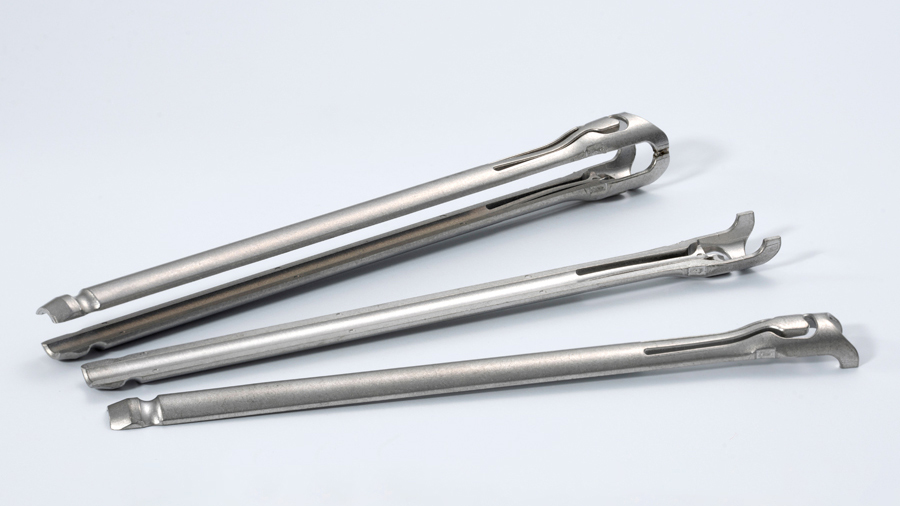
In the Medical/Dental category for MIM components, a Grand Prize was awarded to Advanced Powder Products, Inc, Pittsburgh, Pennsylvania, for a screw chuck used in orthopaedic surgery (Fig. 4). The part is used in a larger assembly that allows a surgeon to drill screws into the spinal regions of patients. Once the screw is inserted, the assembly needs to be broken in two and easily removed.
Initially, the part was presented as a one-piece design. However, after extensive design modifications, the MIM solution was a two-piece assembly that needed to be joined by laser welding.
Medical/Dental: AM
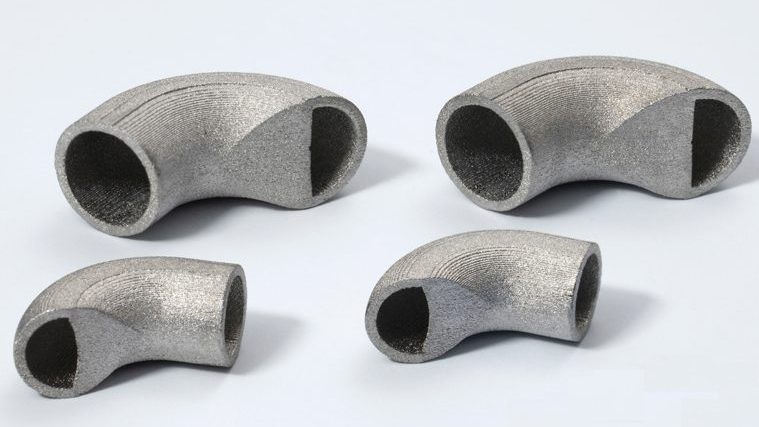
In the Medical/Dental category for metal AM components, a Grand Prize was awarded to 3DEO Inc and its customer, Zimmer Biomet, for bone marrow harvester parts (Fig. 5). Advanced suction curettage technology can harvest small to large volumes of cancellous (trabecular) bone and non-diluted bone marrow aspirate in a few minutes through a minimally invasive incision.
3DEO’s sinter-based Additive Manufacturing process eliminates the complexity and expense associated with tooling, and post-processing operations and waste is minimised. 3DEO is an Additive Manufacturing service bureau that uses an in-house patented process called Intelligent Layering. The technology is a fusion of Binder Jetting (BJT) and CNC machining that, the company claims, is faster, cheaper and capable of higher resolution than BJT alone.
Electronic/Electrical
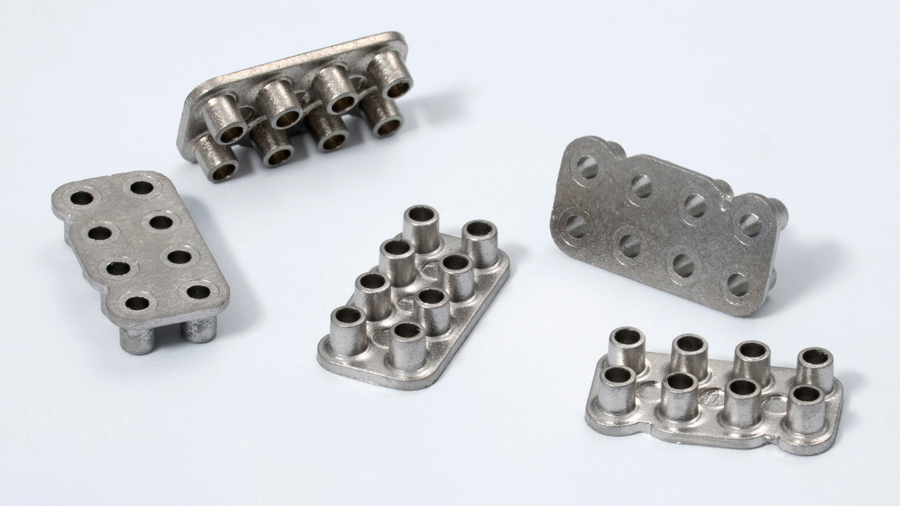
A Grand Prize was awarded in the Electronic/Electrical Components category for MIM components to MPP, Noblesville, Indiana, and its customer, Tactile Engineering, Lafayette, Indiana, for a core plate used in its Cadence Tablet that has a refreshable braille display for the vision impaired (Fig. 6).
The core plate is an extremely challenging part to produce that requires strict adherence to tight tolerances, flatness, absence of flashing, and magnetism. The device uses magnetic latching that requires a specific amount of holding force for effective operation. Traditional machining waste would be more than 40%, and machined parts would cost at least 10x that of MIM parts.
Awards of Distinction
Automotive–Engine
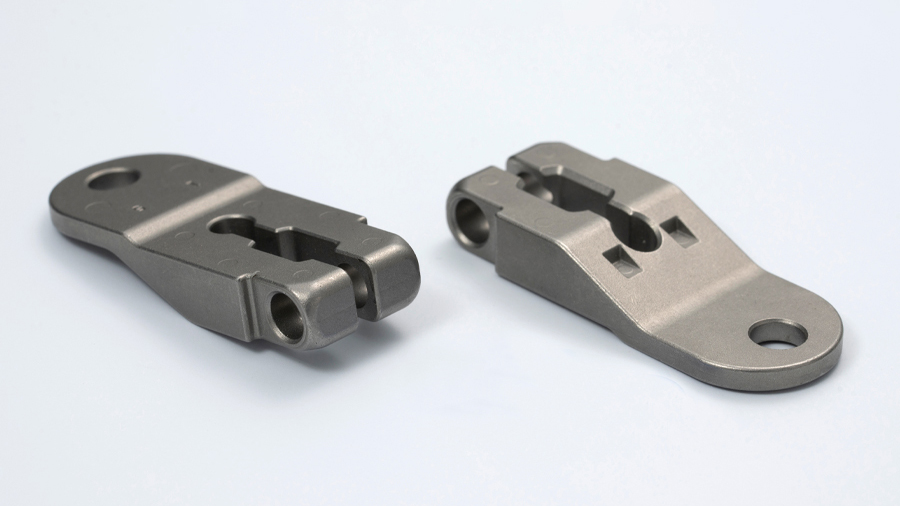
In the Automotive–Engine category for MIM components, an Award of Distinction was given to INDO-MIM Pvt Ltd, Bengaluru, India, for a lever used as a gas-flow controller in the turbocharger of internal combustion engines (Fig. 7). The lever has a U-shaped geometry with an open slot at the rear end, a through-hole at the front, with another through-hole passing through the slot.
MIM processing reduced lead times and was able to produce the high volume of parts needed weekly by the customer while significantly reducing waste material compared with a forging process.
Automotive–Electric Vehicle: MIM
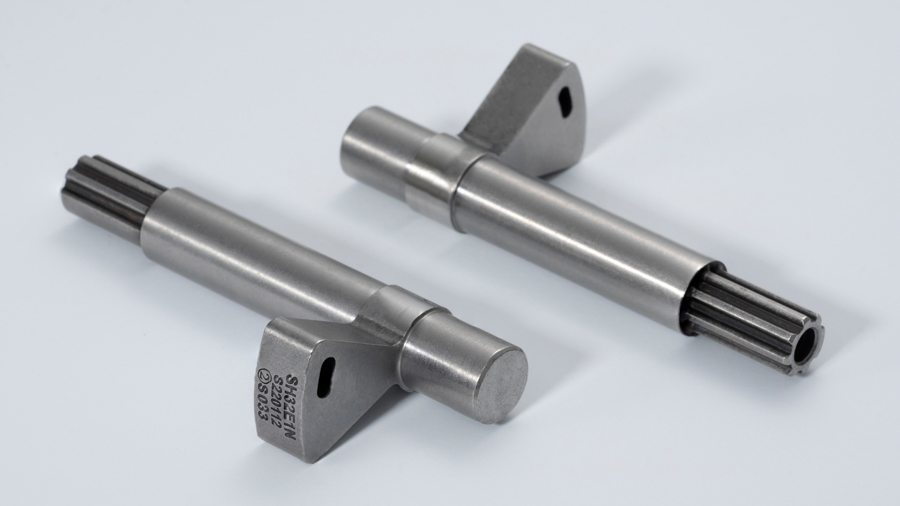
In the Automotive–Electric Vehicle category for MIM components, an Award of Distinction has been given to Hangzhou Sino-MIM Technology Co Ltd, China, for a ratchet shaft used in the parking brake system for new electric vehicles (Fig. 8). The motor moves the splined part to rotate the ratchet shaft so that the cam contacts the disc brake for locking and parking. The spline of the ratchet shaft has a tight tolerance, so fixturing was used during sintering to maintain the part geometry and reduce final machining. The MIM part results in a 20% cost saving compared with a fully machined component.
Automotive–Electric Vehicle: AM
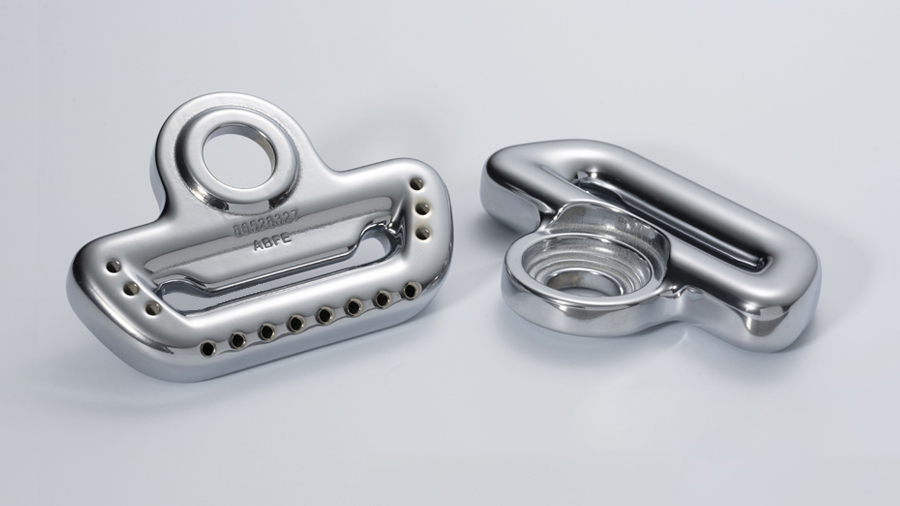
An Award of Distinction, in the Automotive–Electric Vehicle category for metal AM components, was presented to Azoth for a seatbelt pillar adjustable guide loop for its customer, General Motors (Fig. 9). The part is used in the all-electric Cadillac Celestiq. The stainless steel part is produced by Binder Jetting (BJT) and sintered to 97% relative density. The surface of the part is semi-automatically polished prior to a multi-layer bright nickel-chrome plating operation to improve corrosion performance and provide a hard, scratch-resistant surface.
Military/Firearms

In the Military/Firearms category for MIM components, an Award of Distinction has been given to PTI Tech, Clifton, New Jersey, for an inertia weight in a bolt assembly for a blowback firearm (Fig. 10). Tungsten heavy alloy was selected as the material choice for the part that requires a high specific gravity material to obtain the necessary mass in the allotted volume. Tungsten heavy alloys cost 5–10x that of alloy steels and near-net shape processing is needed to minimise raw material costs. Machining the part from bar stock would result in over 70% swarf.
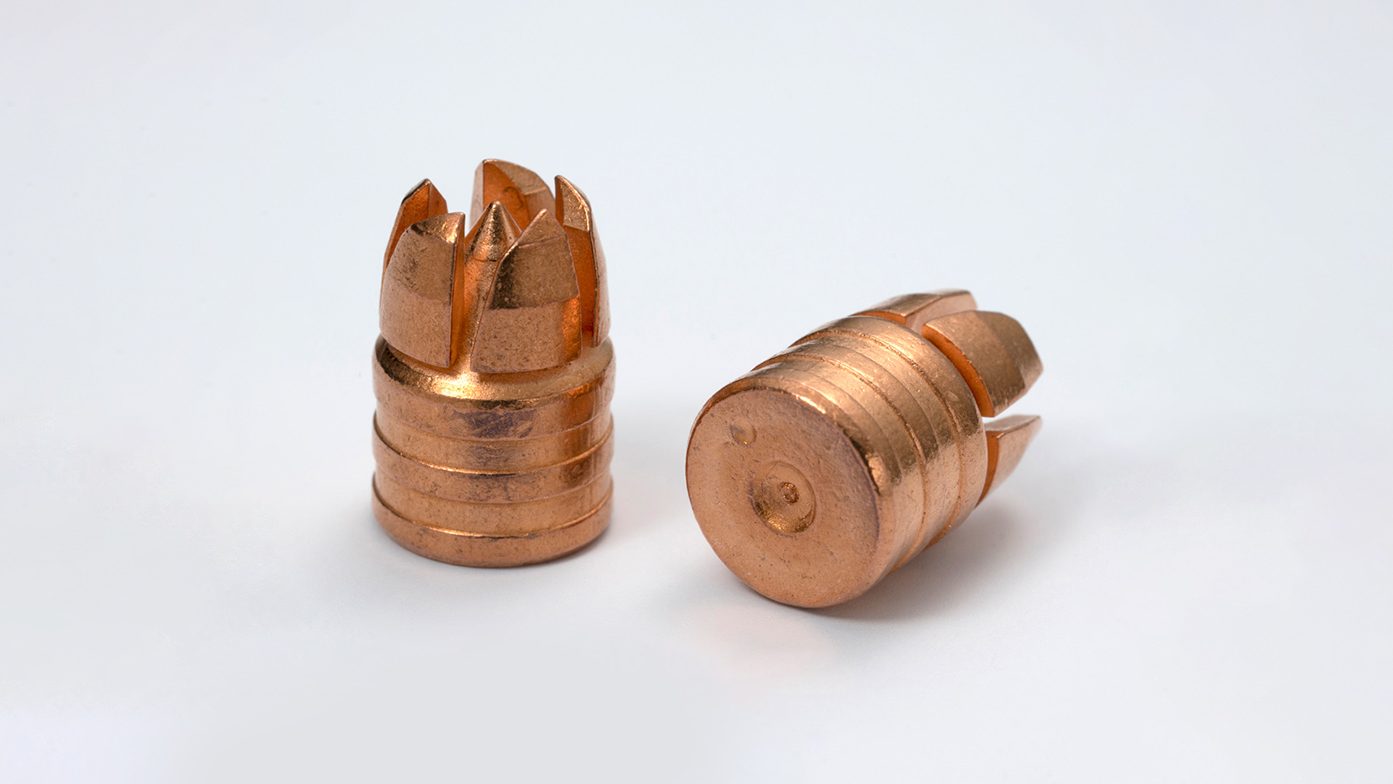
An Award of Distinction, in the Military/Firearms category for MIM components, was also given to ARC Group Worldwide, Longmont, Colorado, and customer Halo Ammunition for a 45-caliber bullet. The bullet is a solid copper projectile that uses a copper feedstock along with a proprietary binder formulation to ensure even and complete sintering with minimal distortion (Fig. 11). The petals were redesigned to be better suited for injection moulding. There is no machining scrap and scrap from tool set up can be recycled.
Industrial Motors/Controls & Hydraulics
In the Industrial Motors/Controls & Hydraulics category for MIM components, an Award of Distinction was given to INDO-MIM for a cone that acts as a fluid controller in a fuel pump (Fig. 12). Moulding this complex part, with thirteen multiple steps and cross-holes, without merging lines and weld-line defects is a challenge. The intricate profiles of the part have tight tolerances.

Electronic/Electrical Components
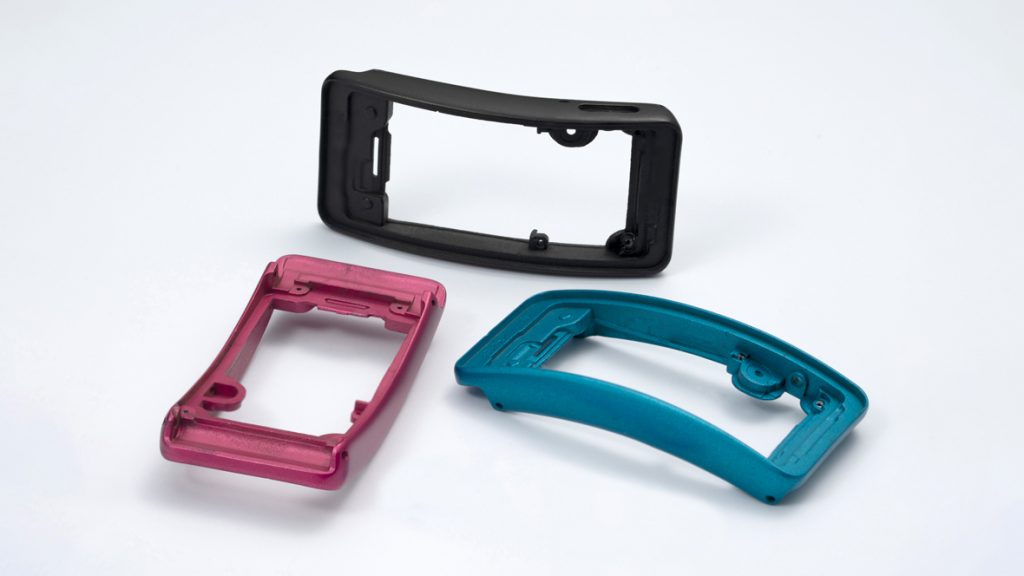
In the Electronic/Electrical Components category for MIM components, an Award of Distinction was also given to SMTG for an aluminium alloy smart-watch case (Fig. 13). The thin, complex sections of the part require use of a high-fluidity feedstock and a high-speed moulding machine. The curved surface of the watch cases necessitates manual polishing to a mirror finish and the parts are anodised to various colours. The light weight of the aluminium alloy parts compared with ones made using stainless steel is a significant benefit.
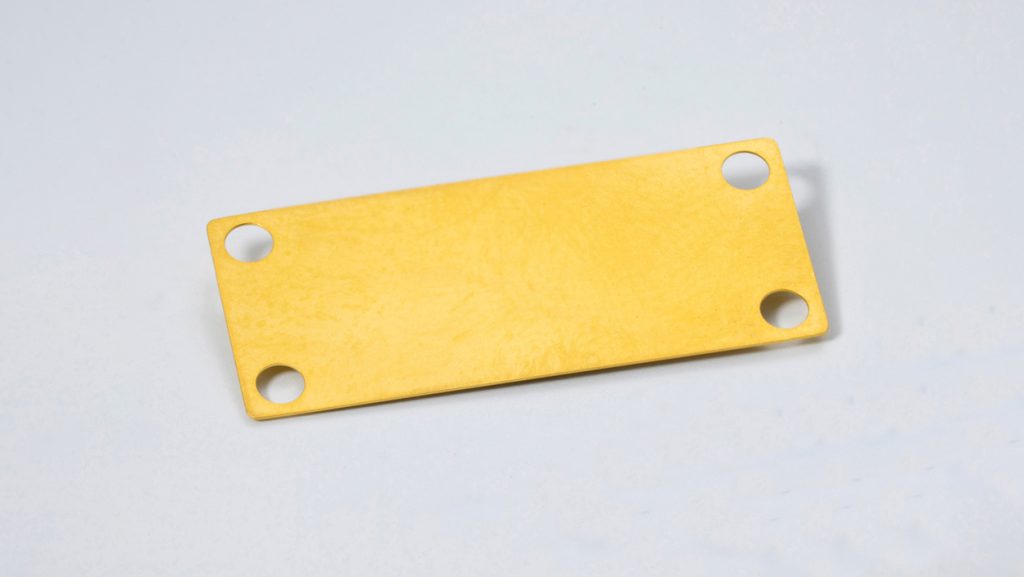
An Award of Distinction, in the Electronic/Electrical Components category for MIM components, was given to Hangzhou Sino-MIM Technology Group (SMTG) for an ultra-thin base plate used as a heat-dissipation module in an optical communication 5G base-station (Fig. 14). Numerous components are mounted on the product’s surface, which serves not only as the mounting base but also conducts and dissipates heat. MIM processing cut the product cycle time and reduced the cost of the product by 45%.
Hardware/Appliances
An Award of Distinction in the Hardware/Appliances category for metal AM components, was presented to APG-MIM, a Division of Nichols Portland Inc, for 150 mm pneumatic chuck jaws for work-holding during precision turning (Fig. 15). The parts are made using Moldjet technology from Tritone Technologies.
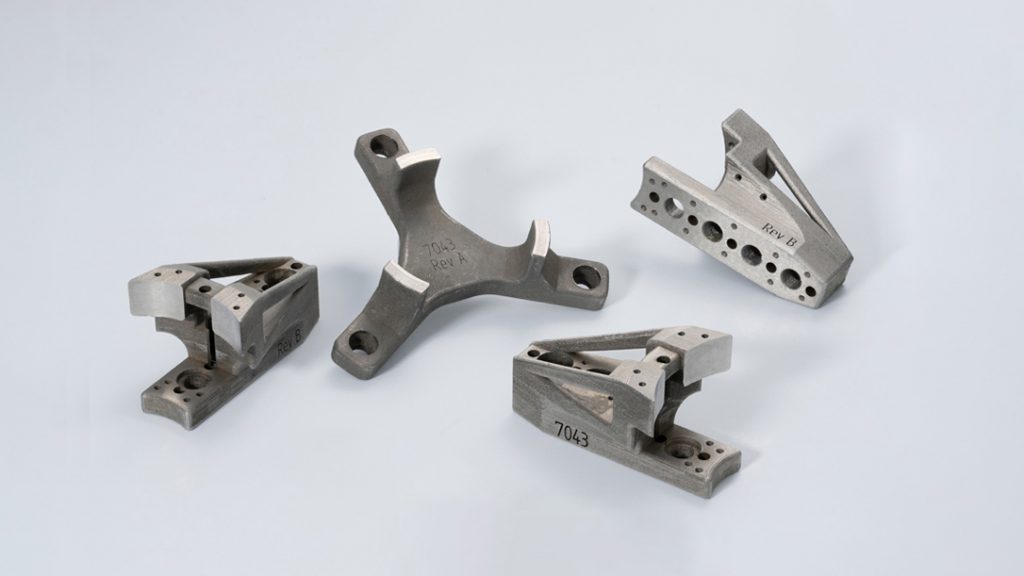
This sinter-based Additive Manufacturing process allows inner-lattice structures to be formed without having to de-powder, eliminating the risk of any powder entrapment in difficult-to-access areas. Moldjet processing generates little waste, and the wax used to form the in-process mould is recovered and can be re-used for the next build.
Medical/Dental
In the Medical/Dental category for metal AM components, an Award of Distinction was awarded to Azoth3D and its customer, Sur-Set Connect LLC, for electromedical connector components comprising a set screw, set screw block, and a spring housing (Fig. 16). These components mate with the associated catheter and provide mechanical feedback to the surgeon ensuring proper insertion of the catheter in the patient.

The very small size and complexity of these components led to depowdering issues when made using Binder Jetting. The problem was overcome by changing to XJet’s material jetting (MJT) process. The parts are produced in 316L stainless steel with high resolution and good surface finish.
Contact
Metal Powder Industries Federation
105 College Road East
Princeton, NJ 08540
USA
[email protected]
www.mpif.org