

Ceramitec 2022: Opportunities abound for producers of technical ceramics by CIM and AM
After a four-year interruption due to COVID-19, Ceramitec, the leading trade fair for the ceramics industry, reopened its doors at Messe München, Germany, from June 21–24, 2022. Whilst noticeably smaller than in previous years, and with significant gaps in the floor plan from the industrial ceramics sector, the event appears to have been positive for the technical ceramics community. Dr Georg Schlieper visited the exhibition for PIM International and reports on activities of interest to users of Ceramic Injection Moulding and ceramic Additive Manufacturing technologies. [First published in PIM International Vol. 16 No. 3, September 2022 | 10 minute read | View on Issuu | Download PDF]
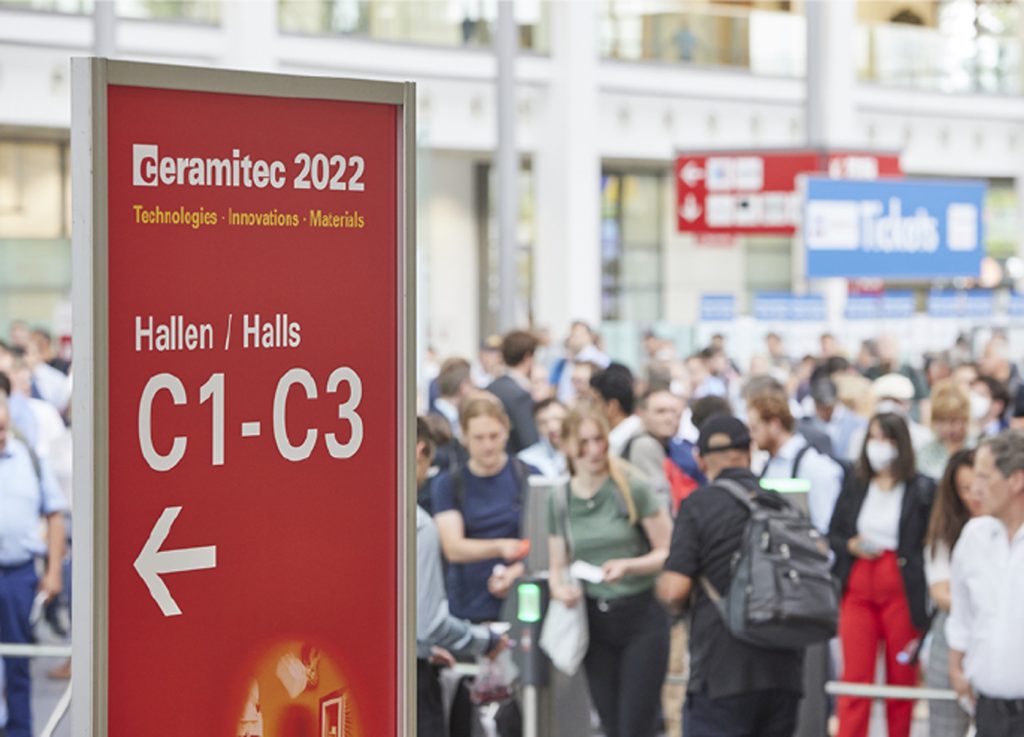
Ceramitec 2022 was held under difficult circumstances. The COVID pandemic was still in the forefront of many people’s minds and some countries, including, crucially, China, still imposed severe travel restrictions, limiting participation from Asia. Furthermore, geopolitical uncertainties inevitably impacted on the industry’s willingness to invest.
Despite these circumstances, Ceramitec’s organisers were confident about the success of the trade show, driven in large part by the knowledge that there was a strong desire for face to face contact between suppliers and customers. In the end, and whilst regarded as a success by many of those who participated, with 356 exhibitors compared to 633 in 2018, and a reported ‘around 10,000 visitors’ compared to more than 15,000 in 2018, the figures suggest a slower than hoped-for return to normality.
It should be recognised, however, that many of the absences from the floorplan were from the ‘non-technical ceramics’ halls, where suppliers of major capital equipment were, it was suggested by some observers, at once dealing with the challenging geopolitical environment and full order books as life returned after COVID, limiting the benefits of seeking new business at a trade show.
Within the realm of technical ceramics, however, rich opportunities exist for CIM producers to diversify into ceramic AM and, indeed, based on informal conversations, it is now hard to find a CIM producer who isn’t already investing in ceramic AM to some extent.
In this report, we have selected a sampling of exhibitors whose CIM or ceramic AM offerings highlight the diversity of activity in this field.
Materials for CIM and ceramic AM
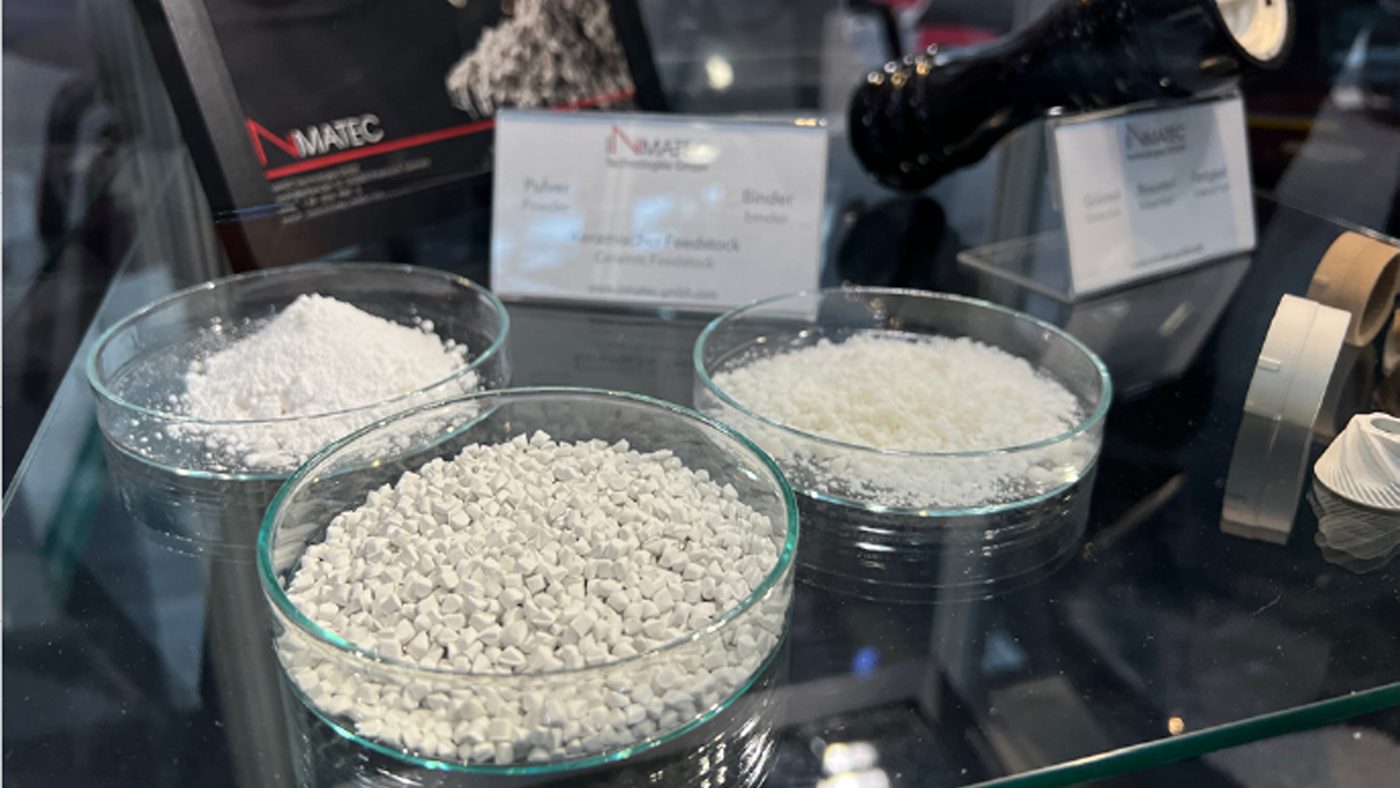
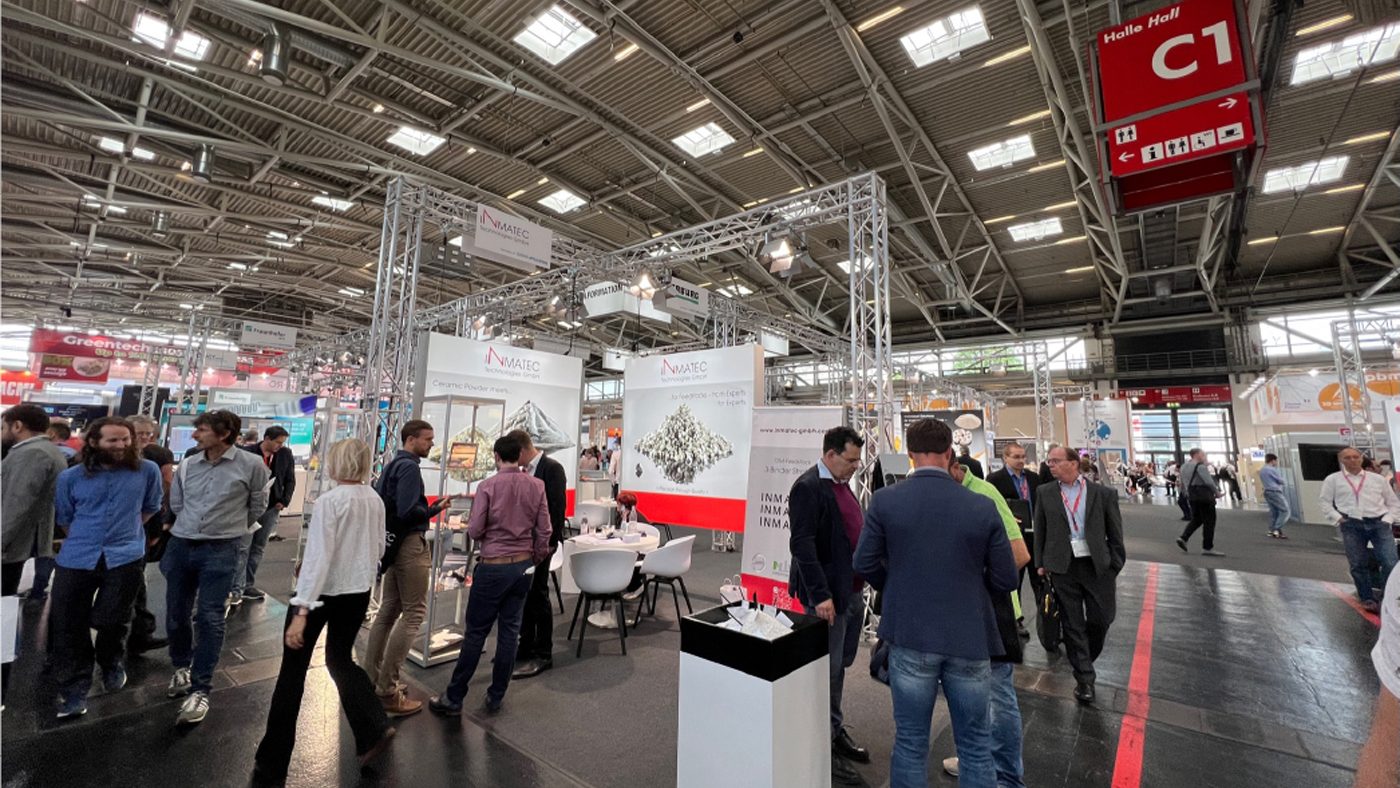
Inmatec Technologies GmbH
Inmatec Technologies GmbH, Rheinbach, Germany, has been producing feedstocks for the CIM industry since 1998. Dr Karin Hajek, Inmatec’s Sales Director, explained the evolution of ceramic feedstocks at the company, “In the beginning, our feedstocks were based on a binder system that had to be debound in two steps: first solvent debinding in water, followed by a thermal process. Over the years, as CIM technology matured, the demand for more sophisticated feedstocks arose. Inmatec developed further binder systems based on various thermoplastic polymers and, today, a wide range of ceramic feedstocks for various debinding processes is available.”
Inmatec has grown continuously in recent years, driven by the expanding market for CIM products. “Today, we employ about sixty people,” stated Hajek. “Ceramic feedstocks are produced on eight production units. Particular attention is paid to the purity of the feedstocks as well as sophisticated quality control procedures adapted to different material compositions.”
Hajek stated that, through active participation in the committees of the German Ceramic Society, the European Ceramic Society and, last but not least, the German-language Expert Group on Ceramic Injection Moulding (Expertenkreis Keramikspritzguss), it has been possible to significantly increase awareness of CIM technology and to extend its technical development into new areas.
Members of the Expert Group on Ceramic Injection Moulding organised a panel discussion at Ceramitec on the possibilities for CIM technology. Case studies from various application areas were presented under the moderation of Inmatec’s Managing Director, Dr Moritz von Witzleben.
Krahn Ceramics
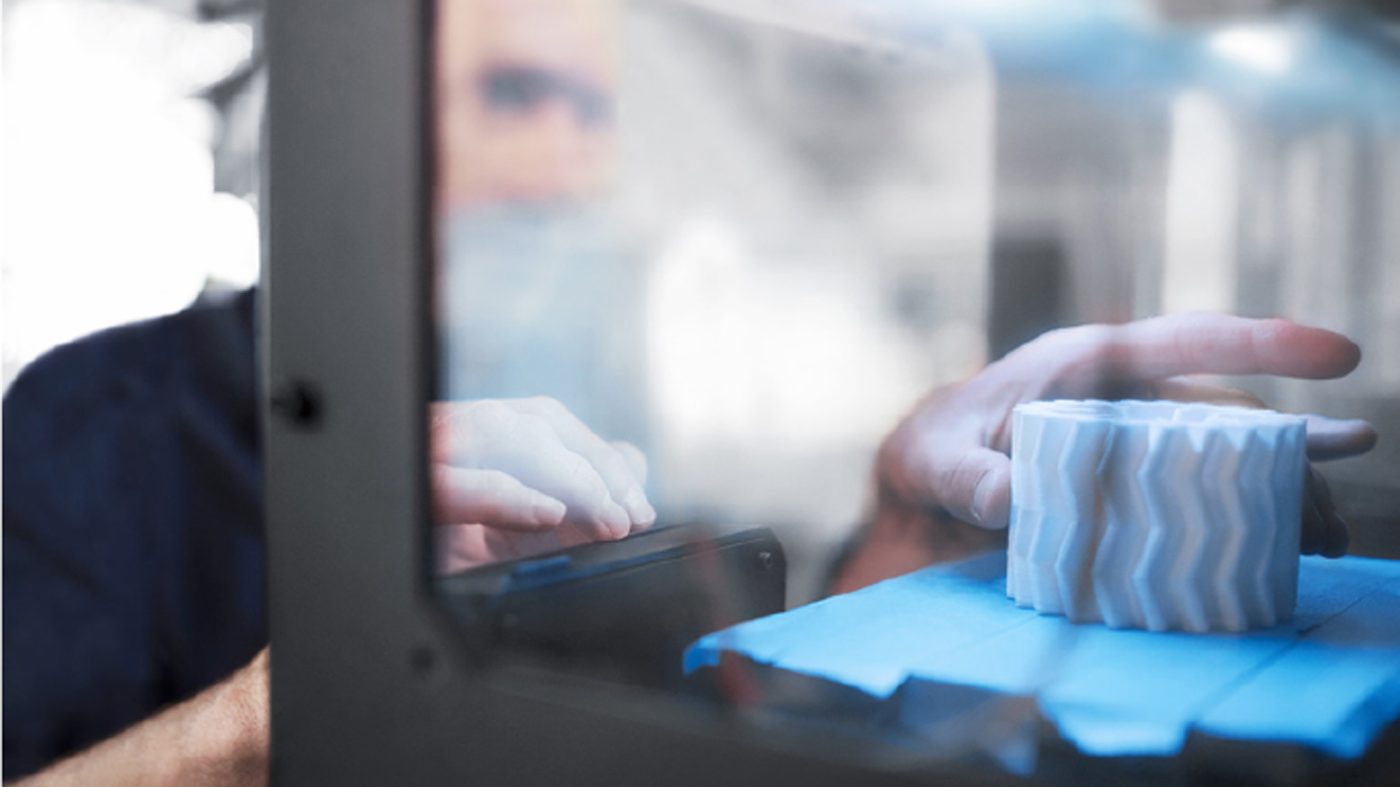
As part of the global, family-owned Otto Krahn Group, Krahn Ceramics specialises in feedstocks for MIM, CIM and sinter-based Additive Manufacturing. Based on a range of proprietary binder systems for debinding in water or organic solvents, as well as for catalytic or thermal debinding, Krahn Ceramics develops and produces customer-specific kcmold® feedstocks. Additionally, Krahn Ceramics offers its organic binders under the brand name Embemould®, as well as several special organic additives in its kcmix® product range, for the production of CIM/MIM feedstocks. In the company’s technical centre, new products are developed and prepared for release.
Besides the feedstock granules for MIM and CIM technology, Krahn Ceramics also produces filaments for Material Extrusion (MEX) Additive Manufacturing. The company has established in-house capacities for manufacturing filaments, supported by what it states is a comprehensive customer service offering.
EnCeram
EnCeram, a subsidiary and in-house start-up within Chemische Fabrik Budenheim KG, Budenheim am Rhein, Germany, has historic connections with ceramic feedstock supply. According to Dr René Engelke, Managing Director of EnCeram, the market launch of the first products based on a water-soluble binder for the production of components made of alumina and zirconia is planned for the end of 2022.
Innovative process developments for ceramics
Lithoz GmbH
Austria’s Lithoz GmbH is widely known for its Vat Photopolymerisation (VPP)-based Additive Manufacturing machines for ceramics and is regarded as the market leader in this field in both commercial and technological terms.
Martin Mann, Head of Sales at Lithoz, showed PIM International some application examples of this technology, which demonstrate the versatility of the process, including various Laval nozzles for burners of all kinds. Functional materials such as piezoelectric and dielectric materials can also be additively manufactured using the process, while special bioceramics are available for medical and dental applications. Geometrically complex lost cores for investment casting are made of special silica-based ceramics. Such cores are used in the production of turbine blades manufactured from heat-resistant nickel superalloys and applied in gas turbines and aircraft engines.
The VPP process that Lithoz uses, which the company refers to as Lithography-based Ceramic Manufacturing (LCM), requires debinding and sintering after the moulding step. During sintering, a shrinkage of about 35–40% takes place. The surface quality and precision achieved with the process is comparable to that of CIM, but with greater shaping complexity.
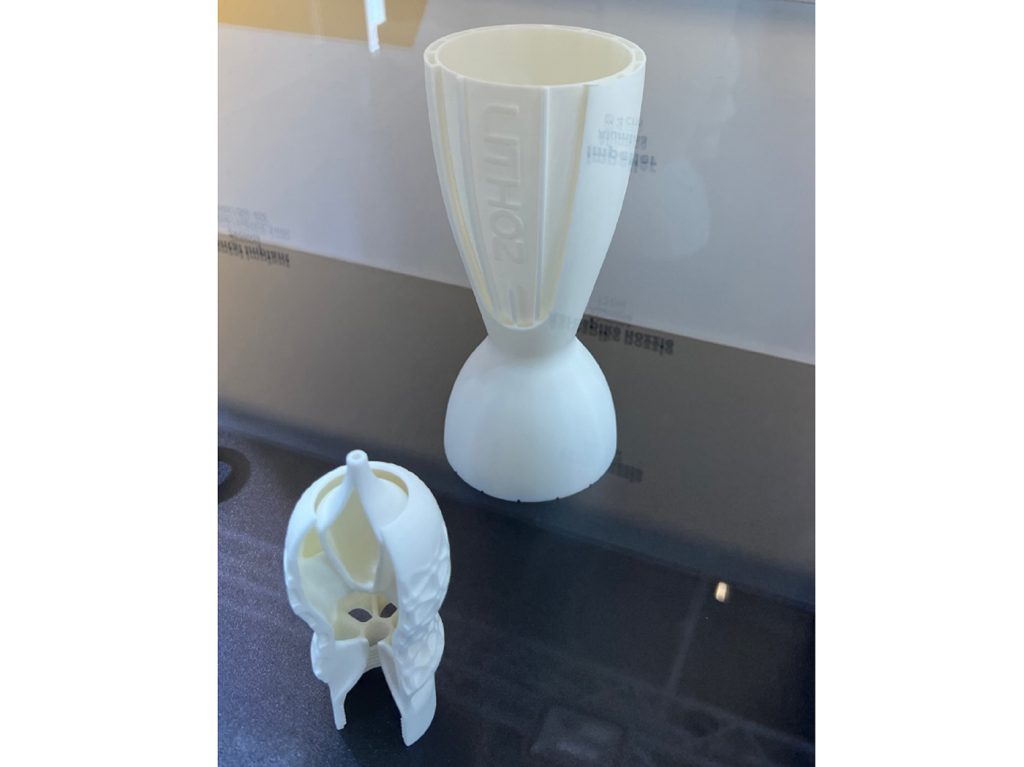
In addition to the VPP-based process, Lithoz presented a new technology for larger, fully dense ceramic parts that it calls Laser-induced Slipcasting (LIS). Here, a water-based slurry is selectively dried with a laser, thus building up the component in a layer by layer fashion. This process does not allow the same precision as VPP, but is suitable for the production of large, thick-walled components. If necessary, parts can be machined in the green state and then sintered, with the debinding step omitted as the water evaporates when drying.

AON
Another VPP-based Additive Manufacturing machine for ceramic materials was presented by the Korean company AON. Starting from the manufacture of dental products, the company’s technology was developed to such an extent that, today, small precision parts can be produced from alumina, zirconia and silicon nitride. AON’s Additive Manufacturing machines are available in a variety of sizes, with the maximum build space being 107 x 60 x 150 mm.
Pollen AM
Pollen AM is a young French company led by Didier Fonta. The starting point of his development work was the recognition that many AM processes offer only a limited selection of materials; Pollen AM set itself the goal of developing a machine for Additive Manufacturing, which is suitable for polymers, ceramic and metallic materials.
The resultant Material Extrusion (MEX) machine can be used to process the same granulated feedstock pellets used in plastic injection moulding as well as MIM and CIM. Whilst this variant of MEX technology is also being developed by others in the market, one example being Germany’s AIM3D, in the case of Pollen AM, it is referred to as Pellet Additive Manufacturing (PAM). The AM machine presented (Fig. 7) had a build space of 30 cm in diameter and 30 cm in height. The build plate and the installation space are heatable. The most important components are the four build heads, which can be filled with different materials, if required.
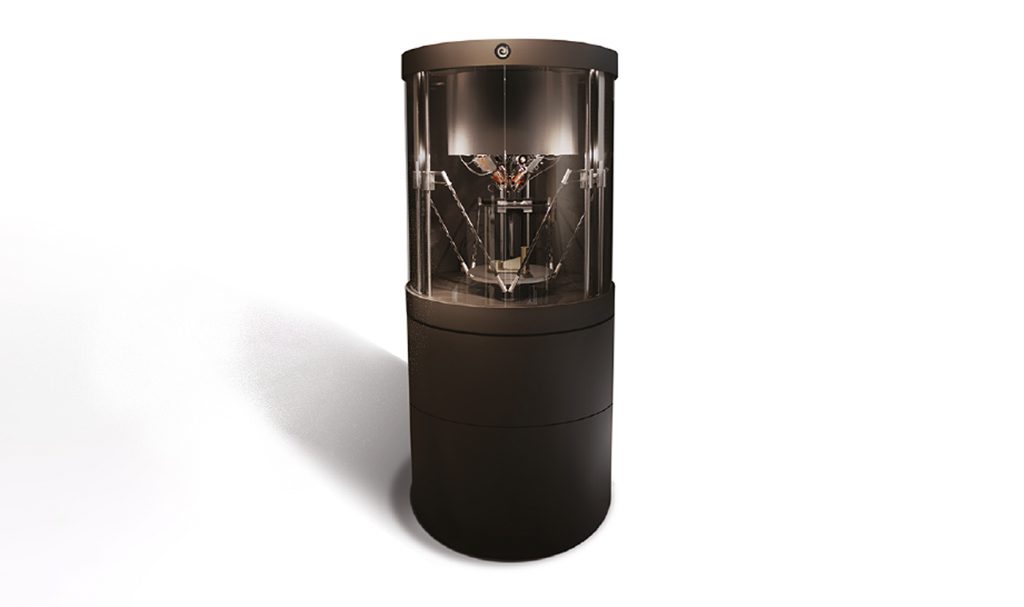
Each build head has a reservoir into which pellets are filled. In a micro-extruder that works in the same way as the extruders of an injection moulding machine, the material is plasticised and compacted so it can be pushed through a fine nozzle. In this way, the green part is built up in the same way as filament-based MEX, also known as Fused Filament Fabrication (FFF).
As attractive as the process may seem at first glance – especially for manufacturers of MIM and CIM components, who are known to have all systems for debinding and sintering – one should bear in mind that there are a large number of parameters that must be optimised for each material in order to end up with a high-quality product.
The ceramic parts manufactured so far by Pollen AM are made of aluminium oxide, zirconium oxide, silicon nitride, and silicon carbide.
3D Minerals
3D Minerals is a French start-up that develops MEX-based ceramic Additive Manufacturing machines. The additive process used is referred to by the company as Slurry Deposition Modelling (SDM) or Paste Deposition Modelling (PDM), a name that echoes the historic term Fused Deposition Modelling (FDM), now referred to as Material Extrusion under ISO/ASTM 52900:2021 Additive Manufacturing — General principles — Fundamentals and vocabulary.
In the process, a suspension of ceramic powder and a liquid is pressed through a fine nozzle and deposited on the build, thus building the green part up layer by layer. The green part is then further processed by drying and sintering or firing to the finished product.
Three basic types of AM machine are offered:
- A Cartesian AM machine, which uses the x, y and z axes as parameters during manufacturing
- An AM machine with a rotating mounting plate, particularly suitable for manufacturing rotationally symmetrical components
- An AM machine with a robotic arm, which offers increased flexibility in terms of product geometry
The AM machines offered by 3D Minerals are suitable for the production of very large parts made from technical ceramics, porcelain or earthenware.
Concr3de
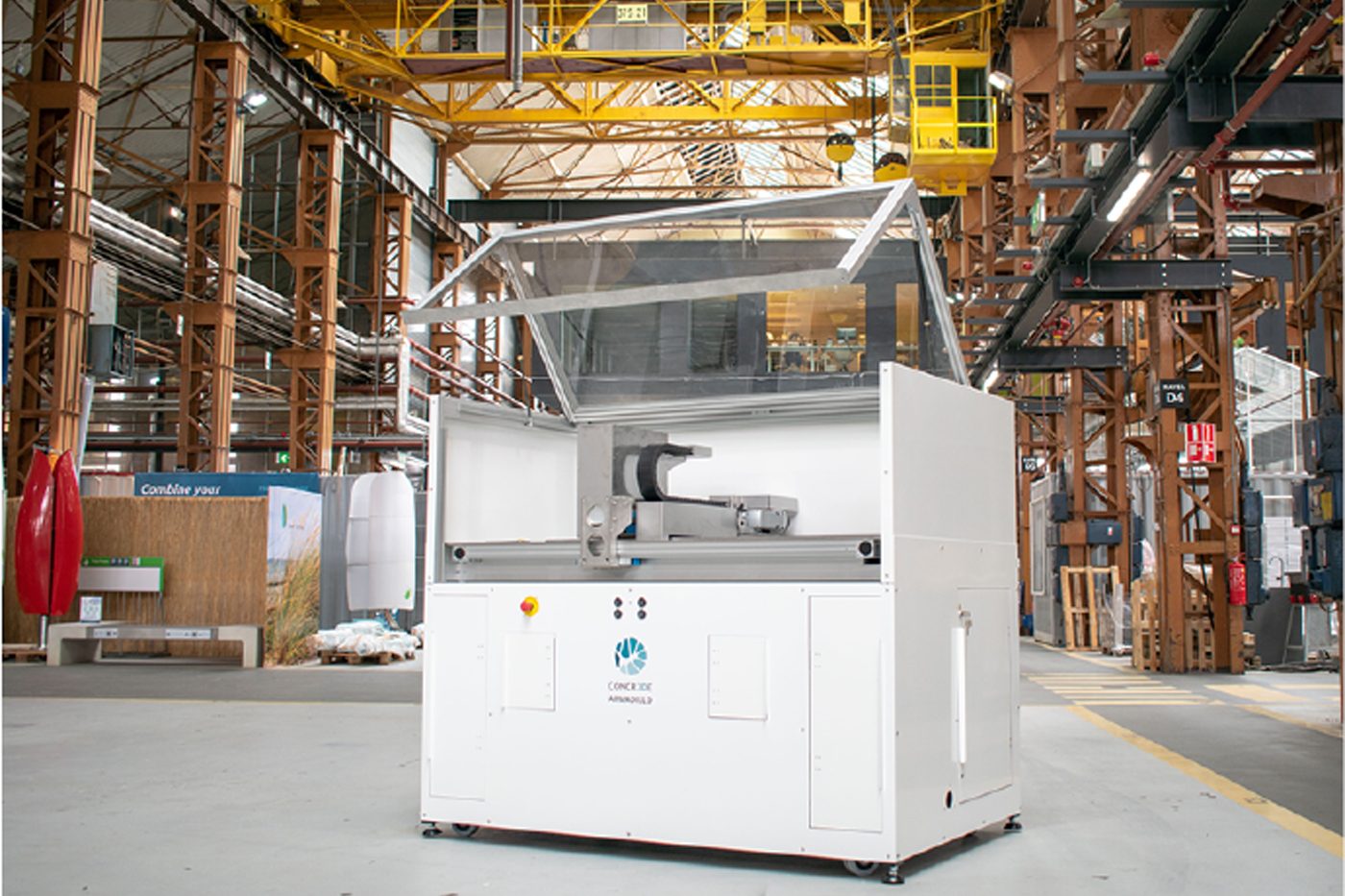
Concr3de, Rotterdam, is a Dutch company which manufactures Binder Jetting (BJT) machines (Fig. 8). With three different machine types, the company covers an extremely wide range of materials, from types of rock such as marble, granite, limestone and concrete to various ceramic materials, as well as selected metals. The company supports its customers in the development of additively manufactured products.
One target is large building elements made of concrete or rock-like materials with dimensions of up to 6 metres. Eric Geboers, CEO of Concr3de, told PIM International that Binder Jetting is able to additively manufacture such large parts in a relatively short time.
Users of AM technology
Bosch Advanced Ceramics
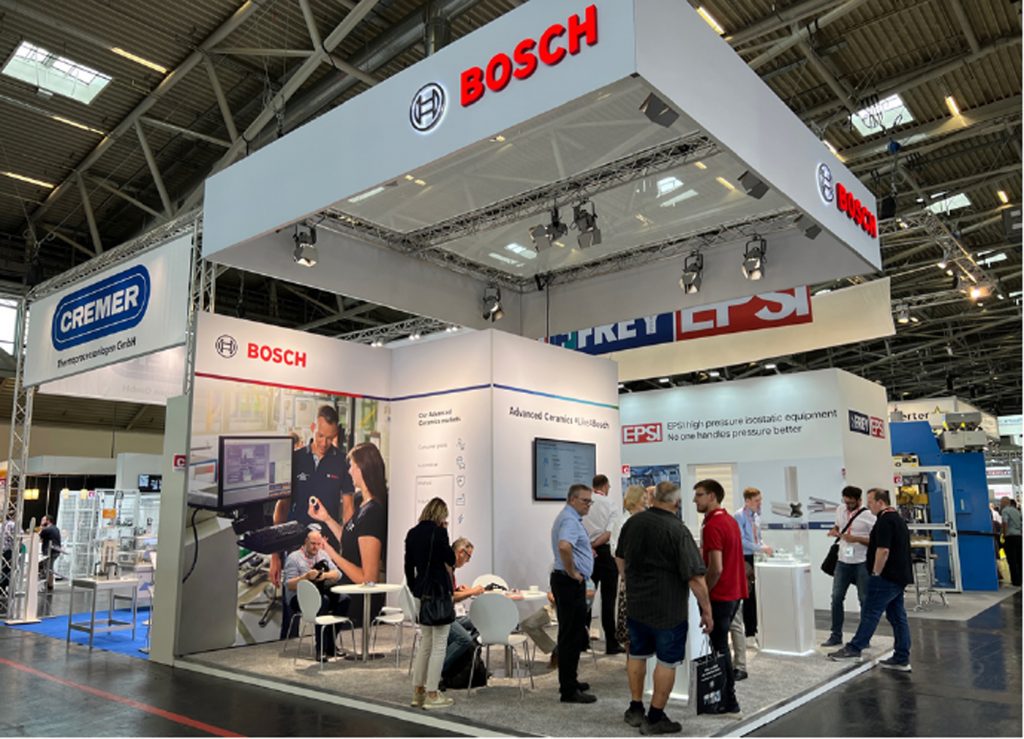
Bosch Advanced Ceramics presented itself as a manufacturer and engineering partner for high-quality precision parts made of oxide ceramics via CIM and AM. The company was founded as a corporate startup within the Bosch Group with the task of using ceramic Additive Manufacturing for industrial production.
From the very beginning, the VPP process was applied (Fig. 6). Working closely with manufacturers of ceramic AM machines, the technology and processes have been adapted to the requirements of industrial production. As a result, Bosch Advanced Ceramics has been able to quickly gain a leading position in the field, building on the Bosch Group’s years of experience in manufacturing CIM parts.
Steinbach AG

Germany’s Steinbach AG offered its expertise in the Additive Manufacturing of engineering ceramics for industrial and medical applications, a field in which the company has been active since 2016. Steinbach uses Lithoz AM machines to manufacture green parts with layers of 25-100 µm, which, upon completion, are cleaned, debound and sintered.
Steinbach uses this process to produce components made of alumina and zirconia. The maximum dimensions of the products are about 80 x 50 x 150 mm (x/y/z). The shrinkage during sintering is stated to be about 30%. The achievable dimensional accuracy is ±1% of the nominal dimension, with a maximum of ±0.1 mm.
Schunk Technical Ceramics
Schunk Technical Ceramics impressed with very large additively manufactured exhibits made of silicon-infiltrated reaction-bonded silicon carbide RBSiC. This extremely hard, temperature- and corrosion-resistant material is suitable for highly stressed applications. AM technology makes it possible to produce highly complex components in one piece.
Conclusion
Visitors at Ceramitec 2022 were able to see that the development of AM processes is still in full swing. The most well-known technologies have been further developed to series maturity. This is, in turn, opening up the use of technical ceramics by new customers as the restrictions imposed by tooling costs, necessitating larger volumes, are being lifted. It will be exciting to observe the technology’s further development.

Author
Dr Georg Schlieper
Essen, Germany
[email protected]