

Ceramic AM resins developed to improve tile mould durability
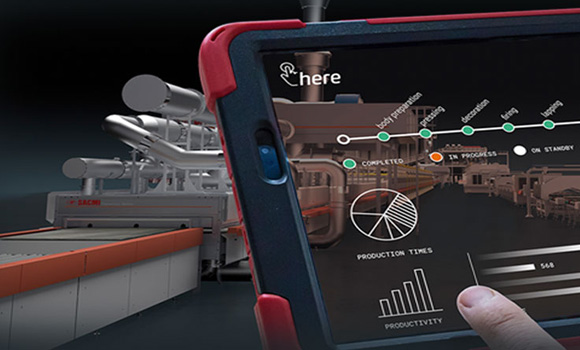
A team of researchers from the Polytechnic University of Turin, Italy, in collaboration with SACMI, headquartered in Imola, is developing new high-viscosity light-curing resins for the Additive Manufacturing of ceramic moulds. The work is being undertaken as part of the project ‘Innovative photocurable formulations for AM applications in the production of ceramic tile moulds,’ funded by MICS – Made in Italy Circular and Sustainable, with the support of the Ministry of University and Research through PNRR funds.
TRUSTED BY INDUSTRY’S BIGGEST NAMES
Discover how we help leading brands shape the industry conversation
| Contact us |
The initiative aims to improve the wear resistance of moulds used to produce ceramic tiles and reduce the environmental impact of ceramic production by using materials from renewable sources. The team includes researchers from the Polytechnic University of Turin under the guidance of Prof Massimo Messori, together with colleagues from the University of Brescia, coordinated by Prof Emilio Sardini, along with SACMI’s Eng Paolo Testi and Dr Fiorenzo Parrinello.
“This project was created to address a real and specific need in the industrial world: to optimise the mould production process for the ceramic industry, with a view to greater efficiency, sustainability and innovation,” stated Federica Bondioli, Full Professor of Materials Science and Technology at the Polytechnic University of Turin and MICS Spoke 6 Coordinator. “The close collaboration between our researchers and company researchers was crucial in transforming a production requirement into an opportunity for applied research and technological development. It is precisely from this constant dialogue that high-impact solutions can emerge, capable of strengthening the competitiveness of our manufacturing system.”
Key aspects of the project include:
- The development of high-viscosity resins compatible with Drop-On-Demand (DOD) technology, capable of counteracting premature wear of moulds caused by the abrasiveness of ceramic powders, ensuring greater durability and mechanical quality
- The design of a laboratory prototype equipped with high-efficiency AM print heads for resin application, paving the way for materials previously inapplicable
- The development of advanced sensors for continuous monitoring of moulds, allowing predictive and intelligent management of the production process
The initiative is reported to align with the broader vision of MICS, an extended partnership that, with an investment of approximately €114-125 million, involves twelve universities, thirteen companies across the fashion, furniture and mechanics sectors. It aims to transform the concept of Made in Italy toward circular, digital and competitive solutions.