

Protiq adds CADdent’s aluminium oxide reinforced zirconia to its Marketplace
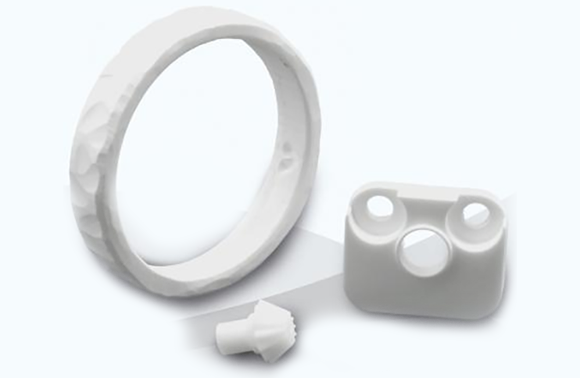
Protiq GmbH, based in Blomberg, Germany, has added aluminium oxide reinforced zirconia (ATZ) from CADdent to the Protiq Marketplace. CADdent uses Lithography-based Ceramic Manufacturing (LCM) technology from Lithoz, enabling the precise and efficient Additive Manufacturing of complex ceramic components.
Technical ceramics are increasingly in demand as they offer exceptional strength, hardness and high resistance to extreme temperatures, corrosion and chemicals, properties which make them durable and high-performance alternatives to metals and plastics, explains Protiq.
Currently, aluminium oxide and zirconium dioxide are the most commonly used ceramics. ATZ consists of approximately 80% zirconium dioxide and 20% aluminium oxide.

ATZ has a very low thermal conductivity and enables more precise and thinner wall thicknesses of 0.15 mm as well as more precise channels. Compared to zirconia, ATZ can also be used to produce significantly thicker walls. While zirconium tends to crack at wall thicknesses of over one millimetre, wall thicknesses of over ten millimetres can be achieved with ATZ. This is due to the more efficient degassing during the debinding process.
The LCM process works with a mixture of liquid polymer and fine ceramic particles. This mixture is applied to a translucent tank. A build plate is immersed in the material, and an LED module illuminates the layer from below with blue light, causing the material to harden in the exposed areas. The desired component is created layer by layer. After the manufacturing process, the parts must be debound and sintered. In this thermal process, the polymer content is removed, and the component is sintered into a dense ceramic.