

Plastometrex’s Indentation Plastometry method formalised with ASTM E3499-25
Plastometrex, a developer of mechanical testing solutions based in Cambridge, UK, announced that its ASTM E3499-25 for Profilometry-based Indentation Plastometry (PIP) standard has been approved. The approval follows a thorough, multi-year process, including collaborative validation work with NPL, Airbus, Nikon, and Renishaw, as well as reviews and balloting through ASTM’s committee system, a process that reflects the consensus of experts across the global materials community.

The standard is intended to give engineers and researchers a globally recognised route to faster, easier, and more cost-effective mechanical testing, whilst providing users with audit-ready data, consistent results across laboratories and supply chains and a clear route to adoption in regulated sectors such as aerospace and energy.
ASTM E3499-25 – Standard Test Method for Indentation Plastometry of Metallic Materials is also expected to reduce barriers to internal approval, make audit readiness straightforward, and ensure results are comparable across organisations. Because ASTM standards are internationally recognised, this development may also provide a foundation for global comparability and regulatory alignment, bolstering the use of PIP overall.
The path to standardisation
The standardisation effort was initiated and led by Plastometrex CTO Dr Jimmy Campbell, who originally coined the term ‘Indentation Plastometry’ in a 2019 peer-reviewed paper, and has since guided its technical development.
“From the outset, our goal with Indentation Plastometry was to create a method that gave engineers the same fundamental mechanical properties as conventional tensile testing, but with far greater efficiency and versatility,” stated Dr Campbell. “Securing an ASTM standard is a major step in that journey. It validates the rigour of the science, recognises the work of the experts involved, and gives industry the confidence to enjoy the benefits that PIP offers.”
“For me,” he continued, “it’s rewarding to see a concept we’ve been developing since the early 2000s now established as an international test method standard that will help accelerate innovation and raise the bar for mechanical testing worldwide.”
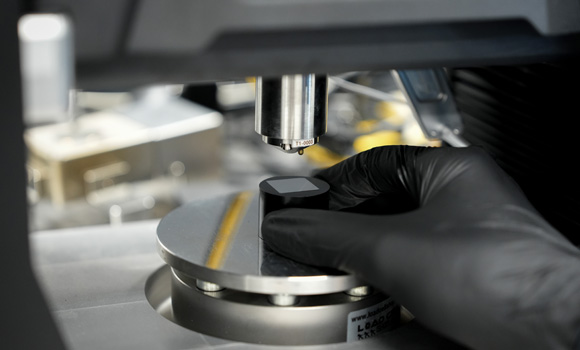
Profilometry-based Indentation Plastometry is a physics-based approach that extracts stress-strain curves from indentation data using an inverse finite element method. This technology is used in all of Plastometrex products: PLX-Benchtop, PLX-HotStage and PLX-Portable, each of which will be covered by the new standard.
PIP testing is valued for delivering stress-strain curves quickly, using minimal material, and without the complexity of conventional tensile testing. It is also suitable in scenarios where tensile testing is not feasible, such as with small or thin specimens, or in-service assets, broadening the scope of mechanical testing beyond what has been possible before.