

Finalists revealed for Formnext 2025 Additive Manufacturing Awards
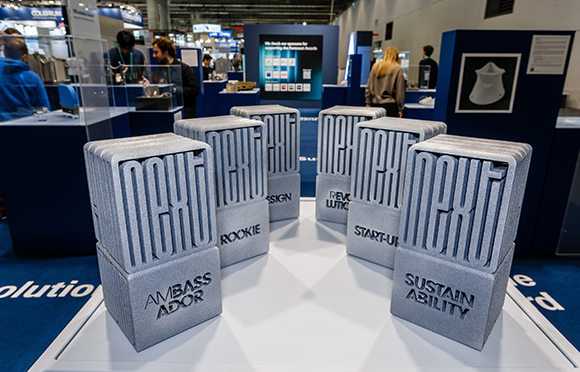
Event organiser Mesago Messe Frankfurt has announced the finalists for the Formnext Awards 2025. The Formnext Awards 2025 will recognise young companies, sustainable business ideas, and technologies across six different categories.
The shortlisted finalists will now present their entries online in the run-up to the trade fair and in person at a special showcase at Formnext. The winners will be announced at the award ceremony on November 20, 2025, from 4:20 p.m. on the Industry Stage (Hall 11.0, D72). Voting for the public is already open until noon on Thursday, November 20.
AMbassador Award: from AM ecosystem to recognised training
The AMbassador Award recognises outstanding individuals or organisations that have had a unique impact on the AM industry and users through innovative training and education approaches or personal advocacy.
The finalists for this award are as follows:
Naiara Zubizarreta – ADDIMAT
Naiara Zubizarreta is Director of ADDIMAT, the Spanish Association for Additive Manufacturing. Since 2015, she has worked to strategise and grow Spain’s AM ecosystem, shaping a community that today brings together more than 100 members.
Mesago Messe Frankfurt stated that, under her leadership, Spanish AM has gained international visibility through her presence at international conferences, the organisation of joint booths at Formnext, strategic collaborations in Europe (AM-Europe), and strong representation in policy and standardisation forums. Her role involves promoting collaboration, driving initiatives that support research, workforce development, and technological advancement.
Today, Spain is one of Europe’s fastest-growing AM markets and will showcase this momentum at Formnext as Partner Country 2025.
Dr-Ing Gustavo Melo – RWTH Aachen University
Dr.-Ing Gustavo Melo’s PhD (Dr.-Ing.) project proposes a comprehensive, technology-enhanced, and data-driven methodology for Additive Manufacturing education that directly addresses Industry 4.0 skill requirements.
Dr-Ing Melo’s methodology combines:
- Systematic analysis of industrial needs
- Modular and flexible curricula design
- Immersive AR/VR applications to teach complex concepts such as Design for Additive Manufacturing (DfAM) and PBF process
- Data-driven monitoring through NLP analysis of thousands of job postings
This integration creates a feedback loop designed to ensure content is always updated with current and emerging skills. By merging structured pedagogy, advanced digital technologies, and labour market intelligence, Mesago Messe Frankfurt stated that initiative represents a novel, scalable, and transferable blueprint that not only strengthens AM education but also serves as a model for other fast-evolving advanced manufacturing fields.
Irena Heuzeroth – Kunststoff-Zentrum (SKZ)
Technological advances and the increasing relevance of Additive Manufacturing processes in a wide range of industries are leading to a steadily growing demand for qualified specialists. Additive Manufacturing is considered a key technology of the future, but so far, there is a lack of structured concepts for sound professional qualification.
To address this, the Chamber of Industry and Commerce (IHK) Würzburg-Schweinfurt and the SKZ are jointly offering a practical course leading to the qualification of Certified Industrial Technician in Additive Manufacturing. The recognised IHK degree is aimed at those who are interested in gaining a comprehensive overview of AM. The further education programme covers the entire AM process chain, from the materials used and their processing to design and procedures to complementary topics such as energy, hydraulics, and occupational safety.
Design Award: From LNG sampling to prostheses for children in Kenya
By identifying concepts that balance both aesthetic and functional aspects, the Design Award highlights the importance of intelligent and inventive design in Additive Manufacturing. The finalists are as follows:
Grabbit – Hochschule für Gestaltung Schwäbisch Gmünd
Grabbit is a project designed for people with hand impairments, combining design, technology, and sustainability. Three distinct shapes enable exercises, hot and cold applications, and adjustable resistance.
The product family is based on three geometric forms that are intuitively understood. The ball enables a variety of grip exercises and, for the first time, fully integrates the thumb into training. The ring activates the extensor muscles and helps to prevent stiffness after injuries or neurological conditions. The cone contains a silicone insert with phase-change material that functions like a hand warmer. It can be used in the morning to activate the hands or in the evening to relax them. The additively manufactured lattice structure supports these functions by distributing heat or cold evenly, improving blood flow and providing adaptive resistance.
IKM Flux Vaporizer – IKM Flux, EOS, Valland, ToffeeX
The IKM Flux Vaporizer is a newly developed LNG evaporation solution that uses generative design and Additive Manufacturing to provide measurement accuracy said to be more than doubled.
The IKM Flux Vaporizer is a redesign of a critical piece of energy infrastructure that supports global trade in liquefied natural gas (LNG). LNG is considered one of the cleaner transition fuels, produced by cooling natural gas to -162 °C for safe storage and transport. Each year, LNG shipments worth more than hundreds of billions of dollars are traded worldwide, and their value depends on the precise measurement of energy content.
Limb Kind Foundation Inc – The Limb Kind Project
The Limb Kind Foundation partnered with Hewlett-Packard and global collaborators to pioneer a groundbreaking Additive Manufacturing project in Kenya. Custom prosthetic sockets, the upper portion of the prosthesis that is specially designed to fit the child’s residual limb, were created using HP’s Multi Jet Fusion technology.
These sockets, fabricated abroad and transported to Kenya, were assembled by prosthetists and fitted to children free of charge. This innovative approach not only restored mobility and independence to children but also demonstrated how advanced technology can open new doors for sustainable, accessible prosthetic care in underserved communities.
(R)Evolution Award: Sand and injection molds and a novel AM system for the dental sector
The (R)Evolution Award is presented to pioneering products, technologies, or services that demonstrate significant added value for the user. The finalists for the (R)Evolution Award are as follows:
Erofio – Engenharia e Fabricação de Moldes, SA
The INOV.iQ project demonstrates how advanced engineering, and Additive Manufacturing can transform traditional injection molding. In collaboration with ENGEL, it developed a fully metal additively manufactured mold tool specifically for a 100-ton injection molding machine with the full iQ solutions set, designed specifically for ultra-thin parts with wall thicknesses as low as 1 mm. The company achieved a 75 percent reduction in tool weight, a 30 percent reduction in energy consumption, and an increase in productivity thanks to shorter cycle times.
imes-icore GmbH
imes-icore introduces CORiTEC Mythos, reportedly the world’s first fully automated hybrid manufacturing system that combines additive coating (PEM) with precision 5-axis milling and grinding. This innovation enables multi-material and multi-colour dental restorations with superior surface quality, accuracy, and aesthetics, from crowns and bridges to implant frameworks.
The fully digital CAD/CAM workflow drastically reduces manual steps, shortens production times, and enhances process reliability. Mythos processes up to seven materials, including ceramics, composites, polymers, and zirconia, setting new benchmarks in efficiency, sustainability, and reproducibility.
Laempe Mössner Sinto GmbH
Laempe Mössner Sinto GmbH has developed an Additive Manufacturing system for the large-scale production of sand cores and successfully put it into operation at the BMW Group. The machine is precisely tailored to requirements and produces more than 1,100 cores per day, reportedly making it one of the fastest Binder Jetting machines in the world.
Technological highlights include a manufacturing speed up to 850 mm/s; bidirectional operation; inline monitoring of construction site; manufacturing accuracy of +/- 0.3 mm; fully automated handling, desanding, and cleaning; and 100% optical measurement of all cores.
Rookie Award: Innovations for medical, dental, and FDM machines
The Rookie Award recognises young individuals with promising business ideas who have either not yet founded a company or who launched less than a year ago. The finalists are as follows:
FIDENTIS GmbH
FIDENTIS is a spin-off from Fraunhofer IGCV, pioneering what is said to be the world’s first commercial multi-material Additive Manufacturing process for dental prosthetics. The technology enables the combination of precious and non-precious metal alloys within a single build, a breakthrough that directly addresses one of the most demanding challenges in prosthodontics: telescopic crowns.
DIGIFAB in collaboration with IAM3DHUB – International Advanced Manufacturing 3D Hub
3DMyMask develops custom silicone masks for premature infants based on 3D scans and Additive Manufacturing. The solution reduces air leakage by up to 60%, improves fit, and enhances comfort.
3DMyMask establishes a new paradigm in neonatal respiratory care by introducing tailor-made masks manufactured through 3D facial scanning and additive technologies. This approach ensures anatomical adaptation, minimises leaks, distributes pressure more safely, and enhances patient comfort. Validation on neonatal simulators has demonstrated up to 60% fewer air leaks and improved pressure profiles.
Tesseract Technologies B.V.
Tesseract has developed accessible linear motors that are optimised for FDM machines. With a direct, straight-line movement that is powered by magnetic forces, the self-correcting linear motors offer optimum speed and seamless precision.
Unlike belt-driven systems, these motors move directly over a magnetic rail with no mechanical transmission. This ensures smooth, precise, and self-correcting motion. The closed-loop design requires virtually no maintenance while enabling higher speeds and reliable build quality, regardless of machine size.
Start-up Award supported by Fluxo Technologies: Faster Additive Manufacturing plus improvements in robotics and medicine
The Start-up Award recognises young, inspiring companies with actionable business models. The finalists for this award are as follows:
Allonic Ltd.
Allonic is building 3D Tissue Braiding: a new production technology that enables the seamless, fully automatic fabrication of the most intricate subsystems in robotics – moving mechanical structures such as fingers, arms, and legs.
Biomotion Technologies FlexCo
Biomotion Technologies FlexCo has developed a platform for the automation and standardisation of 3D tissue bioprinting, which aims to improve reliability in drug screening.
Biomotion is redefining how life sciences approach drug testing by making 3D bioprinting as simple and reliable as industrial manufacturing. The platform combines a high-precision bioprinter with automated parameter optimisation and intelligent process supervision, ensuring that every build is consistent and reproducible, without the need for highly specialised operators.
nureo AG
nureo builds 3D design tools that automate repetitive and time-consuming engineering tasks by capturing engineering logic in software. Its offerings include custom CAD plug-ins, online configurators, and standalone tools, dependent on our customers’ preferences. These tools save time, reduce costs, ensure manufacturability, and unlock new design possibilities and applications.
OsseoLabs
OsseoLabs is an AI-powered medtech company specialising in personalised, additively manufactured orthopaedic and craniomaxillofacial implants. The platform integrates AI-driven surgical planning (OsseoVision™), patented porous scaffolds (OsseoMatrix™), and, reportedly, one of the world’s first additively manufactured bioresorbable magnesium implants. With ISO13485-certified manufacturing and clinical validation in over 250 cases, the company looks to deliver precision implants that reduce surgical time, improve outcomes, and eliminate unnecessary surgeries.
PERFI Technologies
PERFI Technologies is pioneering the next generation of Additive Manufacturing with Volumetric Additive Manufacturing (VAM), a method that creates complete 3D objects in seconds rather than hours. Instead of building parts layer by layer, VAM projects dynamic light patterns into a rotating vat of photosensitive resin, solidifying the entire component at once. This eliminates layers, support structures, and typical post-processing bottlenecks, enabling ultra-fast, waste-free, high-resolution production. PERFI has developed a desktop VAM unit suitable for decentralised, point-of-care manufacturing, ideal for industries where personalisation is critical – such as hearing aids, dental applications, and patient-specific medical devices.
The VAM unit also features an automated, solvent-free post-processing system that recovers and reuses uncured resin in a closed loop, drastically reducing material waste and chemical footprint. The proprietary resin system has been pre-validated for biocompatibility, enabling safe, direct-to-patient use. By combining precision, speed, and sustainable post-processing, PERFI’s patented technology makes on-site production of highly customised devices user-friendly and available on demand.
Sustainability Award supported by Renishaw: Filter for metal residue removal
The Sustainability Award recognises AM applications and products that deliver sustainable impact throughout their entire lifecycle, beyond just the manufacturing process. The finalists for the Sustainability Award are as follows:
Continuum Powders
Continuum Powders recycles aerospace waste into high-quality metal powders, supporting a near-zero-emission circular economy for Additive Manufacturing through its Greyhound Melt-to-Powder (M2P) platform.
A recent Life Cycle Assessment (LCA) conducted by Oregon State University found that Continuum’s process reduces greenhouse gas emissions by 99.7% compared to conventional powders produced from virgin material.
EOS GmbH Electro Optical System
EOS reduces waste and emissions in metal AM by over 90% with a new filtration system that neutralises reactive particles, recovers powder, and sustainably lowers costs.
Smart Materials 3D
Smart Materials 3D develops innovative, biodegradable Additive Manufacturing materials made from regional agro-industrial waste, setting new benchmarks for sustainable circular economy practices in Additive Manufacturing.
Voting for the Formnext Awards is now open; those who wish to vote can do so here.