

Dalhousie University boosts Additive Manufacturing capability with new Lithoz machines
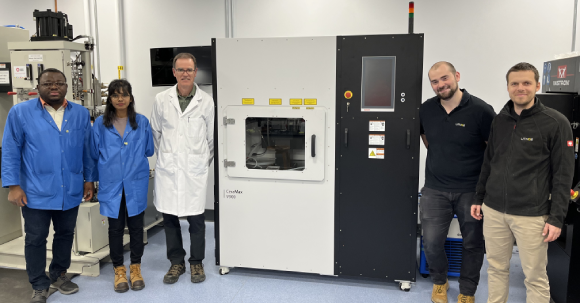
Lithoz GmbH, Vienna, Austria, has announced the installation of two of its Additive Manufacturing machines at Dalhousie University, Nova Scotia, Canada. These machines, state Lithoz, represent the forefront of ceramic material development and each offers unique capabilities for processing high-performance ceramics.
The first machine, the new Lithoz CeraFab Multi 2M30, is capable of multi-material Additive Manufacturing. Thanks to the machine’s capability to combine ceramic and metal materials in a single layer and component, Dalhousie will look at incorporating electrical circuitry into ceramic components. The advancement of piezoceramics in this way will support the work of the HI-AM programme, which works across Canada to overcome the obstacles facing the industrial adoption of metal Additive Manufacturing.

The second machine, the CeraMax Vario V900, is based on Laser-Induced Slipcasting (LIS) technology. LIS is designed specifically to manufacture large, thick-walled, and fully dense ceramic parts. It also enables the processing of dark ceramics such as silicon carbide, whose material properties are highly sought after in many demanding applications under extreme conditions. Dalhousie will employ Lithoz LIS technology to significantly enhance its research and development projects “on the dark side of ceramics” – specifically silicon nitride, titanium carbide, and silicon carbide. This is also expected to aid in advancing industrial applications.
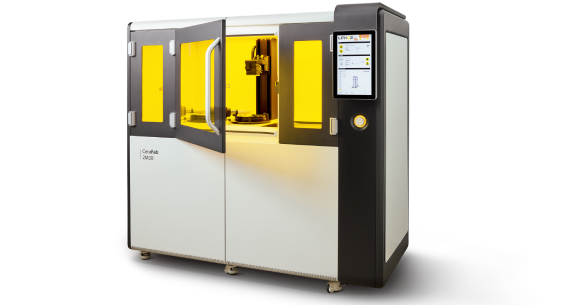
Working with carbide materials can be challenging due to the difficulties of processing through Additive Manufacturing and the limitations or defects of other processing technologies. However, Dalhousie has stated that LIS is the first Additive Manufacturing technology to achieve high resolutions and simplify the process. Its efficient manufacturing process reportedly eliminates the need for debinding and uses standard industrial slurries. This allows parts to go directly from manufacturing to sintering, speeding up and improving the precision of ceramic part production. As the only technology currently capable of producing sintered silicon carbide parts, LIS technology is a game-changer for manufacturers interested in dark ceramics.
Prof Kevin Plucknett, IW Killam Memorial Research Chair at Dalhousie University, shared, “With the installation of two new Lithoz printers at our facilities, we are seeing the beginnings of a real 3D printing hotbed at Dalhousie. By offering such state-of-the-art technology, researchers from across North America now have the chance to get in contact and work with Dalhousie using the technology that can really achieve their goals, while the active support and trainings provided by Lithoz as a partner will help us make the most of this process. We look forward to seeing how our 3D printing facilities can drive innovation throughout North America!”
These investments were support by the Canada Foundation for Innovation (CFI) Infrastructure Fund. Dalhousie’s $9 million funding is said to underscore the promising potential of Lithoz technology for both research and industry.