

Indo-MIM: Exploring the dividing line between Metal Injection Molding and Binder Jetting
There can be few Metal Injection Moulding companies which are not keeping one eye on metal Binder Jetting (BJT). This rapidly progressing Additive Manufacturing process offers the promise of tool-free, high-volume production that can leverage much of an existing MIM producer's expertise and equipment. Indo-MIM Inc., one of the world's largest MIM producers, with operations in India and the US, started its exploration of Binder Jetting in 2019. Here, the company's Jag Holla shares his insight into what the company has learnt so far, and where he sees the dividing line between MIM and BJT. [First published in PIM International Vol. 16 No. 1, March 2022 | 15 minute read | View on Issuu | Download PDF]
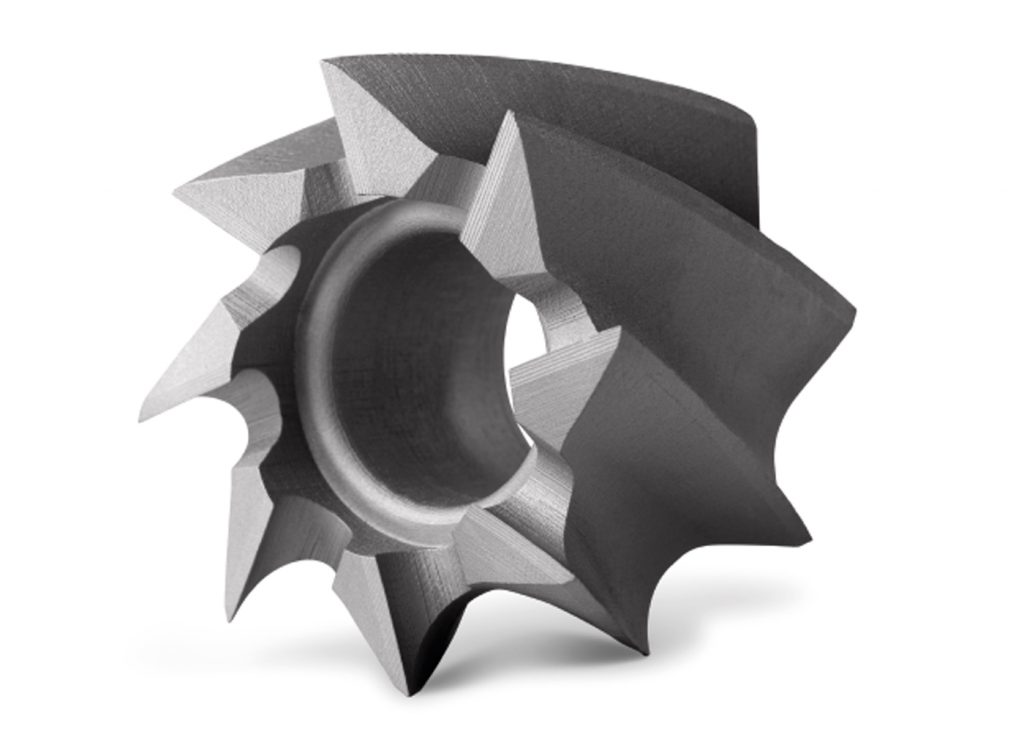
From the 19th century onwards, there has been a constant evolution of multiple industrial metalworking processes. Among these are ‘press and sinter’ Powder Metallurgy (PM) and Metal Injection Moulding. In the early days of metal powder-based manufacturing, PM gained rapid industrial adoption thanks to its net-shape capabilities, lower costs and high scalability, but it also suffered from lower final densities and material strength, as well as being unable to support an ever-increasing appetite for component designs with higher geometrical complexity.
MIM appeared in the horizon as a potential solution to the drawbacks of the PM process in the early 1990s. The process quickly gained global industrial adoption – albeit in a small number of markets – thanks to its ability to support complex three-dimensional shapes and higher densities. MIM is also a highly scalable process and amenable for automation, driving the process costs down. Today, both PM and MIM have been adopted by and carved their respective niches in the global components industry.
However, both are conventional tool-based processes. Launching a part manufacturing programme requires elaborate preparation in terms of tool development that often costs weeks – sometimes months – of lead time. Any subsequent changes to the product design mean a painful wait for corrections.
After PM and MIM had established themselves, Laser Beam Powder Bed Fusion (PBF-LB) metal Additive Manufacturing came along to help. Where feasible, component designers could now consider using metal AM solutions to validate their product designs. This provided some relief for the product engineers, but issues were still present; until metal Binder Jetting (BJT) appeared on the horizon, metal Additive Manufacturing was regarded by many as slow and expensive, even for prototype sample development. Binder Jetting isolated the slow sintering process at the build stage, thus enabling significantly higher build speed. Binder Jetting can achieve thirty-to-seventy times higher build speeds compared to PBF-LB.

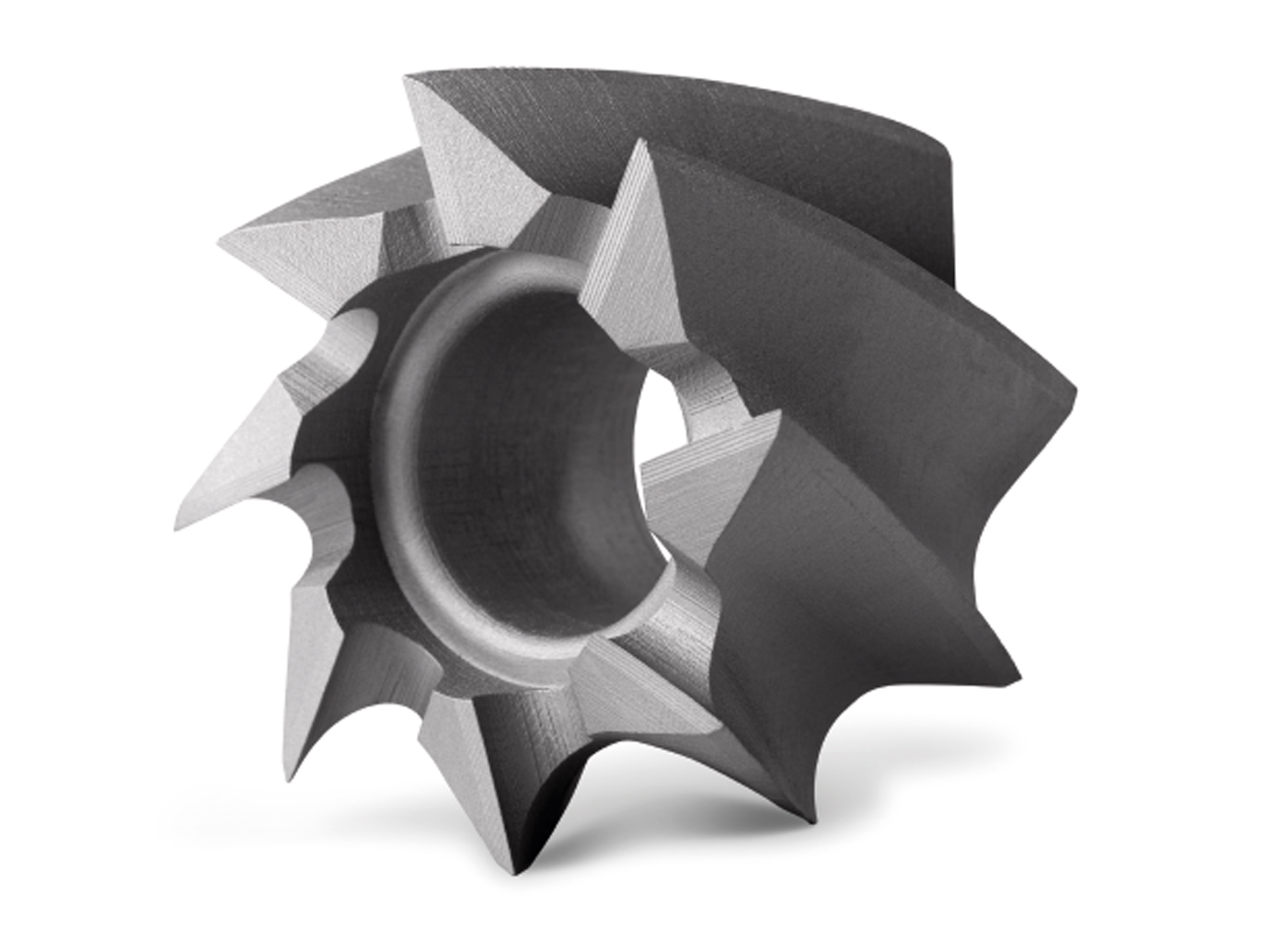
Indo-MIM, a global leader in the Metal Injection Moulding technology, quickly turned its attention to adopting Binder Jetting, beginning in 2019. Currently, the company works predominantly with Desktop Metal and ExOne platforms. The Binder Jetting process utilises MIM grade powders, MIM sintering furnaces and parts will go through similar finishing processes to conventional MIM components.
So, will Binder Jetting eventually replace the MIM process, or will it continue to exist side by side with MIM and PM? It is hard to come to a conclusion at the moment, as Binder Jetting is still at its formative stage. But we predict Binder Jetting will only augment the MIM industry for a foreseeable number of years and help product design engineers achieve greater degrees of design freedom. This article discusses the dividing line between the MIM and BJT processes, based on Indo-MIM’s experience with both.
Size matters
The Metal Injection Moulding process has always been competitive on smaller components – typically, below 50 g, or smaller than a golf ball – for reasons both technical and economic. MIM powders are more expensive than conventional materials, including PM powders, wrought steels, etc. Sintering costs are also a significant component of MIM total part costs. Larger parts occupy more space in the sintering furnaces, thus carrying much higher sintering costs. These factors automatically shrink the economic viability of the process for larger components.
As the component sizes get bigger, moulding and sintering challenges also grow in the MIM process. Bigger components have longer moulding cycles and cannot accommodate a larger number of cavities. Hence, moulding productivity for bigger components is significantly lower than for smaller components.
Bigger components tend to have larger wall thickness. The MIM process can deal with wall thickness up to 5 mm comfortably, but, beyond this, the process struggles with sink and void related issues. Tooling costs for large, complex components also rise dramatically. Finally, with MIM, the overall process yield always drops for larger components compared to smaller components.
The Binder Jetting process experiences similar economic equations, as the cost of powder and the sintering costs are identical to that of MIM. In some cases, powders for Binder Jetting could be marginally higher because of powder conditioning required as suggested by some of the machine manufacturers.
But Binder Jetting scores high on tackling larger components. Components as large of 150 g can be comfortably built and sintered. As Binder Jetting eliminates the moulding process, wall thickness as high as 10–15 mm can be built and sintered without sink or void related issues. The BJT process also utilises a significantly smaller percentage of binder during a part’s build, meaning the debinding process prior to sintering is eliminated.
Once the build boxes for Binder Jetting machines reach an optimum size, and the bi-directional binder deposition becomes a reality, BJT’s productivity will match, or even exceed, conventional moulding. However, the issue that needs to be tackled is the higher cost (by up to three times) of Binder Jetting machines compared to conventional MIM-grade injection moulding machines. Indo-MIM believes that, on a long-term basis, the machine costs will be comparable to the moulding equipment costs.
It is also possible that build speed and build box sizes will significantly scale up to the required level for the Binder Jetting to compete with conventional metal processing technologies.
Material options
Given that the MIM process has been used industrially for over three decades, the material options available are huge. The material options commercially available for Binder Jetting are currently comparatively limited. Indo-MIM offers 316L and 17-4-PH stainless steels, M2 tool steel M2 and 4140 low-alloy steel grades for BJT. The available material options will, of course, expand in the coming years, as both machine manufacturers such as Desktop Metal and early adopters such as Indo-MIM are aggressively working on developing additional materials.
The Binder Jetting materials currently available meet or exceed the corresponding MPIF Standard 35 ‘Materials Standards for PM Structural Parts’ for material properties. So, once developed, Binder Jetting material options available can be easily tested against this standard. Just like MIM, BJT components can also be hot isostatically pressed (HIPed) for enhanced density and material properties.

Sintered BJT samples are, from a materials perspective, identical to sintered MIM samples, meaning parts can be subjected to post-processing procedures that are common in the MIM industry, such as restriking/coining, heat treatment, machining, welding, plating, etc.
Depowdering
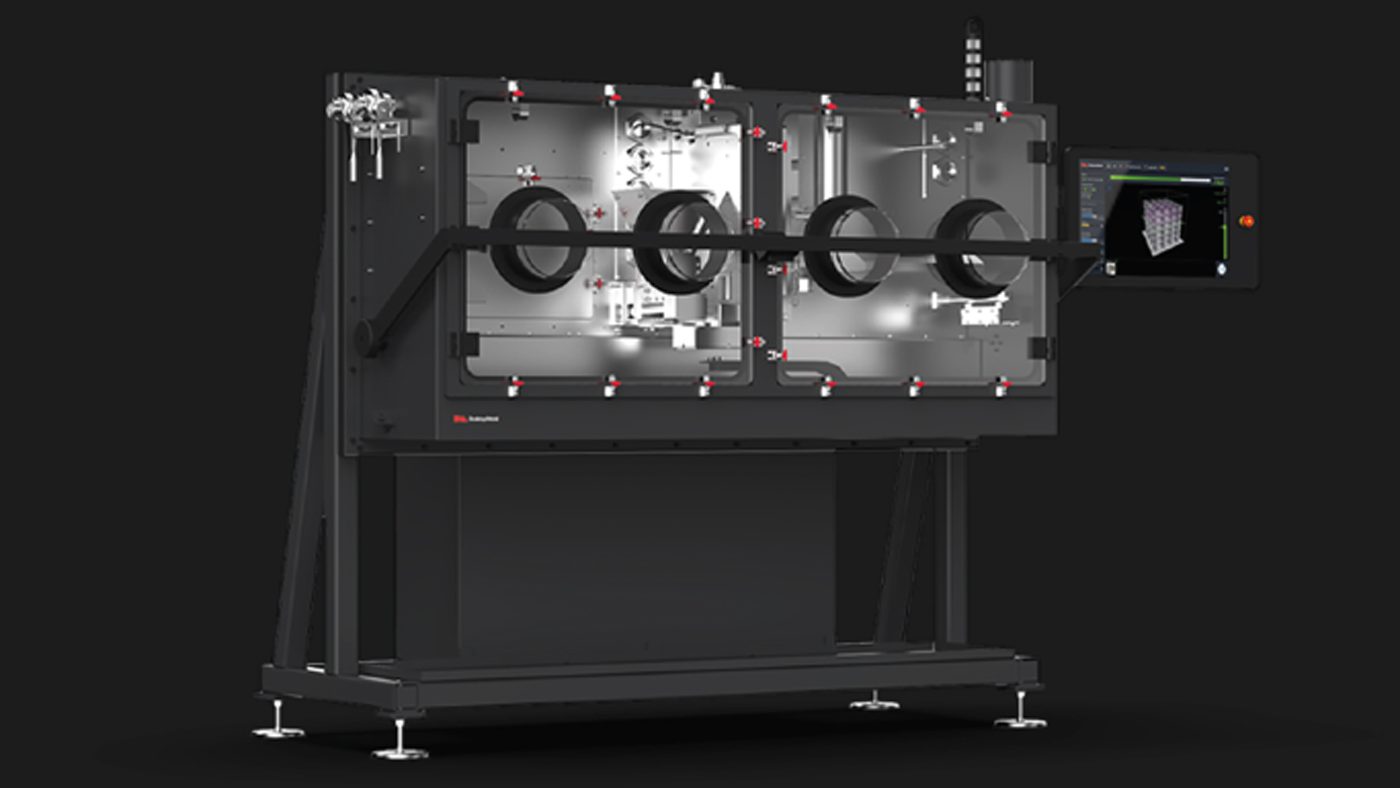
Separating the built components from the rest of the powder in the build box after AM is completed is the process called de-powdering. However, the process is not as simple as its name sounds. The process currently is predominantly manual and time consuming. This will impact the overall cost, especially in the high labour cost regions. We believe that this stage of the process can be eventually automated to the extent that the manual labour content is almost negligible. We are already seeing several third-party vendors developing automated depowdering equipment.
Sintering: Binder Jetting compared to MIM
Although BJT and MIM process routes mostly use powders with the same characteristics, there are some differences at the sintering stage. In some instances, BJT machine manufacturers ‘condition’ the powder by adding coarser powder to the fraction to improve flowability during spreading. Coarser powder also helps easier de-powdering. Although this enhances the ease of the part build stage significantly, shape retention during sintering suffers. Coarser particles on the surface of the green, as-built part increase the friction between the part surface and the supporting ceramic plate during sintering, resulting in more frictional force. The higher the frictional force, the greater the distortion of the component during sintering. Coarser powder particles also, of course, negatively influence the surface finish on sintered parts.
Because the Binder Jetting process uses significantly less binder during the creation of the green parts, special attention may be required to support the green part while sintering. As the MIM process uses powder with particle size less than 25 µm, and greater volumes of binder, the above issues are significantly less relevant.
The current dimensional capability (post sintering) for BJT is within ± 2%, which is significantly worse than the well-established MIM process, where it is ± 0.5%. Binder Jetting needs to get to within ± 1% in the near term to be accepted as a viable production process. Efforts by the machine manufacturers and the early adopters suggest that this is possible within the next 12 to 24 months.

Surface finish
Surface finish on metal AM parts has been a concern compared to the surface finish of parts made by tool-based metal processing techniques, and Binder Jetting is no exception. Post sintering, surface finish on a BJT part is 4~6 Ra. This is significantly poorer than a MIM part’s sintered surface finish of 1.5 Ra max. As-sintered MIM surface finishes can be quickly improved to 0.80 Ra through a simple glass bead blasting process, but reaching a 1 Ra surface finish on a sintered BJT component takes significant effort and requires multiple surface finishing processes.
Switching to a build powder with a finer particle size can help improve surface finish significantly; but, as stated, lower particle size reduces flowability, affecting part quality and machine productivity. Some AM machine manufactures have adopted a nano particle jetting process where powder particles of less than 1 µm are used. While this process achieves MIM like surface finish or better, the process itself is highly cost prohibitive given the input powder cost.
Binder Jetting machine manufacturers are acutely aware of the technology’s surface finish issue and are working on solutions for the future. In the end, Indo-MIM believes that the user community and BJT machine manufacturers will arrive at a compromised economical solution the industry can live with. One such compromise could be that not every surface on a component needs to have a surface finish less than 2 Ra, allowing the freedom to explore hybrid options.

Design freedom coupled with speed of manufacture
This is where the advantages of Binder Jetting solutions far exceed all of the conventional metal processing routes, including MIM and PBF-LB. With BJT, virtually any geometry imaginable by the component designer can be accommodated. This significantly enhances the ability of the design engineers to arrive at the most optimised design without the shackles of current manufacturing process limitations, enabling optimised sub-assemblies and improved end products.
However, in the engineering world, nothing is infinite. Binder Jetting does, of course, have some design limitations in the form of wall thickness. Indo-MIM has found that wall thicknesses of less than 0.80 mm are difficult to build and sinter, especially if the feature is long. The same is true with any feature smaller than 0.50 mm, below which size the resolution suffers. On the other hand, the MIM process can deal with feature sizes as small as 0.20 mm, including wall thickness as small as 0.10 mm.

Say goodbye to the long wait before testing your design
Can we finally break away from the confinement of a long wait to manufacture and optimise our tooling? Binder Jetting does not depend on tooling to produce a part. As a result, Indo-MIM can deliver first samples of designs in less than ten days; eventually, this lead time will be within two days, as we enhance our infrastructure with more BJT machines and dedicated furnaces. Any design change is just a couple of clicks away. This means that the cost of optimising product designs is significantly reduced through BJT.
For those with experience of MIM sintering, pains related to optimising ceramic setters are very real. Binder Jetting allows you to build ‘live’ setters, thus reducing the lead time for optimised staging for sintering, and significantly reducing sintering distortion. Live setters may not be an economically viable solution in production for most components, but for prototypes or first samples, this route presents a huge advantage over the MIM process.

The dividing line between MIM and BJT
The dividing line between these two closely related processes will shift in the near to mid-term as the BJT matures and is adopted on an industrial scale. Current dividing lines are highlighted below:
For parts that just can’t be moulded
For part geometries beyond the capability of MIM tooling, Binder Jetting is the only available option. In this area, the technology has no competition. However, the number of such programmes is extremely low at the moment. Unless the engineering community adopts a more AM-focused mindset, free from constraints of current tool-based metal forming routes, such examples will continue to be low.
This is where customer education on the potentials of unlocking BJT’s design freedom plays a huge role in advancing the process. To a degree, the Additive Manufacturing community has been promoting this mindset for PBF-LB for some time. But penetration into the high-volume production arena is very limited as available metal AM processes before the arrival of Binder Jetting failed to excite the engineering community due to their lack of speed.
For large parts that can be moulded
Where part geometry is mouldable, part size larger than 50 g seems to favour Binder Jetting in the mid- to long-term. However, limitations on wall thickness and feature size in BJT need to be factored in. Fig. 10 identifies the approximate crossover point between MIM and BJT from the cost of production point of view.
Low-volume parts
Very low to low volumes (10–5,000 parts/year) will fit the Binder Jetting process well, given that the higher cost of the process is offset by no upfront tooling cost. This is truer for US and European markets where the tooling costs are traditionally high. The very low volume category includes pre-production samples as well.

The impact of Binder Jetting on ‘machine shops’
From Indo-MIM’s perspective, small machine shops have reasons to be apprehensive about the rise of the Binder Jetting process, as these firms predominantly cater to the demand for very low to low volumes of complex machined metal components. However, it may take more than a decade before Binder Jetting can achieve the tolerances achieved by the machine shops. So, for now at least, they can relax.
The most sensible among those machine shops are adopting Binder Jetting to reduce the overall capital equipment cost in their business. The Shop System, a BJT machine produced by Desktop Metal, is designed precisely to cater to this market. Machine shops using the Shop System can now additively manufacture 90+% of the features of a component, then focus on finishing the dimensions that need closer tolerances via precision machining. Such a hybrid approach would help these companies reduce capital costs and headcount on the shop floor.

Conclusion
As the technology underpinning Binder Jetting progresses, the dividing line will shift and comparison between the two processes may no longer favour MIM. Build speed, cost, availability of more common materials, dimensional process control during sintering and process automation will be just some of the contributing factors.
Just look at the growth of mechanical ‘2D’ printing since the 15th century. We believe similar advancement will occur in metal AM in the next few decades. With the relevant ingredients for the progress of any technology being far more readily available now than ever in history, and with the help of ever-expanding global collaboration on the technology development front, the lead time to bring any technology to maturity is shortening significantly.
Binder Jetting will never fully replace any of the existing metalworking processes, but it will augment the markets currently occupied by MIM and help expand them. This includes adding more complex designs that can leverage the unique capabilities of the process. This is the reason, of course, why so many MIM companies are interested in adopting Binder Jetting as a new capability. Pioneering companies like Desktop Metal, and early adopters like Indo-MIM and many others globally can, and will, contribute to achieving the above goals.
Author
Jag Holla
Sr VP Marketing
Indo-MIM Inc
115 Floral Vale Blvd.
Yardley, PA 19067
USA
[email protected]
www.indo-mim.com