

In MIM we trust: Integrating optical fingerprinting in metal injection molded products
Metal Injection Moulding is a technology that, in addition to its industrial application, is widely used for the manufacture of luxury goods, from watch cases to the decorative logos for exclusive handbags. For many such applications, the value of technologies for counterfeit prevention, quality control or identification for recycling purposes is very high. Here, Erik Dietrich, Applied Research Engineer at Demcon Metal Injection Moulding, Enschede, the Netherlands, reports on an innovative solution developed with Germany's Tailorlux GmbH that enables the integration of unique optical fingerprint technology into MIM feedstocks. [First published in PIM International Vol. 16 No. 1, March 2022 | 15 minute read | View on Issuu | Download PDF]
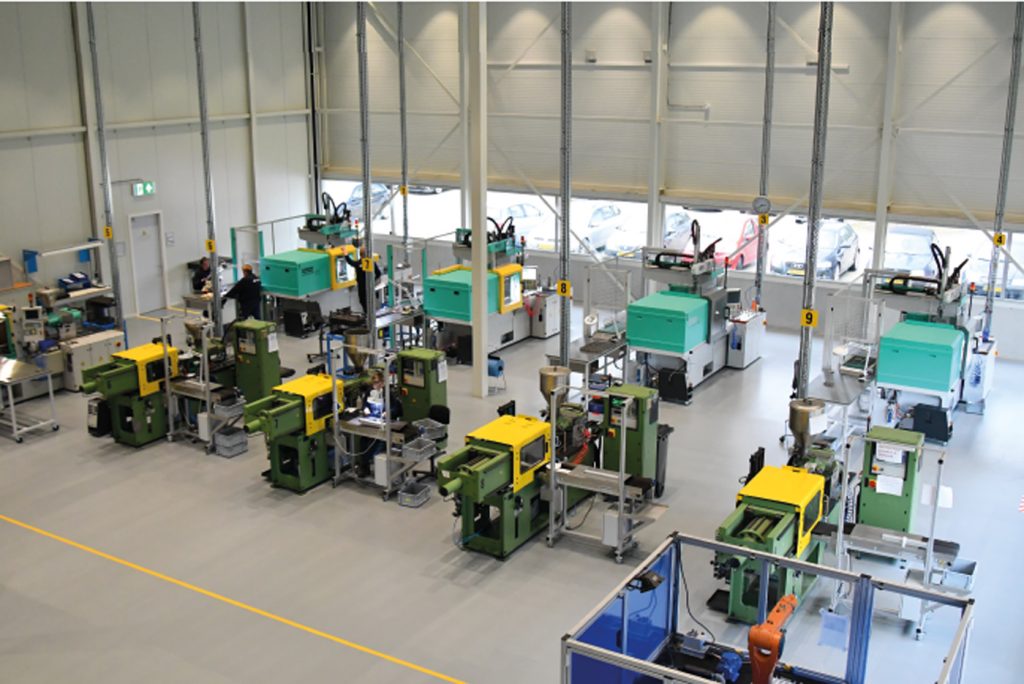
A new manufacturing process for marked metal products has been introduced in a collaboration between Germany’s Tailorlux GmbH, a leading solution provider for optical fingerprinting of products, and Demcon Metal Injection Moulding, the Netherlands. The process involves embedding Tailorlux’s fluorescent particles in the MIM feedstock. This enables an efficient, one-step process and ensures that the fluorescent particles will remain detectable regardless of wear to the MIM product.
The optical fingerprinting of products is on the rise in a wide range of markets, from luxury goods to industrial components to textiles, for counterfeit prevention, quality control or identification for recycling purposes. Tailorlux provides authentication and traceability solutions with covert markings that are ‘linked’ to the product. Through its interdisciplinary expertise in light-emitting materials and detection, Tailorlux has brought transparency and traceability to the value chains of various industries. Products are marked with a customisable and invisible optical fingerprint, based on fluorescent ceramic particles, which allows for the detection, verification and traceability of a product.
Feedstock marker mixing
In many cases, Tailorlux’s optical fingerprints are applied onto a surface via a coating or spray. This requires an additional post-production step and, in some cases, there is the risk that the marking could be removed, for example by sanding or chemical cleaning. Now, Demcon MIM has combined its proprietary feedstock formulation with a low concentration of Tailorlux’s fluorescent particles. The resulting feedstock can be moulded, debound and sintered using standard Metal Injection Moulding procedures.
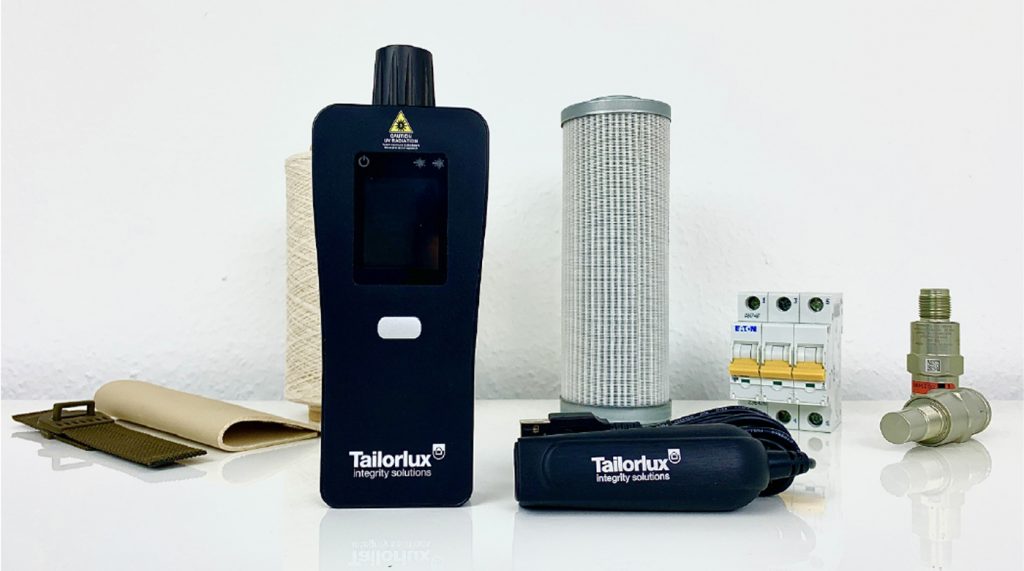
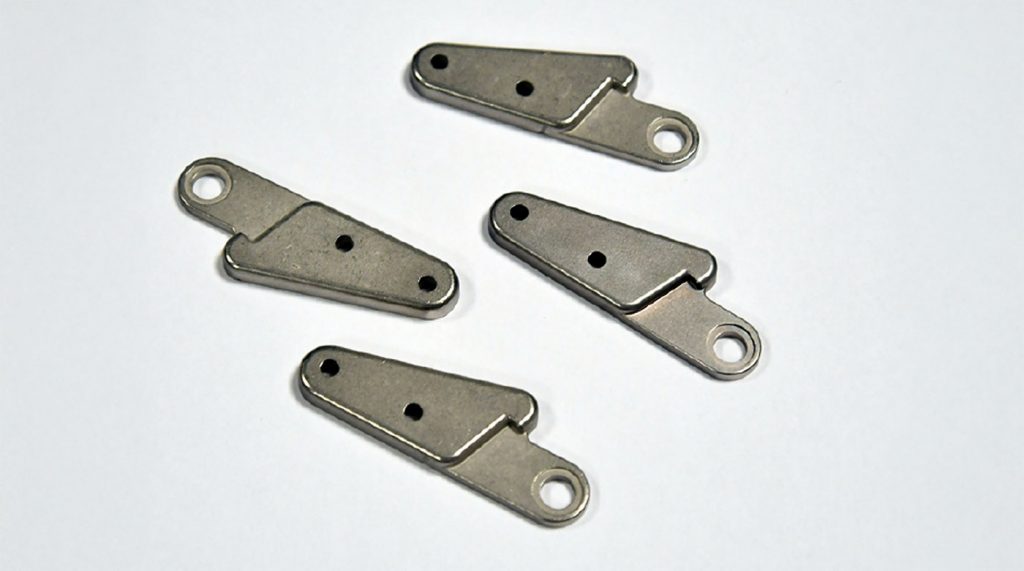
In a first trial, when examined with the scanner, the finished MIM part emitted the unique signal of the used markers. This demonstrated that the fluorescent marker, or tracer particles, can survive the moulding process, including high-temperature sintering. Due to their small size and even distribution throughout the product, the particles do not affect product properties such as tensile strength, hardness, or corrosion resistance.
Overcoming the technical challenges
While the above sounds straightforward, some process optimisation was, of course, required. The addition of a foreign substance to an existing, proven feedstock formulation is always a critical intervention, as it can, at the very least, alter the flow characteristics of the feedstock. Should that happen, the properties of the sintered product might be affected. Fortunately, due to the high sensitivity of the Tailorlux scanners and the strong fluorescent signal of the marker particles, only a small amount of marker material was needed to obtain a measurable response from the feedstock and the sintered product.
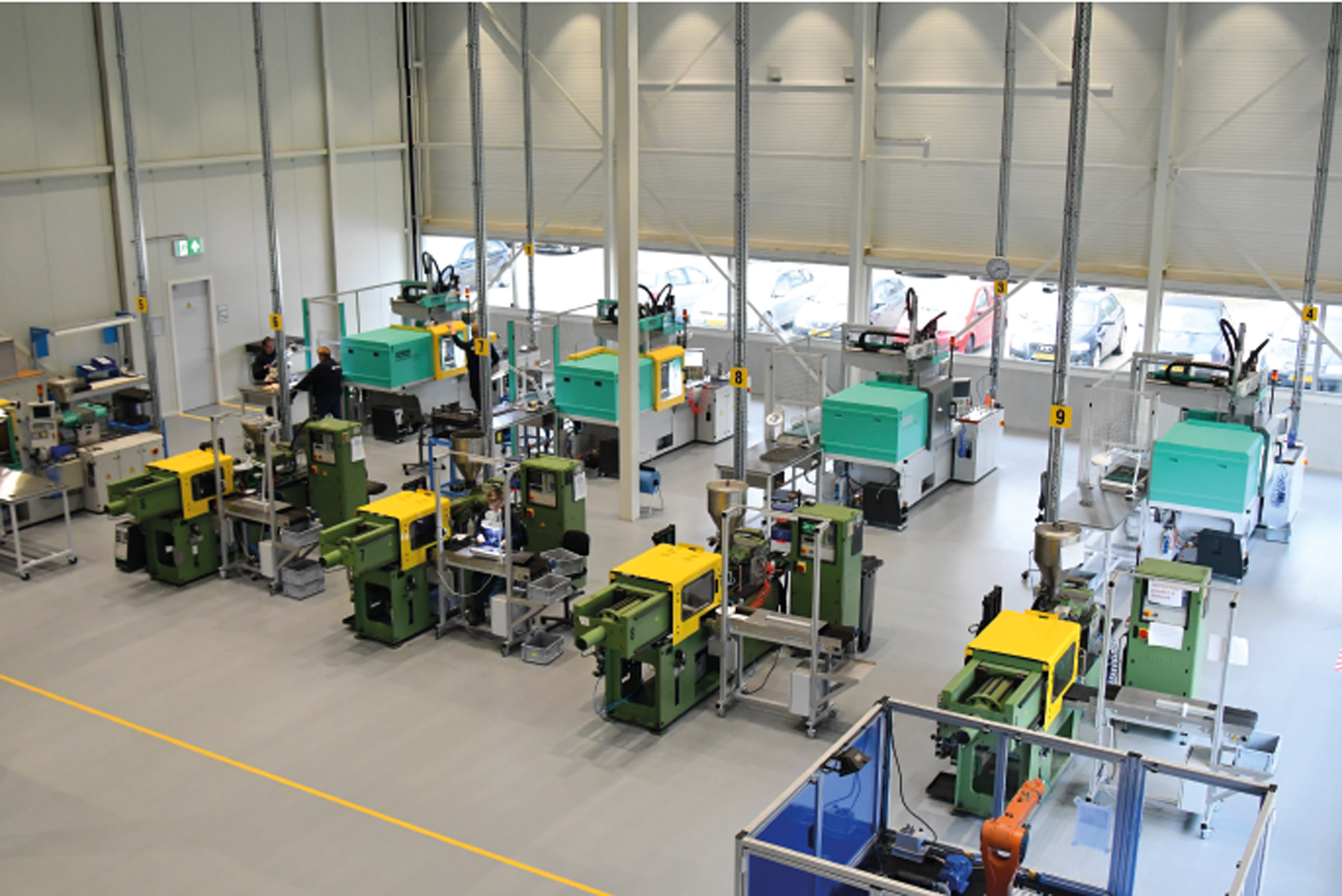
As Demcon MIM has extensive experience in producing its own feedstock from metal powder and a polymeric binder system, it decided to set up a trial and blend the marker particles with standard 316L stainless steel powder. The blended powder, in which less than 1% of the metal powder was replaced by fluorescent marker particles, was then mixed with the polymeric binder to yield the marked feedstock.

This two-step mixing process ensured a homogeneous distribution of the marker particles first throughout the metal powder, and then throughout the feedstock. Since the marker particles have a comparable micron-range size and the same rounded shape as the MIM powder used by Demcon MIM, only a few modifications of the feedstock formulation were needed to avoid issues such as particle aggregation and viscosity reduction.
Initial moulding attempts revealed some minor issues with the filling of the mould cavities, including typical moulding defects such as a poor surface finish. After optimisation of the mixing process and binder ingredients, viscosities identical to the original feedstock were obtained and moulding behaviour of the marked feedstock was improved to the point that it appeared to be identical to that of the standard feedstock. It took several iterations, however, to optimise the mixing procedure and resulting feedstock properties to obtain a feedstock that is fully interchangeable with the standard feedstock formulation.
Demcon MIM uses a two-step debinding process, followed by a sintering step under hydrogen. The first debinding step uses water as a solvent, which did not raise any issues with the fluorescent particles. However, the second debinding step, a thermal process under an oxidising atmosphere, followed by high-temperature sintering under a reducing atmosphere, placed high demands on the chemical and thermal stability of the ceramic particles. As stated above, however, these particles survived all process steps and maintained their fluorescent behaviour. Post-processing, which here involved some light polishing, did not affect the marker detectability either.
To obtain definitive proof, a series of sample products was moulded using either a standard, non-marked 316L feedstock or the new fluorescent 316L feedstock. The moulding parameters were compared, as were final properties such as density, dimensions and hardness. No differences were found.

Tailorlux: expertise in integrity solutions
In 2009, Tailorlux was founded as a spin-off from research on luminescent materials at Münster University of Applied Sciences, Germany. Its in-depth knowledge of inorganic chemistry, materials science and optics formed the basis of the development of intelligent product protection solutions using tailor-made UV light emissions. In 2016, an independent legal opinion confirmed that Tailorlux technology can be used to identify materials and prove authenticity in legal proceedings under German law. More complex and larger projects led to a strategic reorientation, from a provider of ‘smart materials’ to a specialist for ‘integrity solutions’.
Tailorlux’s unique anti-counterfeiting technology uses ceramic particles as inorganic markers that are integrated invisibly into products such as high-value luxury goods or industrial products, their packaging, other trade goods, textiles and coatings. These markers can be detected through the phenomenon of fluorescence by a dedicated Tailorlux spectrometer, integrated in a scanner in either a handheld or an inline version, using a special key-lock principle for maximum safety. Approximately seventy source materials can be used and combined to create individual fingerprints for products. The materials are toxicologically harmless, do not the affect the marked material, and are heat resistant up to 1,700°C.
Currently, Tailorlux employs about eighteen staff, has 600 m2 of lab facilities, and offers a range of over 1,200 marked product lines for customers worldwide.
www.tailorlux.com/en/solutions-services/
The advantages and applications of this technology
Embedding the fluorescent particles in the feedstock has distinct advantages over other methods of marking, as it narrows the actual manufacturing and marking procedure to a one-step process, because it does not require the subsequent application of a fluorescent coating or paint. Also, as the marker particles are present throughout the entire product, they will remain detectable regardless of any product wear, whether this has a natural cause or has been induced intentionally. Moreover, the MIM process further adds to the copy-proof nature of the fingerprinted products, as the unique MIM designs are hard to recreate and reproduce. This further increases the reliability and trustworthiness of the fingerprinting solution.
Naturally, Tailorlux’s fingerprinting technology can be applied to products that are already made by Metal Injection Moulding. Examples include the casings of luxury watches, buckles of expensive bags, and bracelet links, as well as critical industrial parts such as bearings, cogwheels, etc. In addition, the added value of counterfeit prevention, traceability and/or quality control may encourage companies to explore new opportunities for manufacturing products by MIM or sinter-based Additive Manufacturing (AM) processes such as those that use MIM feedstock in pellet or filament form. As Demcon MIM’s feedstock can be used for AM as well, this is a viable option. The first proof-of-principle marked products have already been additively manufactured.
Demcon Metal Injection Moulding
A new manufacturing process for marked metal products has been introduced in a collaboration between Germany’s Tailorlux GmbH, a leading solution provider for optical fingerprinting of products, and Demcon Metal Injection Moulding, the Netherlands. The process involves embedding Tailorlux’s fluorescent particles in the MIM feedstock. This enables an efficient, one-step process and ensures that the fluorescent particles will remain detectable regardless of wear to the MIM product.
The optical fingerprinting of products is on the rise in a wide range of markets, from luxury goods to industrial components to textiles, for counterfeit prevention, quality control or identification for recycling purposes. Tailorlux provides authentication and traceability solutions with covert markings that are ‘linked’ to the product. Through its interdisciplinary expertise in light-emitting materials and detection, Tailorlux has brought transparency.
Conclusion
The application of optical fingerprinting is new to the worlds of Metal Injection Moulding and Additive Manufacturing. This was confirmed at last year’s Formnext, where many visitors were surprised by – and showed a keen interest in – the potential of using marker-enhanced feedstock formulations.
From an economic perspective, adding the markers to MIM feedstock only leads to a minor cost increase for MIM products, which will certainly not be significant in cases where counterfeiting poses major challenges or where a higher degree of security is required.
Author
Dr Erik Dietrich
Applied research engineer
Demcon metal injection moulding
Institutenweg 50
7521 PH Enschede
The Netherlands