

FreeFORM Technologies: Leveraging MIM expertise to drive application development in metal Binder Jetting
The synergies between Metal Injection Molding and metal Binder Jetting are well known. Leveraging these synergies with the intention of accelerating binder jet application development is FreeFORM Technologies, whose team includes several experienced former MIM industry professionals. Here, FreeFORM’s Nate Higgins, Chris Aiello, Eric Wonderling and Meghan Kephart explore what has held Binder Jetting back until now, and how they intend to overcome these barriers. [First published in PIM International Vol. 15 No. 2, June 2021 | 10 minute read | View on Issuu | Download PDF]
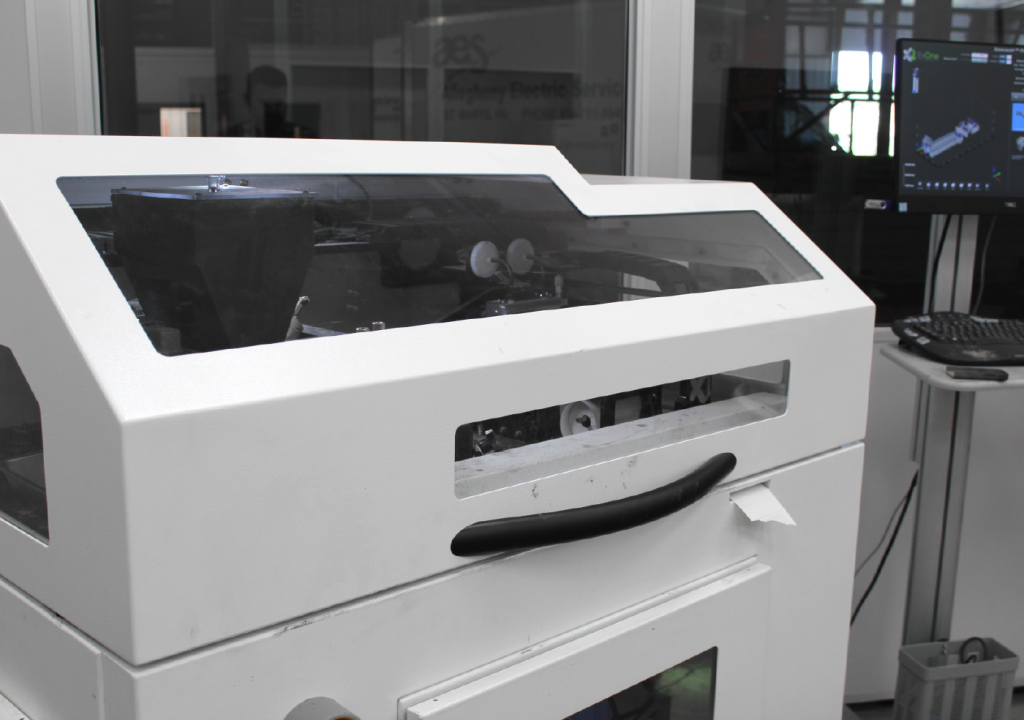
Binder Jetting (BJT) is not a new technology – this is no secret to anyone remotely familiar with Additive Manufacturing. Developed in 1993 at MIT, the technology has had time to mature, but still has not been widely adopted for mass production. Why is that? Great equipment and MIM-grade powder are readily available, and engineers and procurement professionals are tired of paying for tooling. The lack of adoption should be an easy problem to solve, but, for many years, no answer was forthcoming.
In early 2020, four individuals with backgrounds in Metal Injection Moulding, Additive Manufacturing, engineering software, and industrial automation saw an opportunity to solve this equation – thus, FreeFORM Technologies was born. Nate Higgins, president of FreeFORM, was previously a MIM process engineer, progressing to plant manager at a leading US MIM operation. Chris Aiello, VP of Business Development, has worked in technical sales and business development at two of North America’s leading MIM producers. Andy Reasinger, VP of Engineering, is an expert in automated manufacturing with expertise in custom automated solutions, whilst the fourth co-founder, Eric Wonderling, VP of Quality & Applications brings expertise in quality and engineering services, with a focus on development tools for mechanical and electrical design, simulation, and manufacturing.
From the start, it was clear to us that there was an overwhelming demand for a dedicated service bureau to offer metal Binder Jetting technology. Taking a decade’s worth of experience across several domains and intertwining them was the perfect recipe to deliver the answer. The end goal of FreeFORM is to raise the tide of metal Binder Jetting and show a successful path to the mass adoption of this technology across different industries. In order to accomplish this, the company has set out to validate new materials and develop data around them that conforms to standards that industries are used to, such as MPIF Standard 35, and install capacity from some of the leading equipment manufacturers to fulfil customer orders from one to many thousands of parts per month.
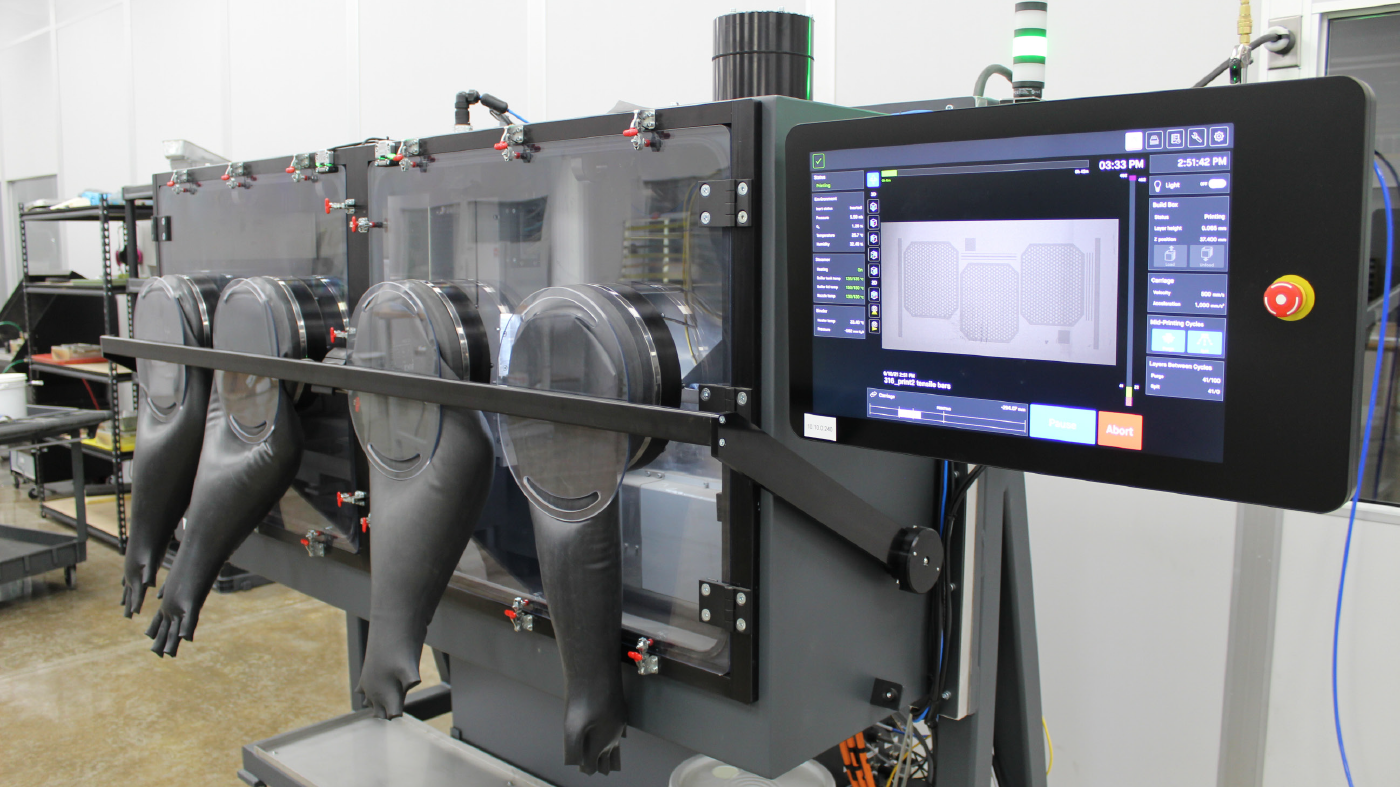
FreeFORM was started as a green field Additive Manufacturing operation focused on metal BJT. With an engineering focus to offer the value-added service of contract engineering for part design – known in relation to AM as Design for Additive Manufacturing (DfAM), plus prototyping services, and various other engineering focused projects, we partner with our customers from each of their product’s inceptions. As technology continues to advance, with component and assembly designs following suit, there is an increasing need for a technology that can support this development and provided components with both improved dimensional capabilities and enhanced material properties.
We have run into a lot of customers and prospects throughout our careers, in Metal Injection Moulding in particular, that had a problem that needed to be solved, but there was always some sort of restraint – tooling costs, design limitations, tolerance stack-ups from multiple pieces being assembled. Something was always holding them back. A lot of that is gone with metal binder jet. There’s now a solution where you can make the part you desire for your application.
We also recognise a growing demand for parts producers to become an extension of companies’ internal engineering structures, which is why we are structured to offer engineering and Additive Manufacturing services. BJT’s capabilities apply broadly across many applications where customers may not want to invest in tooling, due to designs not being frozen, limited product lifecycles, limited annual volumes, or limited capital budgets.
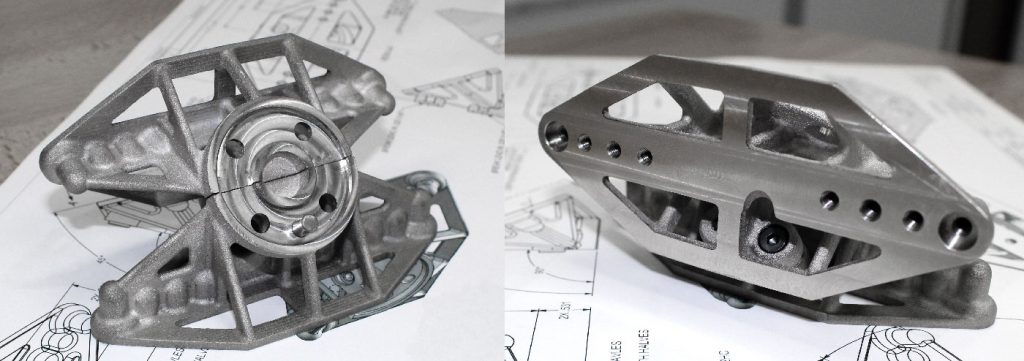
The best applications for metal binder jet do not deviate far from the applications that MIM or investment casting users are more familiar with purchasing. As products become more highly engineered, compact, and energy efficient, however, the components that make up these products are necessarily becoming more complex. This increased complexity also comes with an expectation of improved performance, while maintaining current pricing.
It is these market demands that make it possible for metal binder jet to become a technology that can compete with MIM, casting and compaction in terms of throughput and cost, while, at the same time, eliminating the need to invest in tooling. There is a very real opportunity for metal BJT to disrupt and compete with these other technologies soon, but, at present, they all complement each other very well.
In our eyes, metal Binder Jetting is an ideal technology, as it enhances design freedom even further over traditional metal forming technologies, continues to offer a cost-effective means of manufacturing complex geometries, and leverages a very similar process flow to MIM, which allows MIM industry expertise such as that at FreeFORM to leverage knowledge in high-temperature sintering and part design/assembly consolidation for clear advantages in terms of speed to market and final component success.
Filling the Binder Jetting supply chain gap
Supply chain disruptions are not a new phenomenon. Material scarcity, trade disputes, global pandemics, and ships lodged in the Suez Canal are all recent disruptions to the supply chain that anyone reading this article will be familiar with. Dual sourcing and redundant suppliers have mitigated some of these risks, but not all. A simple search for powder metal, Metal Injection Moulding, investment casting or CNC suppliers will yield thousands of results – but does another supplier of the same technology eliminate your total risk?
A dual source most definitely mitigates risk, but it doubles upfront costs for tooling and start-up. The ability to find another supplier of the same technology surely provides some comfort, but, then, what are restart and transfer costs? What about the risk of downtime during transfer? These are all questions the team at FreeFORM considered carefully before launching the company.
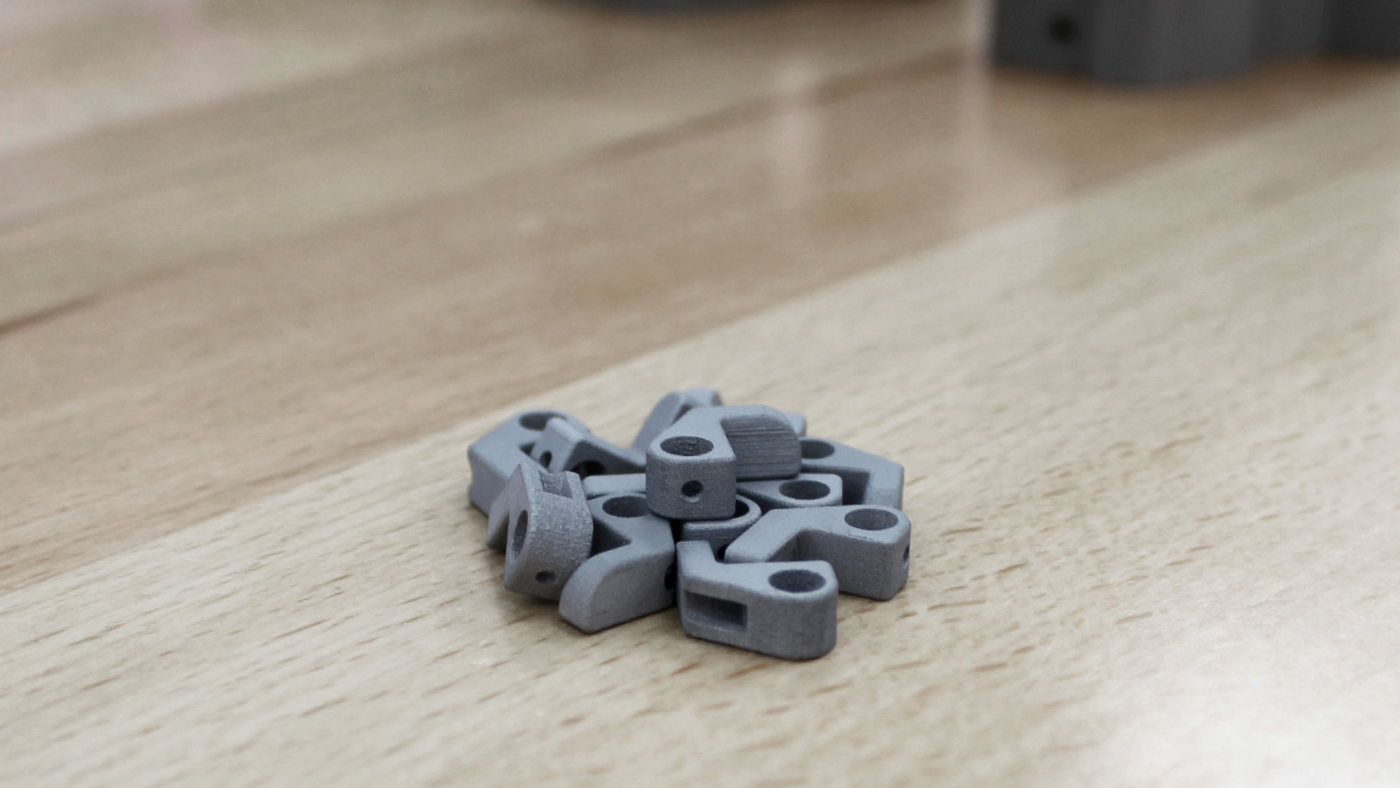
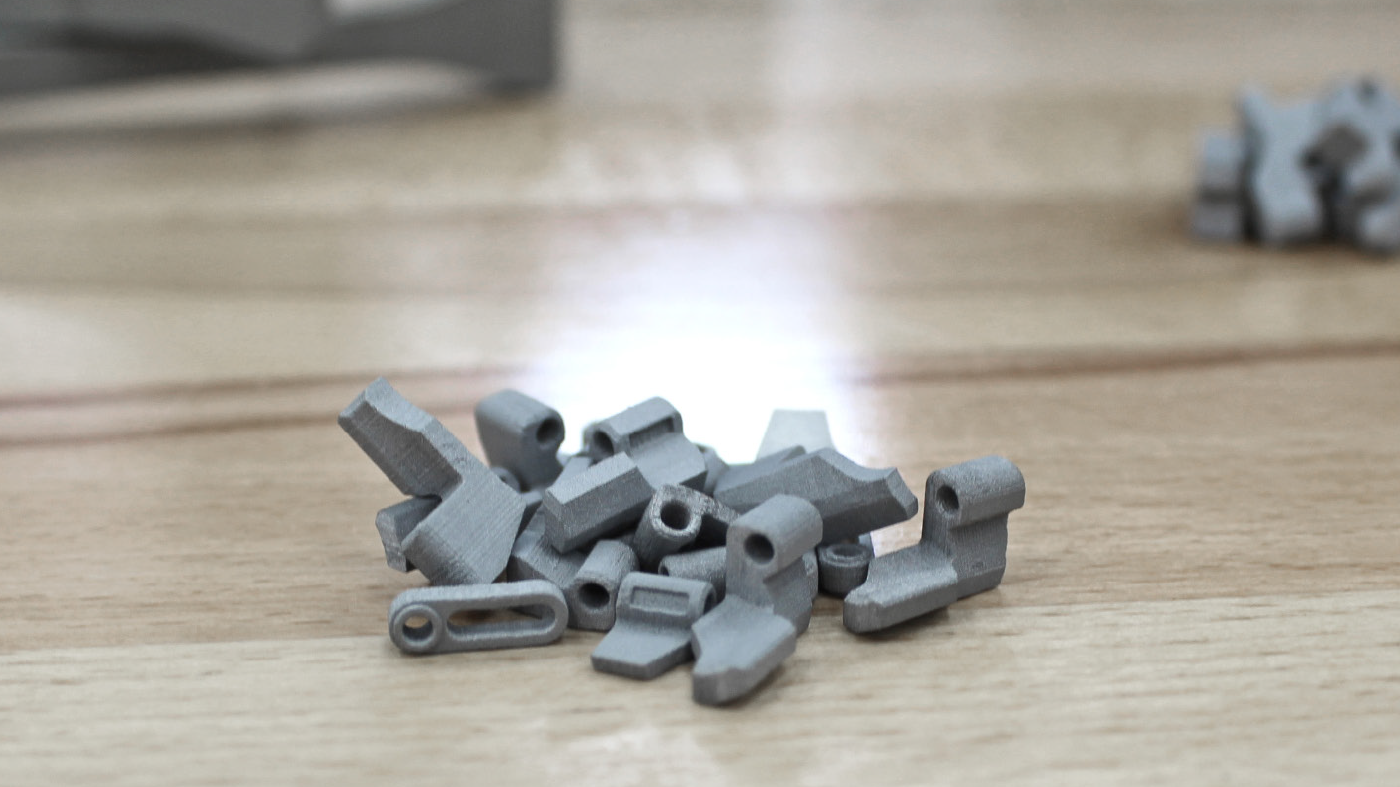
According to the AMPOWER Report database, there are only twenty-five vendors globally that offer metal binder jet part manufacturing services, and some of the reported vendors are equipment resellers and powder suppliers. Of those twenty-five vendors, fifteen are in the USA.
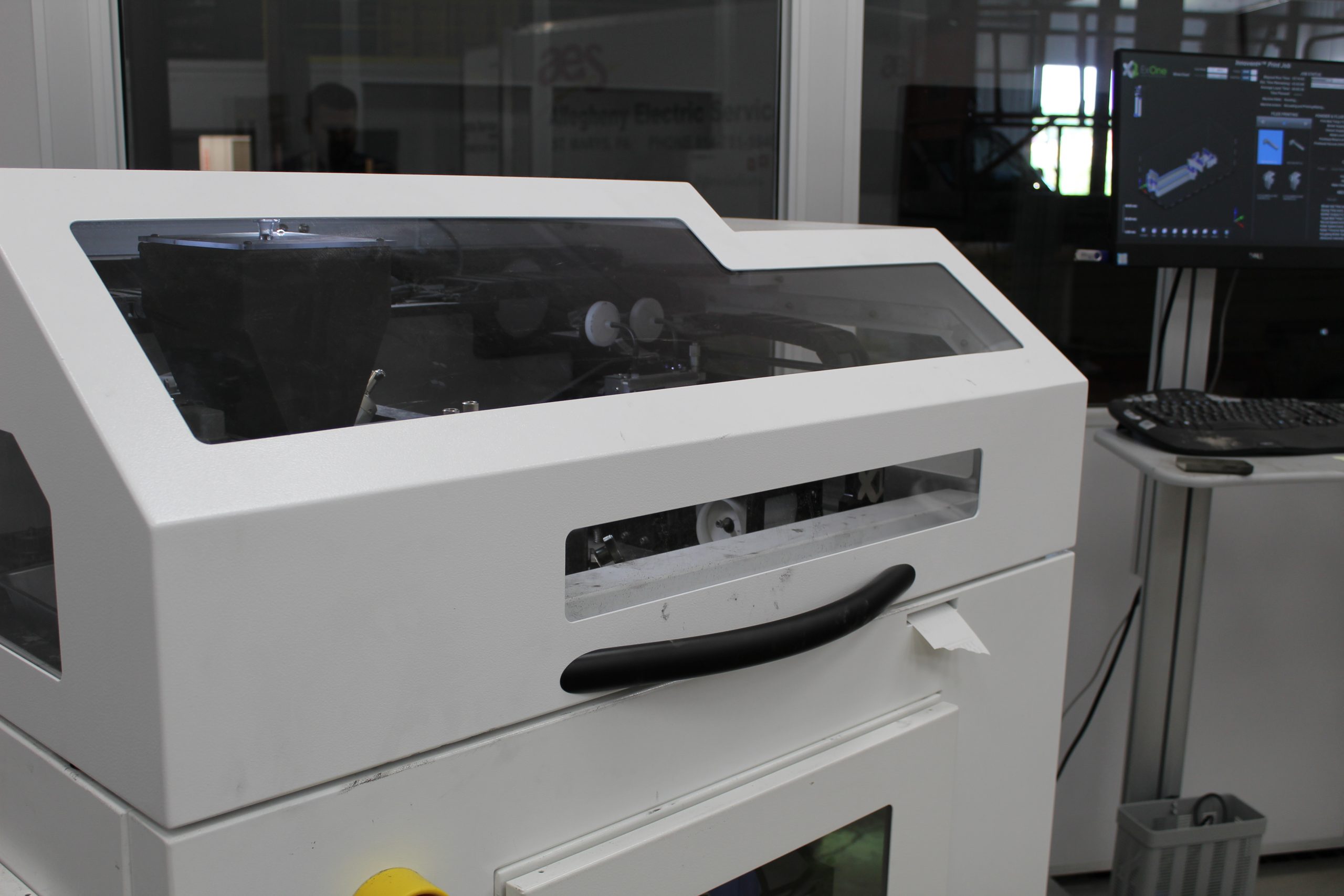
Also, based on our research, as of 2020, the global installation of all metal binder jet machines is around 275 systems. Roughly 30% of those machines are installed at labs and universities, and less than twenty machines are installed at independent part manufacturing suppliers.
This is an astounding number to a company located in St Marys, Pennsylvania, the powder metal parts capital of the world, where, for comparison, there are multiple conventional press & sinter Powder Metallurgy companies which operate at least twenty presses each. After extensive market research and careful examination of the technology, it was clear to us that metal binder jet would likely be the technology to take Additive Manufacturing to high-volume production. In order to do so, companies like ours need to exist to push manufacturing services, material validation, and the technology’s reputation.
The second gap – material availability
Metal binder jet uses conventionally atomised MIM-grade powders. There has been a strong focus on the bread-and-butter MIM materials, such as 17-4 PH and 316L stainless steels, and rightfully so. However, in discussions with one of the premier MIM feedstock vendors in the US, 316L does not even appear in their top five materials sold.
The realisation, therefore, came early to our team that material availability for end-users would be the game changer. While the materials currently available and validated by the equipment manufacturer are acceptable for most applications, some companies do not want to deviate from what they know. In addition, if metal binder jet is going to disrupt (or complement) Metal Injection Moulding, the industry must develop the same materials for customers to perform side by side comparisons or testing against legacy data.
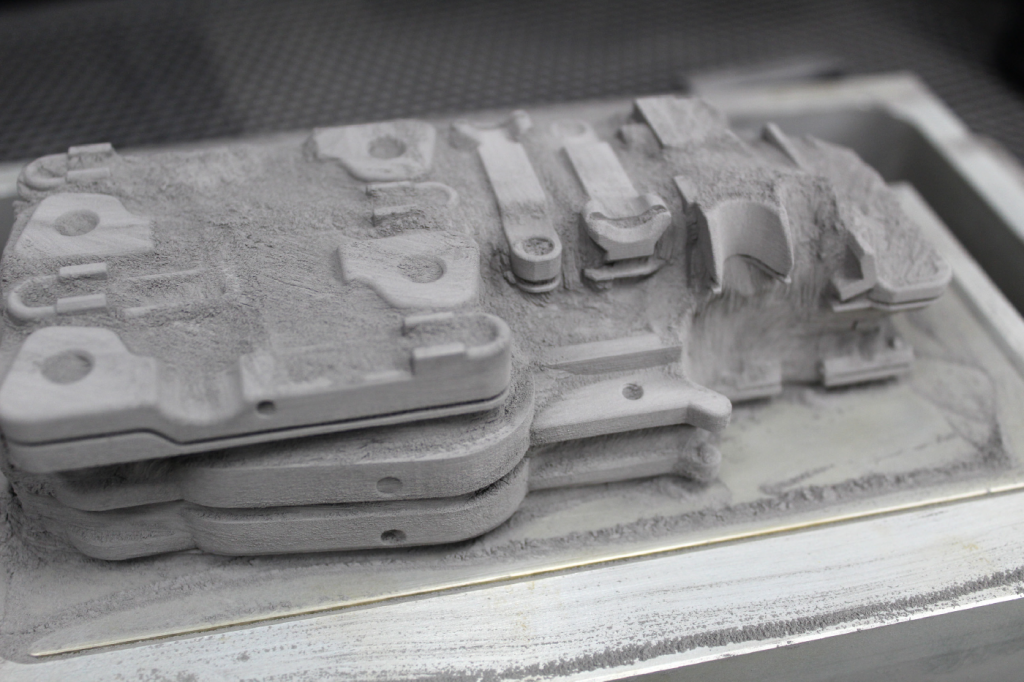
Due to our team’s MIM background, an early goal for FreeFORM was to achieve the internal validation of more materials through a robust development process that MIM users really want to see. Built from the ground up as a service bureau of engineers for engineers, our team understands what customers want to see from a development process.
With industry experience across multiple segments, we recognised the need for third-party validation of these material efforts and for a certifying body, like the MPIF, to release a standard. With all of this in mind, the company has launched an internal process to develop and validate fifteen materials desired by its customers and prospects. This effort will focus on the remaining ‘top-runners’ for Metal Injection Moulding, as well as on speciality materials.
In addition to validating new materials from virgin powder, we are taking a calculated approach to the reuse and reintroduction of recycled powder. BJT is a green technology in every sense, and we want to continue working towards a completely circular economy for Additive Manufacturing. However, we need to make sure we do that in a controlled manner that does not affect the end use of our products.
The final gap – bringing it all together
Great Binder Jetting machines are available. Known MIM-grade powders are available. Sintering furnace companies have implemented changes to equipment for the technology. The buzz around Binder Jetting is at an all-time high. So why does it feel like we are still so far behind?
It is very clear that we are at a critical turning point for metal AM technologies, and all signs are pointing towards the primetime – Additive 2.0, as Desktop Metal calls it. The final hurdle, in our opinion, is for someone to bring it all together.
Right now, there are very few companies that can tick all the boxes and accomplish this and scale towards production. From our perspective, it takes experience with high-volume, high-temperature sintering, in combination with expertise in Additive Manufacturing and a location in an industrial area with a skilled workforce and competent secondary suppliers offers the perfect storm to draw together and push metal Binder Jetting to the masses.
The sintering aspect of metal binder jet, or high-temperature sintering in general, turns off a lot of people. You start looking at million-dollar pieces of equipment, and then infrastructure that requires the use of explosive gases – it raises a lot of questions for some companies, and even some municipalities. Our geographic location, our rich history with metal powder-based technologies, and our overall desire to advance the technology make for the perfect situation.
We are excited and energised to join the charge on this effort. The continued push by current equipment manufacturers, and the possibility of other OEMs entering the space, is great for the technology. There is excitement around the technology from which we continue to thrive.
Conclusion
We are facing a new manufacturing landscape that needs new visions. Every designer has hit a roadblock at some point in their career due to conventional thinking and conventional manufacturing solutions. With the opportunities in front of us, that is all gone now.
While no technology is truly limitless, an agile and flexible staff within a start-up environment is fuelling the growth at FreeFORM. Offering early-stage services allows companies to adopt and design for a new generation of advanced manufacturing services whilst leveraging the expertise gained from MIM, such a closely related technology. This early intervention will allow for an industry-leading speed to market and low cost of total ownership for our customers, breaking down the roadblocks that a traditional manufacturing company has in order to give greater freedom of design to the end-user.
Contact
Chris Aiello
VP of Business Development
FreeFORM Technologies
+1 814 594 1062
[email protected]
www.freeformtech.com