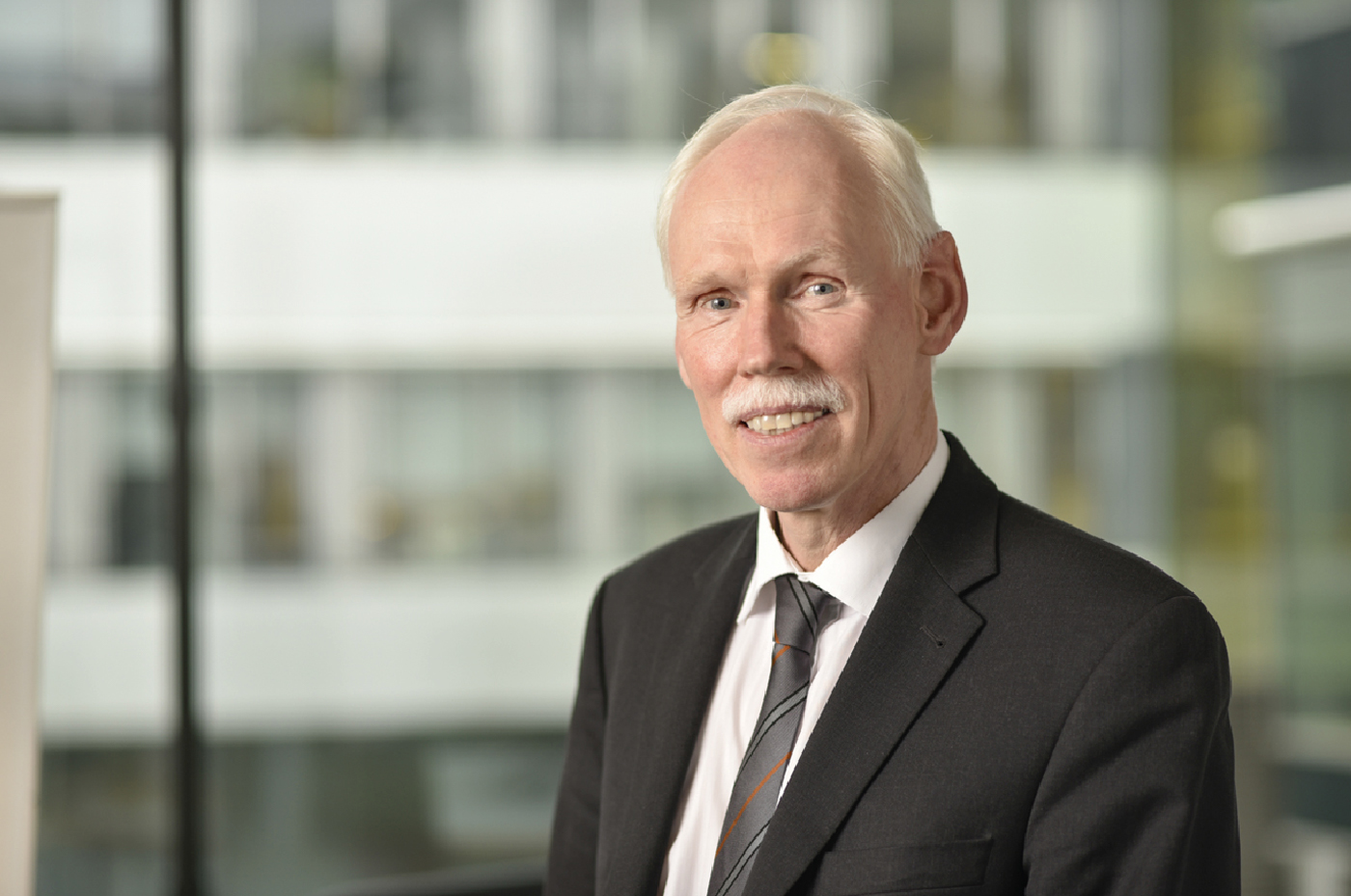


Frank Petzoldt on the past, present and future of Metal Injection Molding technology
There can be few people in Europe’s MIM industry, if not further afield, who are unaware of Prof Dr Frank Petzoldt’s contribution to the development and promotion of the technology over more than three decades. Following his recent retirement from the Fraunhofer Institute for Manufacturing Technology and Advanced Materials IFAM, Bremen, Germany, Dr Petzoldt spoke with Dr Georg Schlieper about the past, present and future of MIM technology and shares his insight into the industry in both Europe and worldwide. [First published in PIM International Vol. 16 No. 2, June 2022 | 15 minute read | View on Issuu | Download PDF]

The story of Frank Petzoldt’s career goes hand in hand with the story of the Fraunhofer Institute for Manufacturing Technology and Advanced Materials, commonly known as Fraunhofer IFAM. Born in 1956, Petzoldt joined Fraunhofer IFAM in 1984 as a Project Engineer at a time when the institute only employed about seventy staff. He remained there until his retirement from the position of Deputy Director a few months ago, leaving behind a thoroughly modern institute which employs around 700 people at a number of locations in Germany. The Fraunhofer IFAM branch in Dresden, which today has a similar status to the original institute in Bremen, is the most notable of the satellite locations, created following the reunification of Germany in 1990. Further locations were added in the following years and, like all institutes of the Fraunhofer Society, Fraunhofer IFAM focuses on industry-related contract research.
Powder technology has been a focus of research at Fraunhofer IFAM for many decades. One of Petzoldt’s first areas of activity when joining the institute was the sintering of tungsten heavy alloys. Soon after, he was given the opportunity to do his doctorate, with the topic of his dissertation being the production of amorphous metals by mechanical alloying. Early in the 1990s he was given more responsibility, initially being promoted to Group Leader and then, in 1993, appointed as head of the Powder Technology department. In 1999, he was appointed Deputy Director of the institute, a position that gave him a controlling role and, with it, the opportunity to exert influence on strategic decision making.
For more than three decades, both Petzoldt’s career and the work at Fraunhofer IFAM have followed the rise of the Metal Injection Moulding industry. “It is very unusual for one technology, such as MIM, to be covered at a Fraunhofer Institute over such a long period. However, this meant that many consecutive research contracts from industry partners could be secured over this extended period of time as new materials and applications were commercialised,” stated Petzoldt. “The MIM industry in Europe has enjoyed continuous growth in recent decades. Even the financial crisis of 2008 did not lead to a permanent slump in demand for MIM products. This positive development enabled the industry to invest continuously in research. Even today, in the pandemic, I perceive a positive mood in the MIM industry.”
Milestones for the MIM industry and some of the companies which enabled growth
BASF and the binder revolution
When considering milestones in the industrialisation of MIM technology, Petzoldt called to mind BASF’s introduction of its binder system based on polyoxymethylene (POM) at the beginning of the 1990s as a key turning point. “Until then, wax-based binder systems were mainly used, which required extremely lengthy thermal debinding processes,” he stated.
“With BASF’s Catamold system, which is debound in a catalytic process, debinding times were drastically reduced. At the same time, the dimensional stability of the parts produced was outstanding. BASF thus made it easier for many companies to get started with MIM production and helped to ensure that MIM was perceived as a mature and safe technology.”
BASF’s Catamold business model focused on supplying a core number of materials that are most frequently used in mass production, enabling it to produce feedstock more efficiently in larger batches. “From the beginning of the Catamold era, MIM manufacturers who wanted an extended range of materials and special materials had to use different binder technology. Of course, after the expiry of BASF’s patent, other feedstock suppliers developed their own POM-based binder formulations, thereby expanding the range of available materials.”
However, Petzoldt stressed that there are many large and very successful companies in the MIM industry that have worked with their own binder formulations from the beginning and continue to do so. The diversified market for MIM binder technologies that exists today has resulted in many innovations, most notable of which, stated Petzoldt, being the introduction of water-soluble binder components. “As a result of this type of innovation, the environmental impact of the MIM process has been significantly reduced.”
Tailoring injection moulding machines for MIM
“The name Arburg cannot be missed when one reflects on the growth of MIM. The company has been a key figure in the adaptation of plastic injection moulding technology to MIM and process-specific developments in the MIM sector,” stated Petzoldt. “Arburg was the first manufacturer of injection moulding machines to recognise the potential of MIM and set up an Application Centre specifically for MIM and CIM products. Here, the company’s technicians studied the MIM process in every detail and optimised their injection moulding machines accordingly.”
“Based on their expertise, they were able to give valuable advice to their global customers when problems arose,” he continued. “Other manufacturers of injection moulding machines do not have this in-depth experience with the production of MIM components. As a result, Arburg has gained a clear competitive advantage, worldwide.”
Furnaces makers enabled stable high-volume debinding and sintering
“Following the arrival of Catamold, the competitive mass production of MIM parts was enabled by the introduction of the continuous debinding and sintering furnace. First and foremost in this development was Cremer Thermoprozessanlagen GmbH, which produced the first walking beam furnace for MIM parts in 1992, a model which was later exported all over the world under the name MIM-Master”.
Another furnace specialist which has driven the rise of MIM technology is the US company Elnik Systems, which has dominated the market for MIM batch vacuum furnaces. “Today, Elnik’s solutions for debinding and sintering are used for both MIM and numerous ‘sinter-based’ process variants driven by the growth of Additive Manufacturing,” commented Petzoldt.
Automation increases efficiency and quality
For Petzoldt, the widespread use of automation in MIM manufacturing is one of the outstanding milestones on the road to the industrialisation of MIM. “In the early days, MIM production was still largely based on manual work. Burrs and sprues on green parts were removed by hand, then the parts were placed on trays for debinding, possibly repacked again for sintering and checked by hand after sintering,” he explained.
“This has fundamentally changed all over the world. What used to be done by hand is now being carried out by pick-and-place systems and robots. As a result, not only an increase in the efficiency of production has been achieved, but also significant quality improvements and a drastic reduction in reject rates.”
Improvements to the machines, giving higher accuracy and better control, have also contributed to significant advances in product quality, he added.
Research as a driver for new applications and process evolution
In-house research leads to commercial success
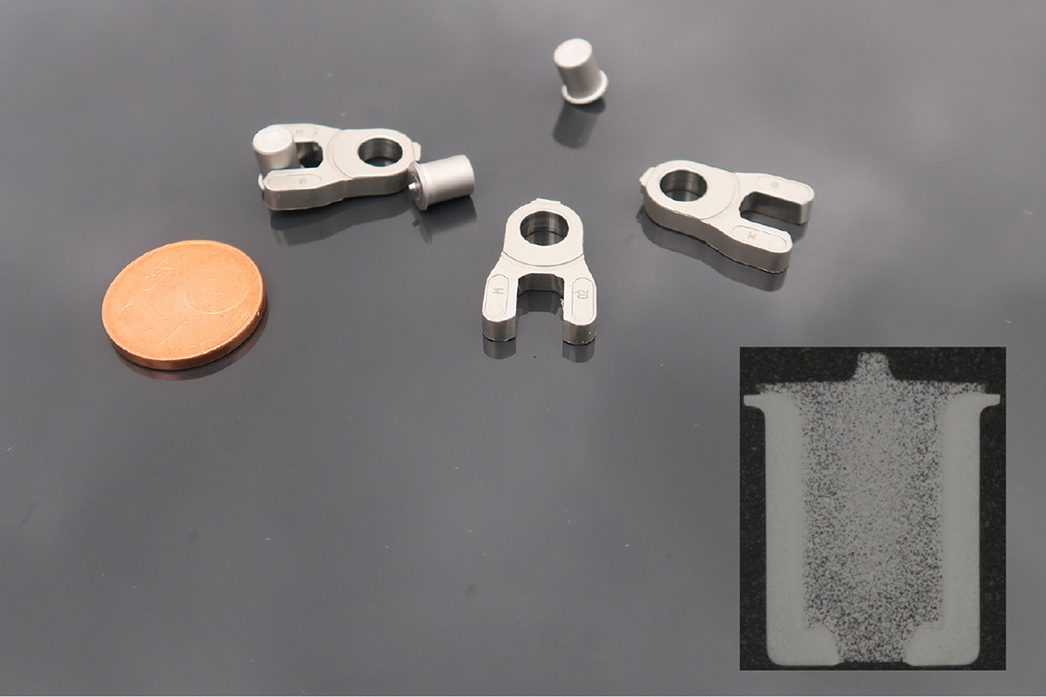
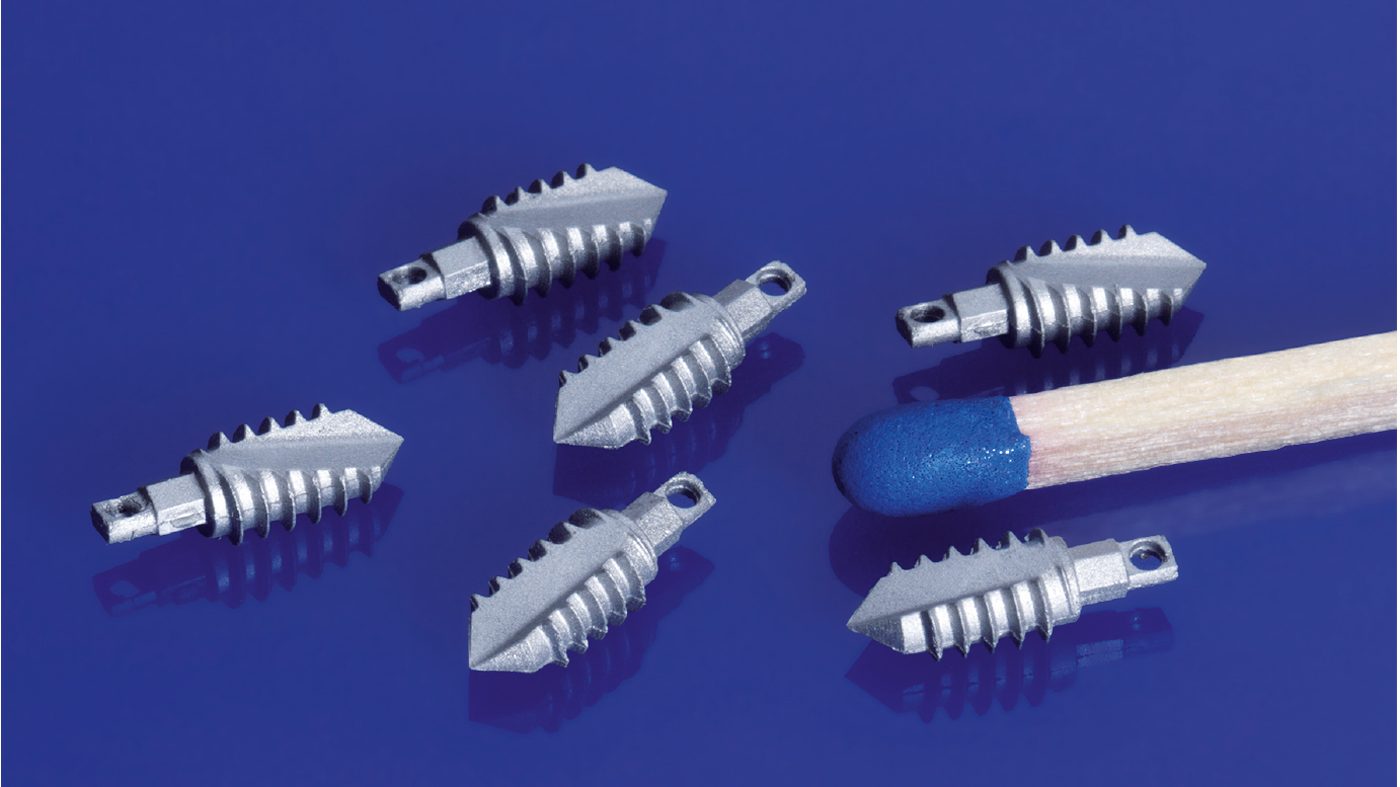
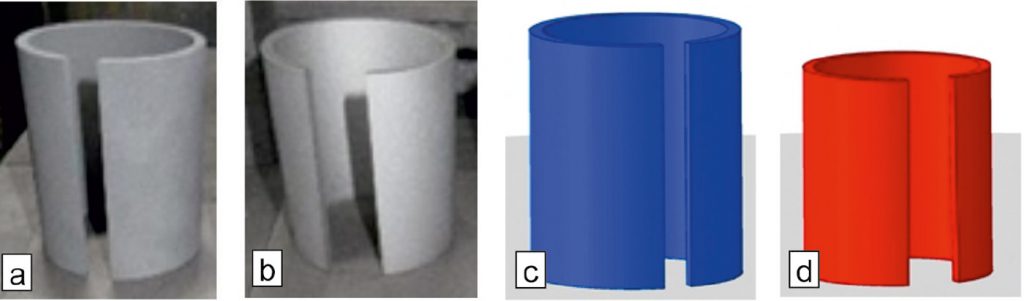
In addition to research contracts from industry, research is also carried out at Fraunhofer IFAM based on its own initiatives. As an example, Petzoldt mentioned the application of two-component injection moulding in MIM technology. Today, Germany’s Schunk Sintermetalltechnik GmbH manufactures such two material, or two-colour, parts in high volume. In the example shown in Fig. 2, a low-alloy steel is combined with a wear resistant alloy for an automotive application. Another application developed at Fraunhofer IFAM is the suture anchor shown in Fig. 3. This part consists of the composite material iron-tricalcium phosphate (Fe-TCP) and was made by MIM at Fraunhofer IFAM. This medical application uses material that is degradable in the body.
The evolution of process simulation
Process simulation for MIM is, states Petzoldt, an essential development that is still being evolved. Whilst major MIM manufacturers are now routinely using computer simulation, the technology is also accessible to many smaller firms.
“Mould filling behaviour during injection moulding can now be predicted very well, avoiding many of the delays that are associated with tool modifications. Sigmasoft, based in Aachen, Germany, is a market leader here. The next steps are the development of software capable of accurately predicting machine parameters such as pressure and temperature during injection moulding, enabling the development of defect-free components in the shortest possible time,” explained Petzoldt.
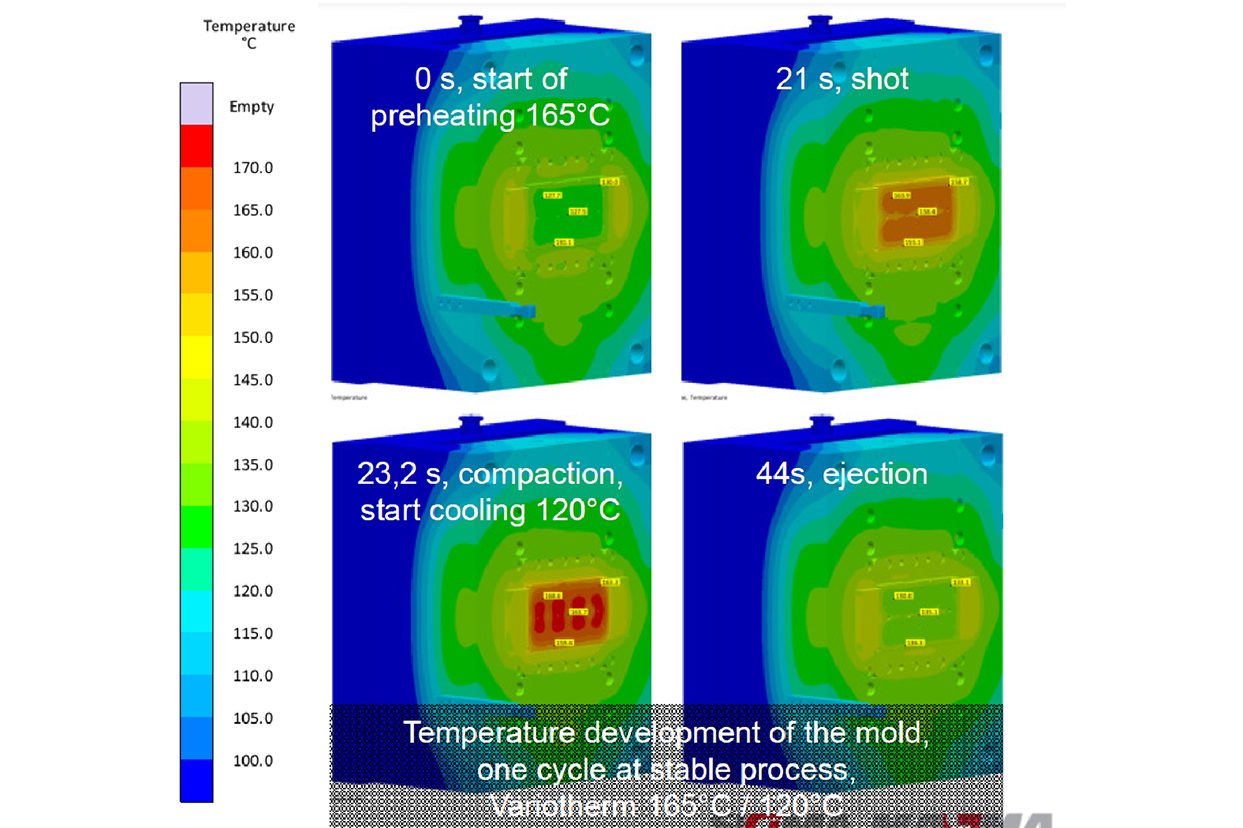
In addition to the simulation of injection moulding, which is already very advanced, work has been underway for about thirty years on the simulation of sintering. “Interest in this has without doubt been given a new boost by the rise of sinter-based AM. Previous work focused on the development of models that describe the processes in the most accurate way possible. In the meantime, however, there are also new approaches based on process data, with the required data determined by experiments.”
Petzoldt’s vision of the future in the longer term sees the use of quantum computers in computer simulation. “Quantum computers no longer calculate only with zero and one, but with probabilities in a space. This results in many possible solutions, in a similar way to the human brain. The different solutions are evaluated and a solution is selected that seems most likely. Quantum computers will be able to process the huge amounts of data generated in a manufacturing plant, intelligently correlate them and derive from them how safely the process runs.”
In cooperation with partner companies, Fraunhofer IFAM has already gained experience with so-called neural networks. In conjunction with the development of quantum computing, Petzoldt expects a further quantum leap in the technical development of MIM manufacturing.
Future growth markets for MIM
Research at Fraunhofer IFAM is by no means limited to powder technology, extending, for example, to the development of electrical energy and hydrogen storage systems, fuel cells, and lightweight construction. When it comes to electromobility, the Powder Technology team supports the automotive sector by participating in the development of, amongst other applications, hard and soft magnetic components for electric drives.
Beyond the automotive industry, Petzoldt cites the aerospace industry as holding many opportunities for MIM. “New market segments are constantly being opened up; for example, recently, some successful components for the aerospace industry have been developed in Europe. I see the most dynamic growth markets for the MIM industry being for applications in aerospace and medical technologies.”
Petzoldt added that one crucial future research area that will open up many new areas of application is a thorough investigation of the influence of residual porosity in MIM materials on their fatigue strength.
Roadmaps for sustainability and digitisation
The topic of sustainability is also currently of high interest throughout industry. “MIM’s customers are increasingly making sure that their suppliers manufacture parts sustainably,” Petzoldt said. “The question of whether MIM is a sustainable manufacturing process must be answered by the MIM industry itself.”
Together with the European MIM industry, Petzoldt has developed two roadmaps, one on sustainability and a second one on digitisation. “The roadmap for the sustainability of the MIM industry identifies at which points in the MIM process progress towards sustainability is possible,” he explained, “be it in powder production from recycled material, in energy savings in the sintering process, in reducing reworking operations, etc. I am convinced that sustainability improvements will be of great importance for research during this decade.”
Thoughts on MIM in Asia and North America
The rapid development of the MIM industry in Asia, especially in China and India, has left a lasting impression on Petzoldt, as it has for most observers. He reflected on a visit to a Chinese company that manufactures MIM parts in such large quantities that a new injection mould was made every week – simply because the old mould was worn out. “I found the dependence of this company on a few components frightening, because the company would very quickly get into economic difficulties if some of these products were to disappear.” His hosts in China were acutely aware of this problem, expressing a desire to diversify into markets other than consumer electronics, such as the automotive sector.
“In addition, I noticed that the company had invested very heavily in machinery and equipment even before there were orders for products that could be manufactured with these systems,” he recalled. “In Europe, such an approach would be unimaginable. This seems to be a fundamental difference in the corporate philosophy between Asia and Europe.”
When talking about the MIM industry in Asia, Petzoldt stated that one cannot ignore Indo-MIM. “This company plays a special role worldwide, as it has production facilities in both India and North America. It alone has revenues comparable to those of the entire German MIM industry combined, making it one of the most important global players by far. The company is active globally and in all MIM markets, offers an extraordinary variety of materials and reacts extremely flexibly to customer requirements,” commented Petzoldt.
The North American MIM industry, he said, appears relatively static. The relevant markets – mainly firearms, automotive and medical technology – seem to be quite stable. “I believe that there is a research culture in Europe that is more firmly established than in North America or Asia,” he explained. “It would be good to see more funds invested in research and development there.”
Marketing MIM: insight into the MIM-Expertenkreis
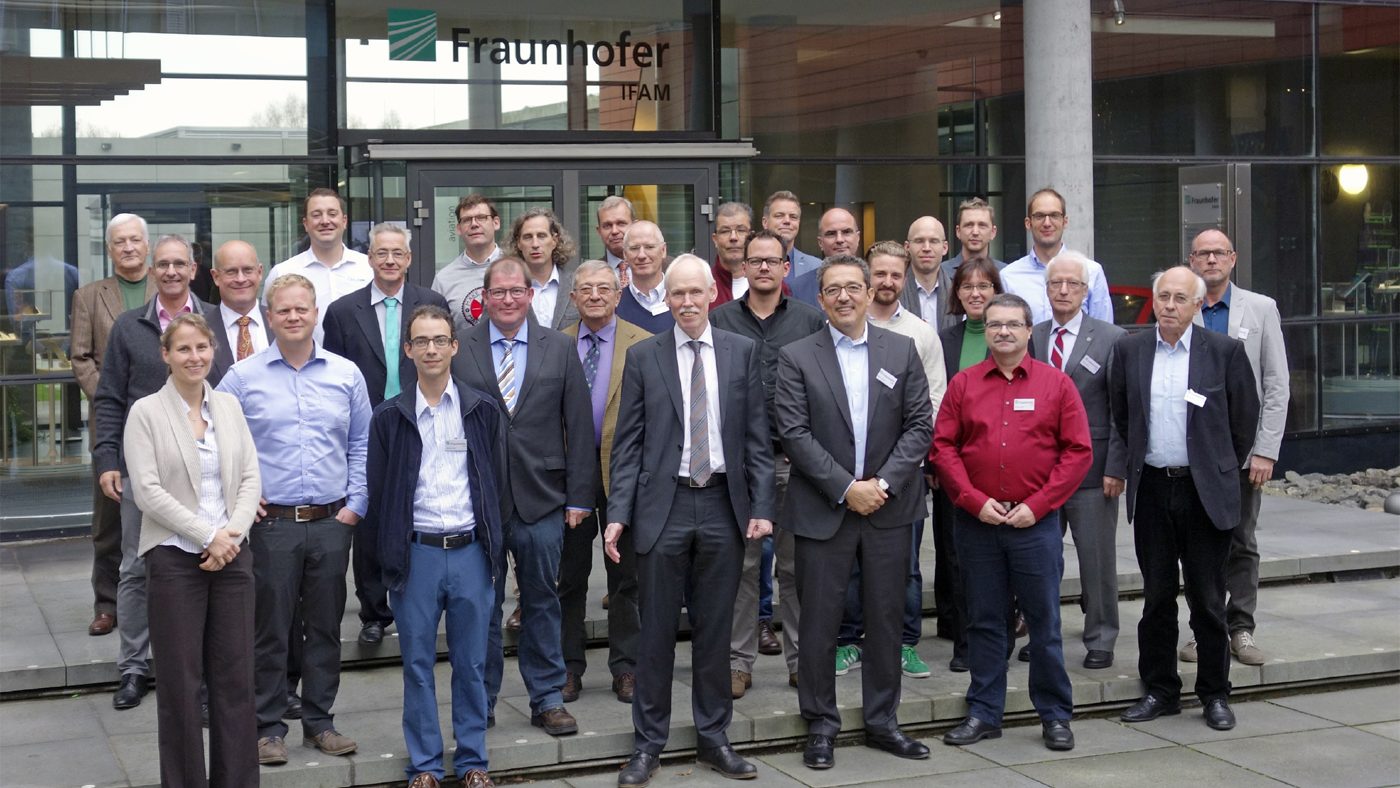
For nearly thirty years, there has been a grouping of MIM industry leaders in German-speaking countries which promotes the dissemination and further development of MIM technology. Among the more than thirty-five members of the ‘MIM-Expertenkreis’ (expert working group) are manufacturers of MIM parts, suppliers of raw materials and production equipment, as well as research institutes.
MIM-Expertenkreis members meet twice a year to coordinate activities. In recent years, the group has organised webinars to raise awareness of MIM technology as well as to tackle the issue of sustainability at a European level. “The trust and cooperation shown by these companies, many of which are also competitors, is probably something extraordinary and unique,” Petzoldt noted.
“Networking has proven itself over many years, as everyone pursues the same goal: namely, to advance MIM technology. Efforts are also being made to better connect the MIM industry worldwide through the support of informal initiatives such as the popular MIM parties at recent PM World Congresses.”
There is still the prevailing impression that young design engineers know far too little about the possibilities offered by MIM. “For thirty years, we’ve been trying to communicate the knowledge about MIM to end-users,” Petzoldt said. “Nevertheless, I have repeatedly noticed that many designers still have a great deal of uncertainty about the reliability of MIM parts.”
To try and address this, a novel approach was taken by the group. “We decided to create ten briefcases with 26 sample parts each, which are loaned to university teachers so that they can show their students real-world sample parts, supported by a set of explanatory notes. In addition, the promotion of MIM technology at trade fairs such as the Hannover Messe or Formnext also helps to make the process better known to students and designers. However, such actions are associated with a lot of effort and unfortunately only work in the long term,” stated Petzoldt.
On a positive note, Petzoldt commented that it is not only Fraunhofer IFAM which is active in the research, product development and promotion of MIM technology. “Work is ongoing at various universities in Europe, where there is a focus on both MIM research and education, and this has introduced MIM to many students. Good example of this are in Spain, notably at universities in Madrid and Ciudad Real.”
Additive Manufacturing as a catalyst for MIM technology?
In Petzoldt’s view, the current high levels of interest surrounding Additive Manufacturing, especially sinter-based processes, may contribute to a greater acceptance of MIM technology in the market. “Many European MIM manufacturers have recognised that AM is a useful addition to MIM and are building up their own production capacities,” he stated.
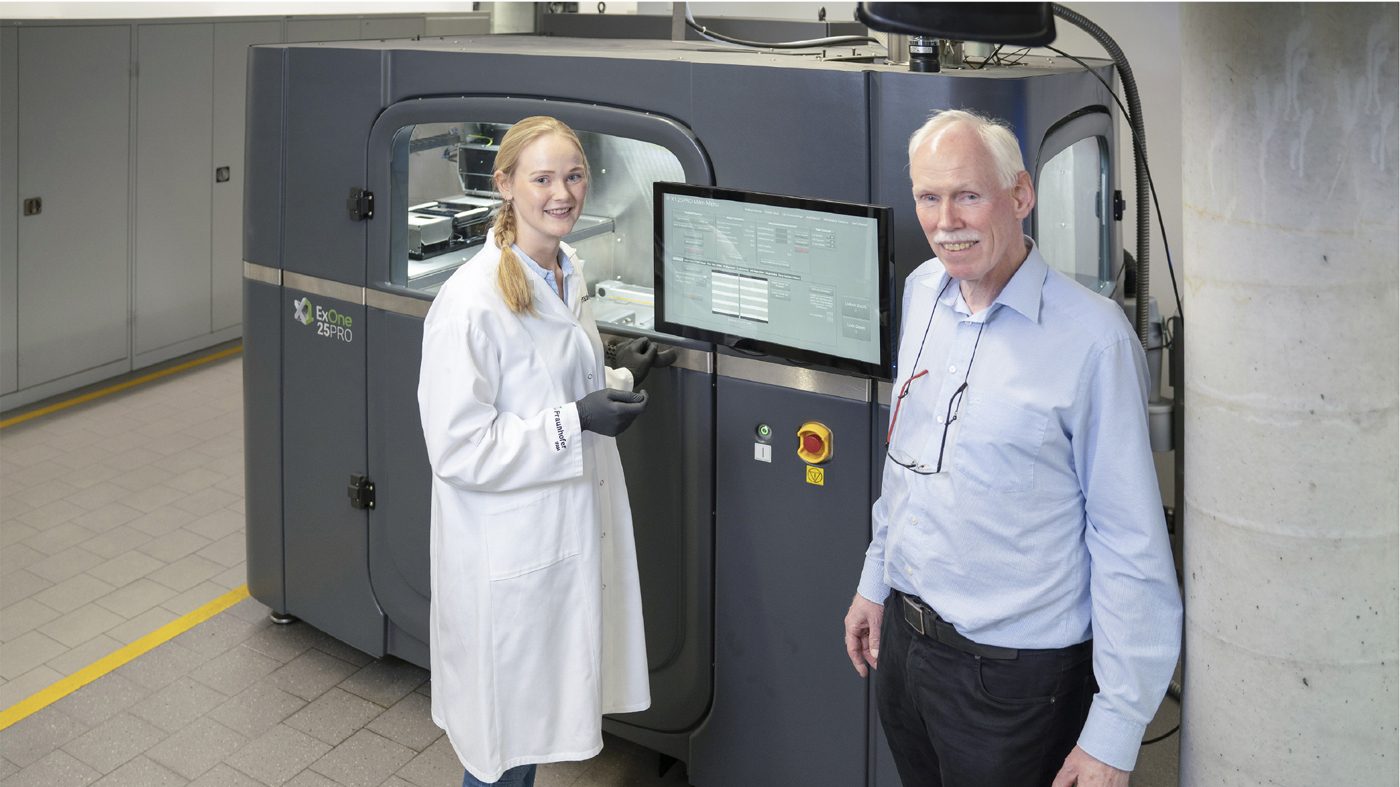
Fraunhofer IFAM began researching metal AM in the early 1990s and one of the first EOS machines for Laser Beam Powder Bed Fusion (PBF-LB) was installed at Fraunhofer IFAM in Bremen. This was soon followed by a system for metal Binder Jetting (BJT). In the intervening years, however, before the resurgence in interest of the last eight to ten years, activities around these processes decreased, Fraunhofer IFAM’s work was stopped, and the machines were decommissioned. The knowledge that was gained about AM, however, remained with Fraunhofer IFAM’s engineers. Re-entering Additive Manufacturing was therefore easier for Fraunhofer IFAM than for many others, thanks to the early experience with the technology. Today, Fraunhofer IFAM works with several additive processes, with Petzoldt considering BJT to be the most promising variant of sinter-based AM processes.
“For companies that manufacture MIM parts, a major advantage is that Binder Jetting can easily be integrated into their production. The printing process is at least an order of magnitude faster and the process is therefore much more economical than the laser-based processes,” he explained. Petzoldt is certain that, with BJT, quantities of several thousand AM parts are economically feasible. Thus, the process seamlessly closes the gap to the tool-bound MIM process in terms of production quantities.
However, Petzoldt also warns that disappointment threatens if very high expectations are set for AM too quickly. “Often, applications based on these new technologies cannot be immediately manufactured to the necessary quality, be it in terms of dimensional accuracy, surface quality or strength. A lot of development work is still needed for the technology to become robust.”
“I fear that if a customer finds that an additively manufactured component made by a process such as Binder Jetting does not meet all requirements, they could conclude that MIM technology is also unreliable. One should always take into account that the additive processes are still very young and that MIM technology has been on the market for far longer and is extremely well established.”
Conclusion
Frank Petzoldt leaves a very different organisation to the one he joined nearly forty years ago. His departure, however, does not signal a slowing down of the institute’s activities. Fraunhofer IFAM’s research on MIM technology will be continued by his successor, Sebastian Hein, who also takes over the chairmanship of the MIM-Expertenkreis.
The MIM industry has changed dramatically over the period that Petzoldt has been at Fraunhofer IFAM, and without doubt it is a technology that has had a major impact on industries such as consumer electronics, resulting in the rapid rise of China’s MIM sector, as well as the medical device industry, defence production and much more besides. The question remains, however, as to whether MIM has reached, or will, reach its full potential in more general industries that consume high volumes of small, complex components.
As Petzoldt stressed in this interview, MIM remains a technology with an awareness challenge, and far more needs to be done to make potential users aware of its capabilities and its green credentials. With this also comes a need to continue to overcome the industry’s historic secrecy and bring a greater level of transparency to the industry for the benefit of those in it and those looking to use it.
“The collection of economic data in the European PM industry, as an example, is very difficult, and the data from MIM part producers is no exception. Although some limited data is collected every year, its reliability is low. Powder manufacturers and feedstock suppliers could also provide the most reliable information about powder and feedstock consumption, but many of them don’t disclose their sales data.”
Some good news? Whilst Petzoldt is stepping away from his role at Fraunhofer IFAM, he will not be stepping away from the technologies that he has worked on for so long. As a freelance technology and management consultant, he will continue to be an advocate for MIM and sinter-based AM technologies and work to overcome some of the challenges that remain in the way of the greater adoption of these technologies.
Contact
Dr Frank Petzoldt
Eschacker 5
D-27607 Geestland, Germany
[email protected]
Author
Georg Schlieper
Harscheidweg 89
D-45149 Essen
[email protected]