

Finding opportunities in a challenging market: AFT-Hungary’s Metal Injection Molding strategy
AFT-Hungary, a key European player in Metal Injection Molding, has navigated industry challenges through strategic adaptation and market diversification. Facing intense price competition, shifting trade policies, and evolving regulations, the company has focused on expanding MIM applications beyond traditional sectors. By identifying new opportunities and refining its manufacturing processes, AFT-Hungary remains competitive in a rapidly changing landscape. Emma Lawn explores the company’s approach to sustaining growth, enhancing efficiency, and overcoming obstacles in today’s demanding manufacturing environment. [First published in PIM International Vol. 19 No. 1, Spring 2025 | 10 minute read | View on Issuu | Download PDF]
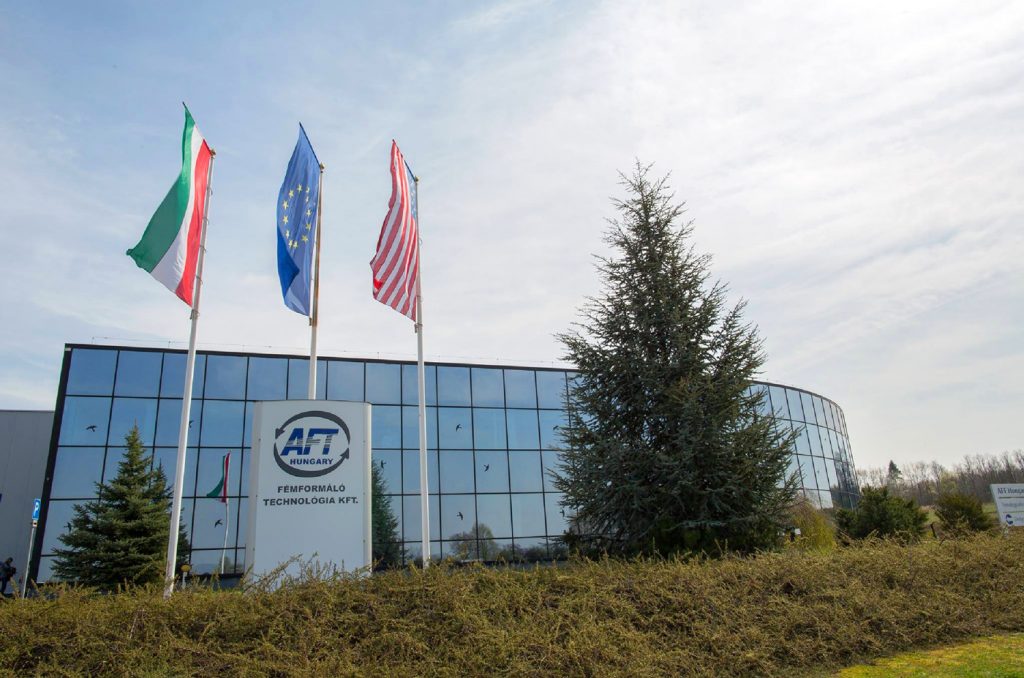
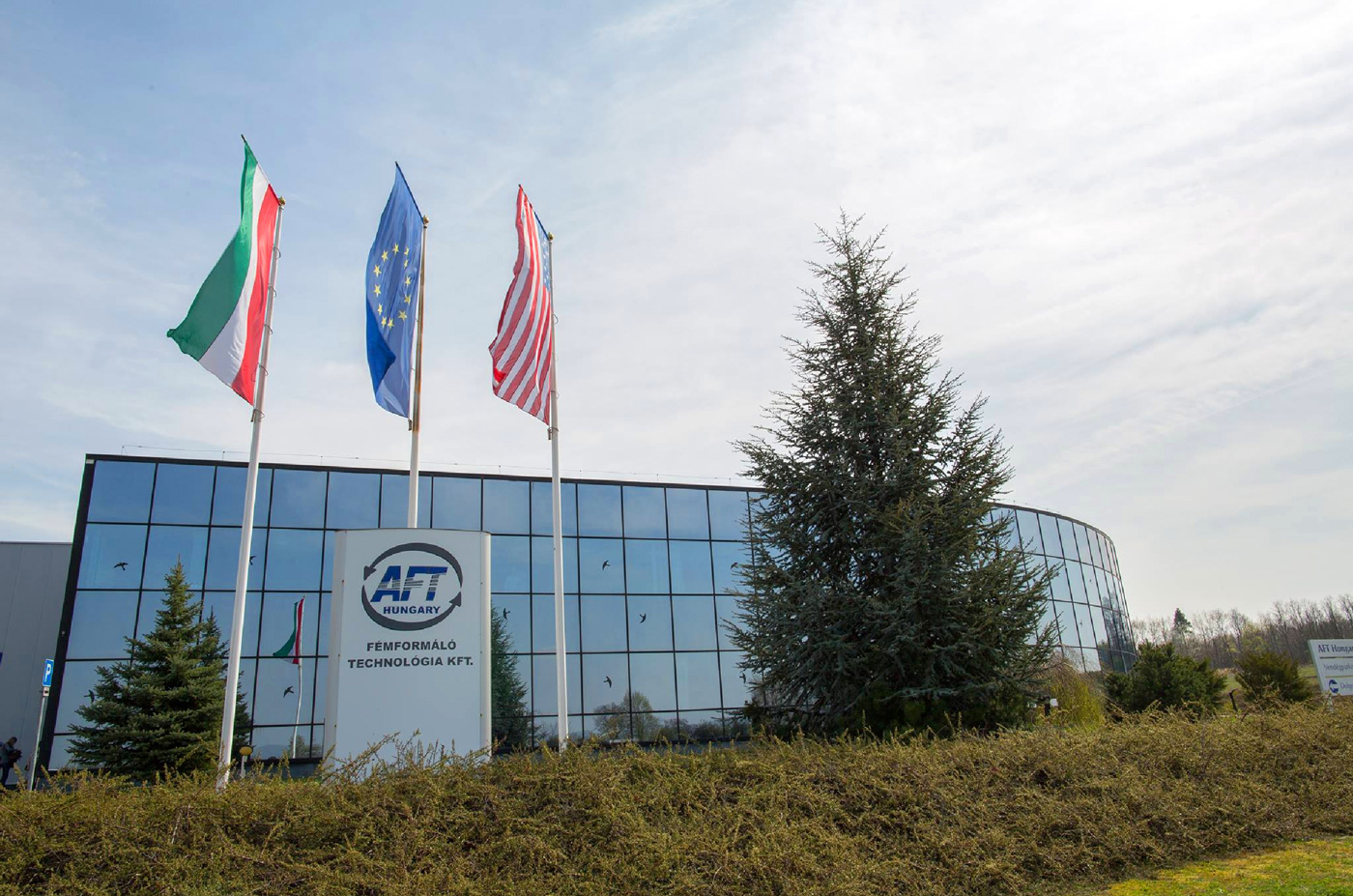
AFT-Hungary, based in Rétság, an hour’s drive from Budapest, is a leading European manufacturer of components produced by Metal Injection Moulding. The company was established in 2002 with a primary focus on the automotive sector; however, in 2012, it became part of ARC Group Worldwide, a US-based advanced manufacturing company. Since the acquisition, AFT-Hungary’s markets have expanded to include consumer products, defence, and other industries. ARC Group Worldwide also operates a MIM facility in the US, ARC Colorado, with a focus on the aerospace and firearms markets.
Amid challenging market conditions driven by price competition, regulations, and fluctuating international trade policies, AFT-Hungary has been able to maintain a competitive edge in Europe due to its strategic geographic position. However, it also has its eye on the future through MIM process innovation. “While ARC Group Worldwide is not the largest player in the market, it continues to push the boundaries of material development,” stated Ádám Kurusa, General Manager of AFT-Hungary, who noted the group’s success in sectors such as aerospace.
Kurusa joined AFT-Hungary in 2020 and, under his leadership, the company has regained profitability and is on a strong growth trajectory. “Our focus is now on innovation and market expansion,” he shares. The Hungarian facility currently generates annual sales of over $9 million.

Kurusa and the company’s Engineering Manager, Alan Bird, see significant untapped potential in MIM, particularly in applications currently produced using traditional manufacturing methods. “Based on our expertise and experience over the past four years, we are convinced that many components could be produced far more cost-effectively with MIM,” Bird asserts. “After all, MIM was designed specifically to optimise manufacturing costs.”
Rather than competing within the existing MIM market or taking opportunities from other MIM manufacturers, AFT-Hungary focuses on introducing new applications where MIM technology can deliver long-term benefits for its customers. Bird explained that this approach enables the company to create a “true win-win scenario.”
As global supply chains increasingly shift toward regionalised production, European manufacturers are facing growing instability. “Two years ago, we lost a major customer because regional trade agreements made manufacturing in Europe financially unviable,” Bird notes. This disruption was initially the result of shifting US trade policies under US President Donald Trump’s first administration, which introduced significant uncertainty and left many industries in a state of flux. While the 2020 US-Mexico-Canada Agreement (USMCA) initially presented barriers, more recent proposed policy changes, such as increased tariffs and a focus on reshoring production, have only intensified these challenges.
With cost competitiveness under increasing pressure, competing with Asian suppliers has become progressively harder. “Simply put, manufacturing in Europe is expensive,” says Bird, “competing with Asian players is extremely challenging, as pricing often takes precedence over quality.” Kurusa notes that, despite widespread discussions about strengthening regional supply chains within Europe, the “trend has increasingly leaned toward continent-specific preferences.” For example, American customers tend to favour US-based suppliers, while Asian customers show a similar preference for local suppliers. This shift toward regional sourcing is driven by lengthy programme timelines and the need for closer proximity to reduce lead times.
Despite these challenges, AFT-Hungary has expanded into markets like India, South Korea, and China, demonstrating its ability to compete globally. “While price is often the deciding factor, total cost of ownership tells a different story,” says Bird. “Customers who prioritise long-term value recognise our quality advantage. This demonstrates that we can compete with Asian manufacturers not only in terms of quality but also on price,” Bird adds.
European manufacturers are also facing increasing pressure to maintain high-quality production standards while remaining competitive in an increasingly cost-driven market. Kurusa acknowledges that “European regulations and compliance requirements tighten year after year,” and while such regulations are necessary, they place a “significant burden on manufacturers. Ensuring adherence to evolving regulations requires continuous adaptation and investment, which adds complexity to an already competitive manufacturing landscape.”
AFT-Hungary’s markets
While ARC Colorado focuses on aerospace and firearms, the Hungarian facility has a broader reach, spanning automotive, consumer goods (including power tools, connectors, and rock climbing parts), and defence. Kurusa notes that the civilian side of the firearms market is somewhat softer – mainly due to demand from the US market – but for current geopolitical reasons, non-civilian firearms demand is increasing. AFT-Hungary is expanding MIM applications into emerging markets, including appliances, motorcycling, and door-damping systems, as well as other industries, further strengthening its global presence.
Automotive
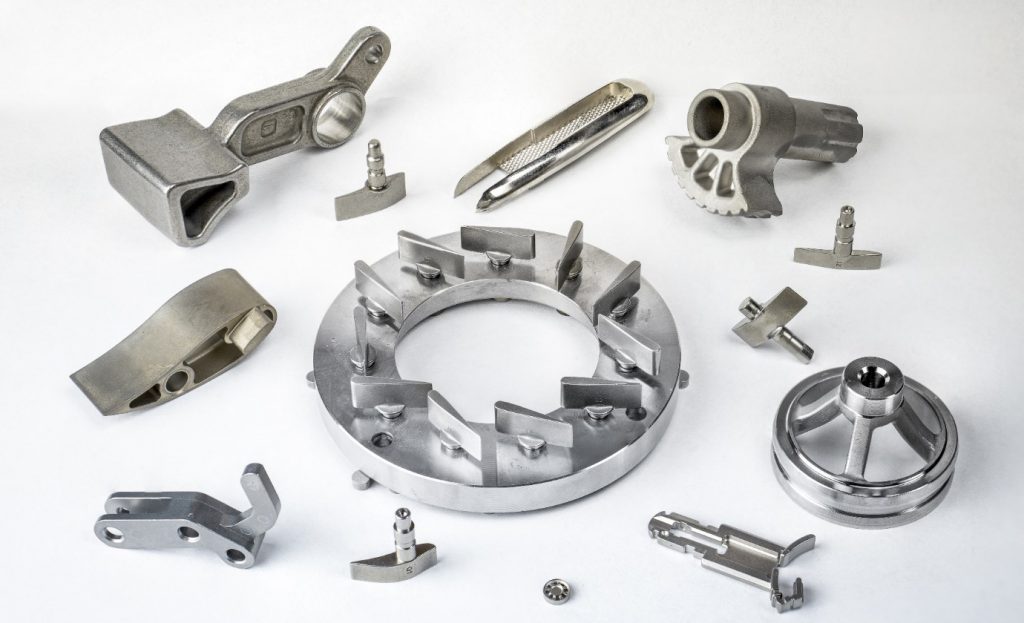
Despite challenges within the automotive sector, demand for MIM remains strong – particularly among European automotive manufacturers. “The automotive sector has the most experience with MIM technology and understands its cost benefits,” Kurusa explains.
AFT-Hungary specialises in manufacturing MIM components for turbochargers, a crucial technology in modern automotive engineering. As turbocharger designs become more advanced, manufacturers require increasingly complex components that can withstand extreme conditions while maintaining performance. As turbo technology evolves, AFT-Hungary continues to enhance its processes to meet these stringent demands. “MIM can keep up with these design changes and support the demand for turbocharger components,” explains Bird.
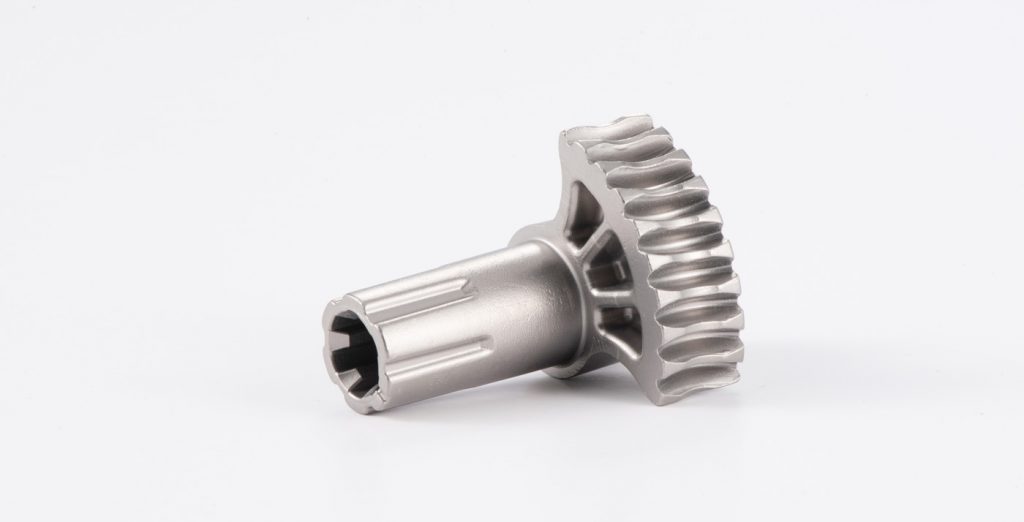
Despite the growth of electric vehicles, turbochargers remain crucial in optimising internal combustion engine (ICE) performance. “There’s been a renewed focus on ICE technology, but with greater emphasis on efficiency and emissions reduction,” says Bird. With engine displacements shrinking, turbochargers help maintain power output while improving fuel economy, ensuring sustained demand.

Beyond turbochargers, MIM technology is gaining traction in other automotive applications. “We’re seeing its use in transmission components (Fig. 5), fuel injection systems (Fig. 6), seat assemblies (Fig. 7), and valve supports,” notes Kurusa. Heat-resistant MIM materials are also being explored for additional turbocharger elements, broadening the scope of the technology within the industry.
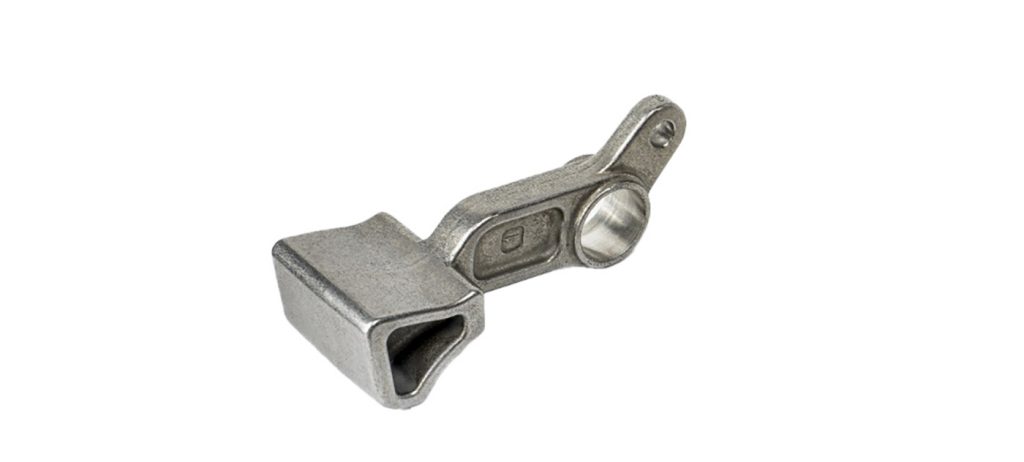
AFT-Hungary’s production of fuel injector valve discs stands as a testament to the capabilities of Metal Injection Moulding. The technology enables the efficient mass production of such intricate, high-performance components – a feat that traditional techniques such as casting or machining simply cannot match. The scale of this achievement is significant; notably, AFT-Hungary has produced 38 million valve units, maintaining a flawless quality record with zero reported rejects. The use of hardened 440C stainless steel, combined with the component’s small size, intricate details, and high annual demand, further demonstrates the unmatched capabilities of MIM technology.
Defence and firearms
Wars and shifting geopolitical dynamics have driven rising demand for firearms and defence applications, which now account for 35% of AFT-Hungary’s annual revenue. Kurusa explains, “For any manufacturer aiming to produce firearms competitively and at high volumes, MIM components are essential.”
The growing firearms industry presents unique challenges compared to other MIM markets. While volumes can sometimes be lower compared to other MIM markets, firearm components often feature complex designs, which can make it challenging to maintain their ever more demanding tolerances after sintering.
As Bird explains, cost pressures are significant, both in terms of piece price and mould costs. To meet these challenges, AFT-Hungary is exploring interchangeable insert moulds to meet those cost pressures. Additionally, the company is looking into replacing traditionally machined firearm components with MIM solutions, especially for parts that typically require extensive machining time. “These components are not just the small MIM parts, but the main component of the firearm,” Bird adds.
Operations and MIM Innovation
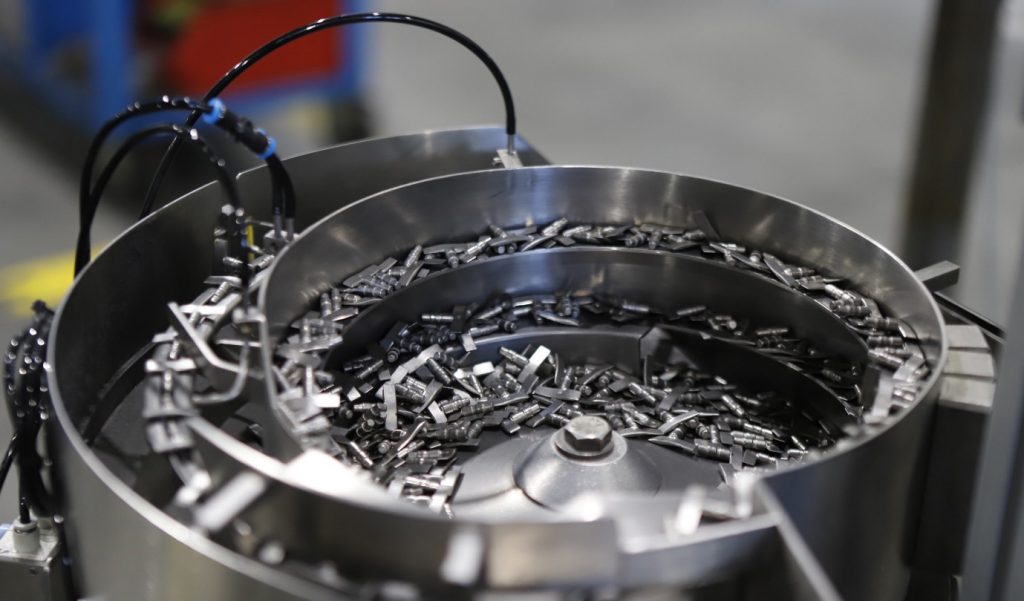
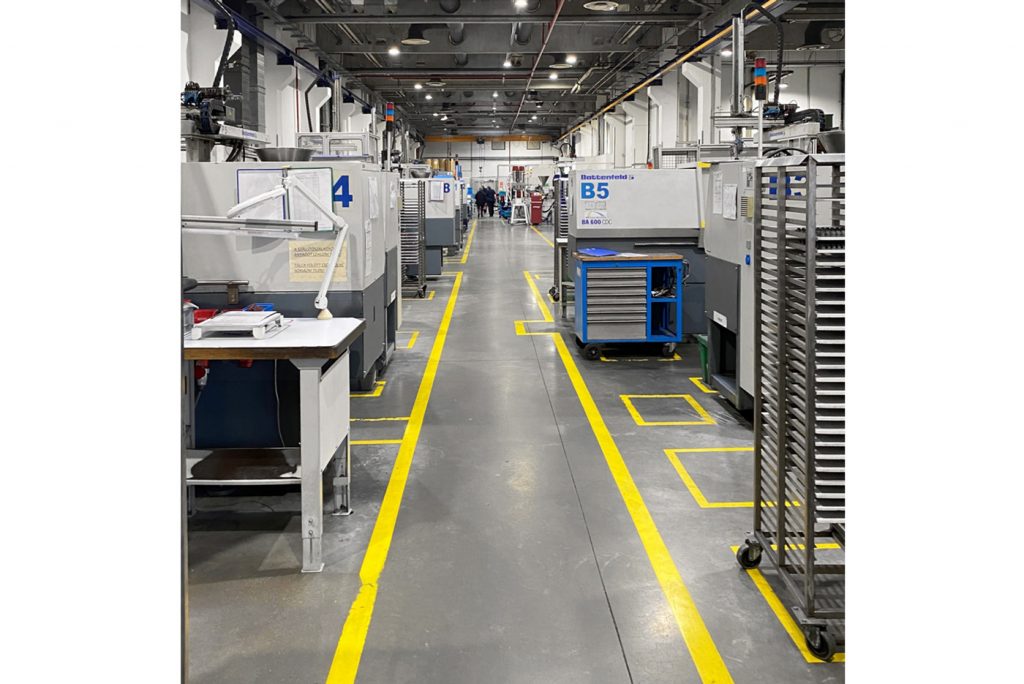
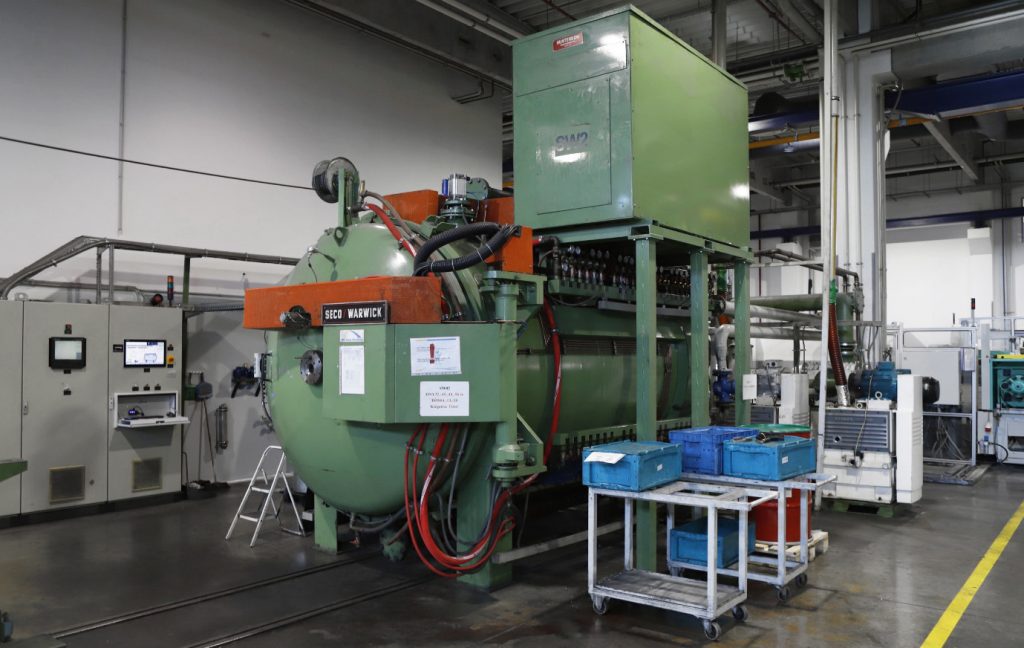
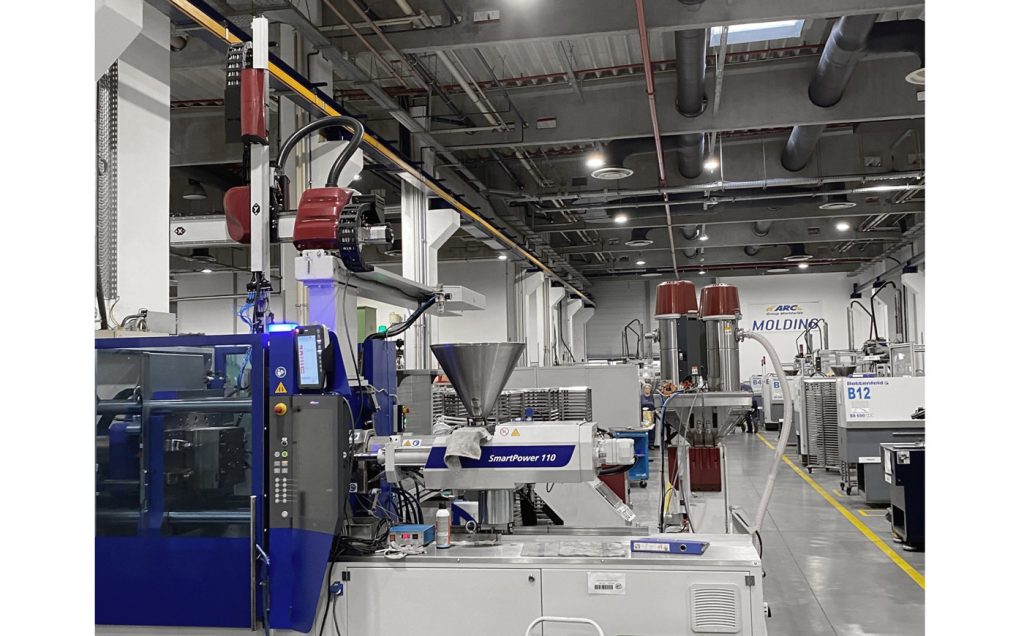
Today, the company operates out of a facility that spans more than 5,000 m². It is equipped to handle large-scale production with thirteen fully automated injection moulding machines, two debinding units, and four sintering furnaces. In order to ensure consistent, high-quality production, automation is used as much as possible. Automated inspection equipment is utilised in the secondary processing area to uphold stringent quality standards throughout the production process. Sizing, CNC machining, tapping/reaming, and tumbling and polishing are all performed in-house. The only post-process steps outsourced are heat treatment and plating.
AFT-Hungary is developing new Metal Injection Moulding technologies that will help increase the typical current weight limits for economically-viable MIM parts from around 100-400 g. This innovation, part of a $3.25 million project with TETT Mérnökiroda Kft and ZalaZONE InnoTech Nonprofit Kft, is supported by a $2 million grant. Expected to be completed in two years, it aims to cut production costs and significantly expand the company’s manufacturing capability. Revenue is expected to increase by approximately $2.5-5 million through the development.
Obstacles to the wider adoption of MIM
Despite MIM’s advantages, it remains underutilised in many industries, partly due to its limited presence in engineering education. “It is either briefly mentioned or not covered at all in most universities and technical colleges.” As a result, “newly graduated engineers rarely consider MIM as a manufacturing solution and often struggle to adapt their thinking to this technology,” Kurusa stated.
This knowledge gap extends beyond academia to industry professionals, presenting both a challenge and an opportunity. Unfamiliarity with MIM often leads to inefficiencies in the design process. “Many European engineers find it difficult to break away from what they learned in academia,” Kurusa observes. “They often insist on unnecessarily tight tolerances in technical drawings, even when they serve no practical purpose. This lack of design for manufacturing (DFM) principles can significantly impact production efficiency and cost.”
MIM also requires a shift in design philosophy. “MIM requires a completely different mindset – almost a reverse way of thinking compared to traditional machining processes,” Bird elaborates. “In CNC machining, material is removed from a solid block, whereas in MIM, we build parts from metal powder. It’s a fundamentally different approach.”
Additionally, MIM is a highly specialised manufacturing process that demands significant technical expertise. “For many manufacturers, MIM exists only as a complementary production method rather than a core competency,” Bird notes. “This makes the emergence of new local players extremely rare.”
Recognising these challenges, AFT-Hungary actively supports customers through early project involvement. Regarding support in this area, Kurusa advocates, “By collaborating from the design phase, we can help optimise manufacturability and ensure the project’s success – a shared goal for both us and our customers.” This proactive approach, combined with a focus on demonstrating the efficiency and scalability of MIM technology, allows AFT-Hungary to embrace the challenges of the industry. As a result, the company continues to expand its market presence and strengthen its reputation for high-quality manufacturing.
It was also stressed that customers should be better educated about MIM’s environmental benefits. Bird notes, “MIM is inherently a more environmentally friendly manufacturing process due to its minimal material waste.” As part of the company’s ongoing sustainability efforts, AFT-Hungary continually works to optimise energy consumption within its facility. For instance, the company maximises the number of parts per tray in their furnaces, ensuring greater energy efficiency and minimising unnecessary furnace operation, further reducing their environmental footprint and operational costs.
Kurusa highlights a further sustainability consideration. “If a product is still being purchased, but is instead produced in another part of the world using a much more polluting method, then we have achieved nothing on a global scale. The challenge lies in finding the right balance.”
Conclusion
Despite global competition and regulatory challenges, AFT-Hungary continues to thrive through technological innovation and strategic diversification. By advancing Metal Injection Moulding technology and expanding into new markets, the company continues to strengthen its position as a leader in precision manufacturing.
Contact
Ádám Kurusa
General Manager
[email protected]
+36 (30) 497 9814
Alan Bird
Sales and Engineering Manager
[email protected]
AFT-Hungary
Rétság, Ipari park 5,
2651 Hungary
www.arcw.com/afthungaryintro/