

Cleaner semiconductor etching: Bosch Advanced Ceramics’ two-part AM injector produced with Lithoz technology
Semiconductor manufacturers increasingly rely on components that can withstand extreme plasma environments while delivering tighter process control and near-zero contamination. To meet these demands, Bosch Advanced Ceramics and Lithoz have transformed a previously two-part injector design into a fully integrated single ceramic component using ceramic Additive Manufacturing. By pairing high-purity alumina with precision AM technology, complex internal geometries could be unlocked, enhancing reliability and performance for advanced wafer production. [First published in Powder Injection Moulding International Vol. 19 No. 4, Winter 2025 | 10 minute read | View on Issuu | Download PDF]
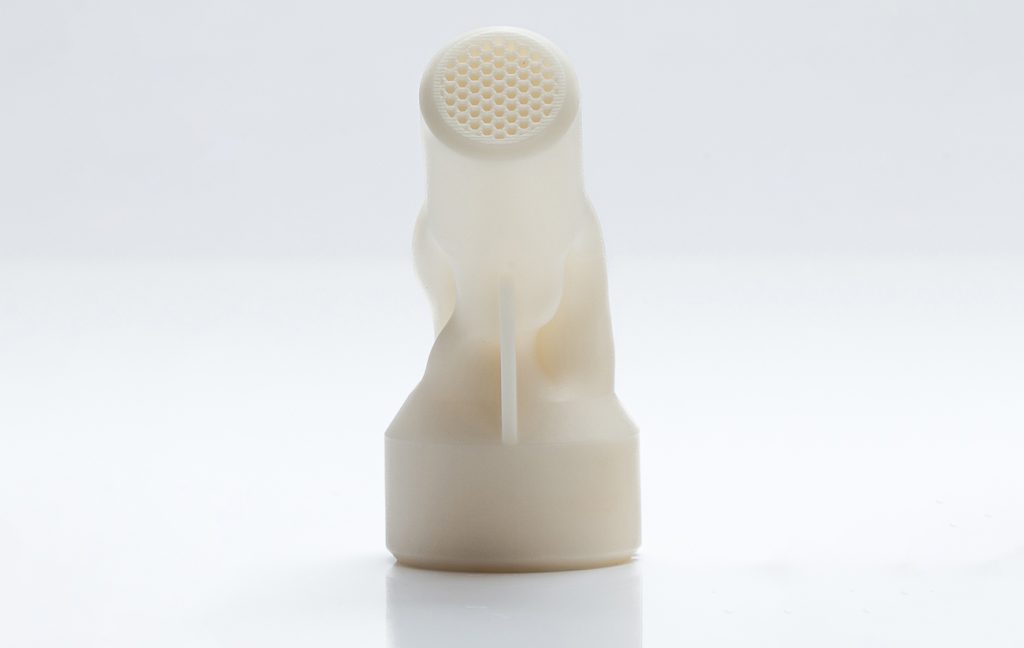
Semiconductor manufacturing is known for its high demands on materials and manufacturing processes. Etching, in particular, involves the use of aggressive gases and therefore requires components that offer not only exceptional chemical resistance and thermal stability, but also precision and long-term reliability in continuous operation. This article highlights an additively manufactured gas injector made from technical ceramics, demonstrating how ceramic Additive Manufacturing can enhance the performance of critical components.
The realisation of this project by Bosch Advanced Ceramics, working closely with its customer and using Lithoz’s Lithography-based Ceramic Manufacturing (LCM) process – the company’s Vat Photopolymerisation (VPP) technology – exemplifies how ceramic AM can deliver optimised process flows, improved component performance, and greater overall reliability.
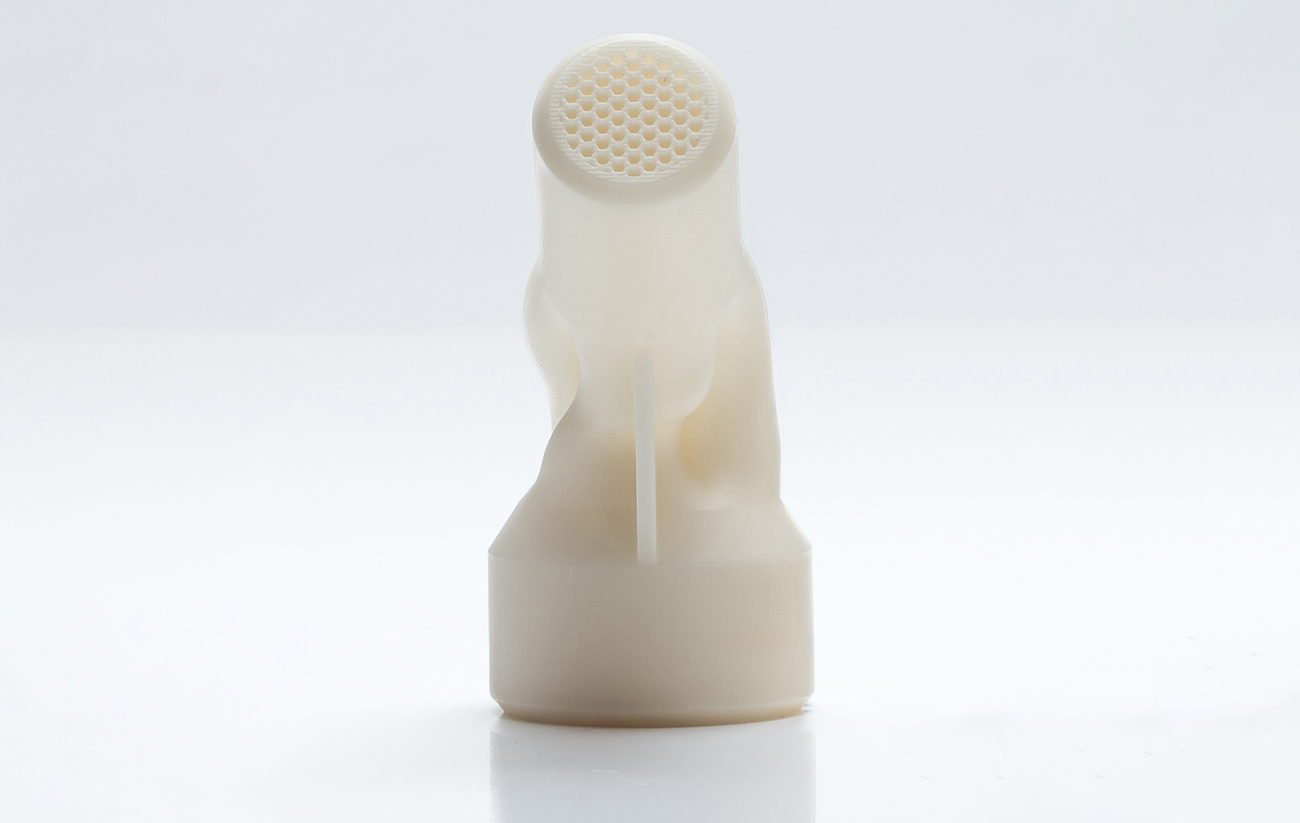
Gas injectors are crucial components for precisely introducing corrosive gases into the etching chamber during wafer manufacturing. Although the end-customer’s original concept comprised two separate components, the final AM design brings three internal channels and sixty-two flow-optimised outlets together in a single ceramic part. LCM’s ability to produce intricate internal features made it possible to realise the original two-part concept as a single ceramic component, significantly improving process reliability and material purity.
“Our customer was faced with a challenge that could not be solved efficiently with conventional manufacturing processes and still offered potential for optimisation in terms of functionality,” explained Ashu Sharma, CSO at Bosch Advanced Ceramics.
“We were able to convince them that ceramic Additive Manufacturing was a promising alternative that would enable significant functional integration, increase the performance of the component, and optimise the final semiconductor manufacturing process.”
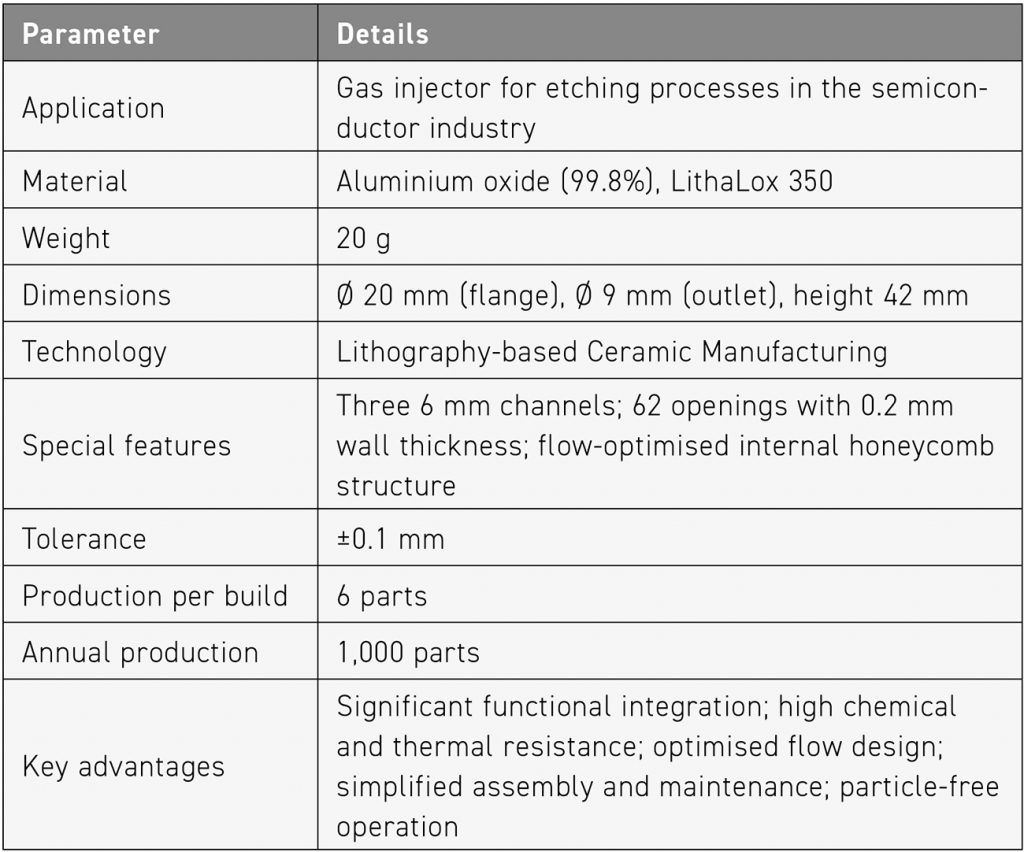
The requirements for the component were complex and multifaceted. It had to ensure absolute gas tightness throughout its entire operating life, offer long-lasting resistance to extremely aggressive process gases, and ensure compliance with strict tolerances of ±0.1 mm at the flange for flawless integration into the system.
Conventional materials, such as metals, would be attacked under corrosive conditions, which would lead to material removal and wafer contamination. Plastics, on the other hand, would become brittle in the plasma applications of semiconductor manufacturing, losing their structural integrity. Both these materials – especially metals – carry an increased risk of particle emissions, which must be avoided at all costs in the high-purity environment of semiconductor manufacturing in order to minimise scrap.
Materials and processes: combining high-performance alumina with AM precision
Given these demanding conditions, the material of choice was high-purity aluminium oxide (99.8%), in this case in the form of Lithoz’s LithaLox 350. This high-performance material is characterised by its exceptional chemical inertness to a wide range of process gases, its high thermal stability even at elevated operating temperatures, and its excellent mechanical strength. These properties make it the ideal candidate for withstanding the aggressive environments in etching chambers while ensuring the purity of the process, a crucial factor in meeting the required particle-free and corrosion-resistant standards in cleanroom environments, where metallic components can often lead to contamination.
The complex design of the gas injector comprises three internal channels, each with a diameter of 6 mm, and a total of sixty-two intricate, flow-optimised openings with a wall thickness of only 0.2 mm at the outlet surface.
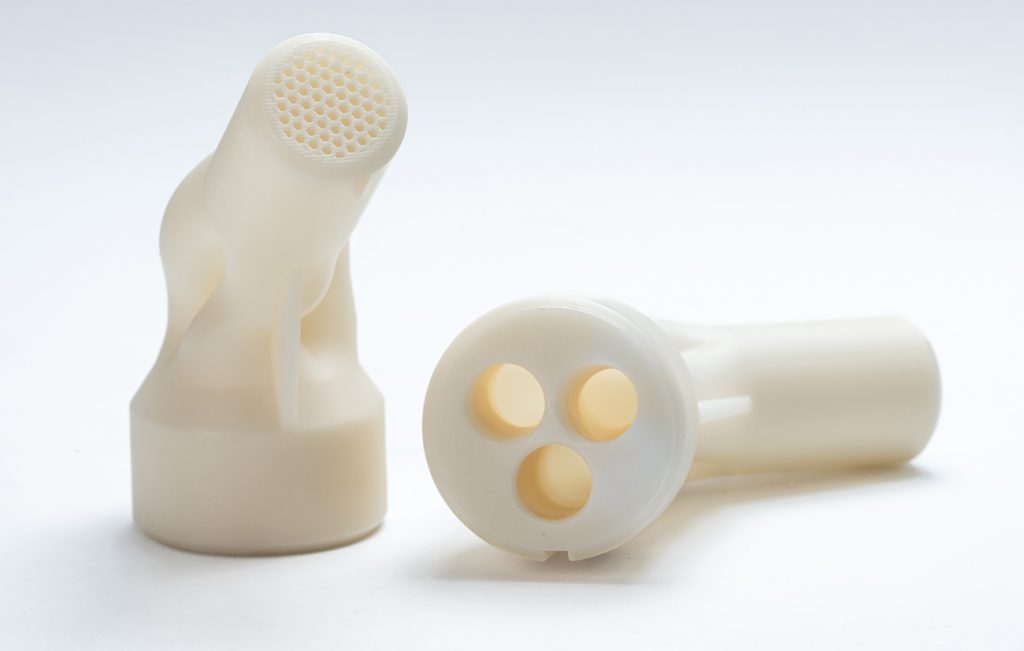
Lithography-based ceramic AM enables the production of extremely delicate structures and complex internal geometries that would be extremely difficult or impossible to achieve using conventional manufacturing methods, such as injection moulding. It also ensures exceptional precision in the micrometre range, down to 40 µm, and excellent surface quality, both of which are essential for reliable operation in the semiconductor industry.
“Additive Manufacturing allows us to create geometries that would be unthinkable using conventional methods, while achieving maximum functional integration,” explained Nikolai Sauer, CTO at Bosch Advanced Ceramics.
“The original two-part component has now been combined into a single, optimised design. This not only reduces the complexity of the supply chain for the customer and minimises the risk of errors during assembly, but also enables us to significantly improve the gas flow through a flow-optimised honeycomb structure inside the injector. This contributes to the efficiency of the etching process.”
The ability to manufacture complex components without time-consuming and error-prone assembly not only reduces the number of potential sources of error but also increases quality and lowers costs in the long term.
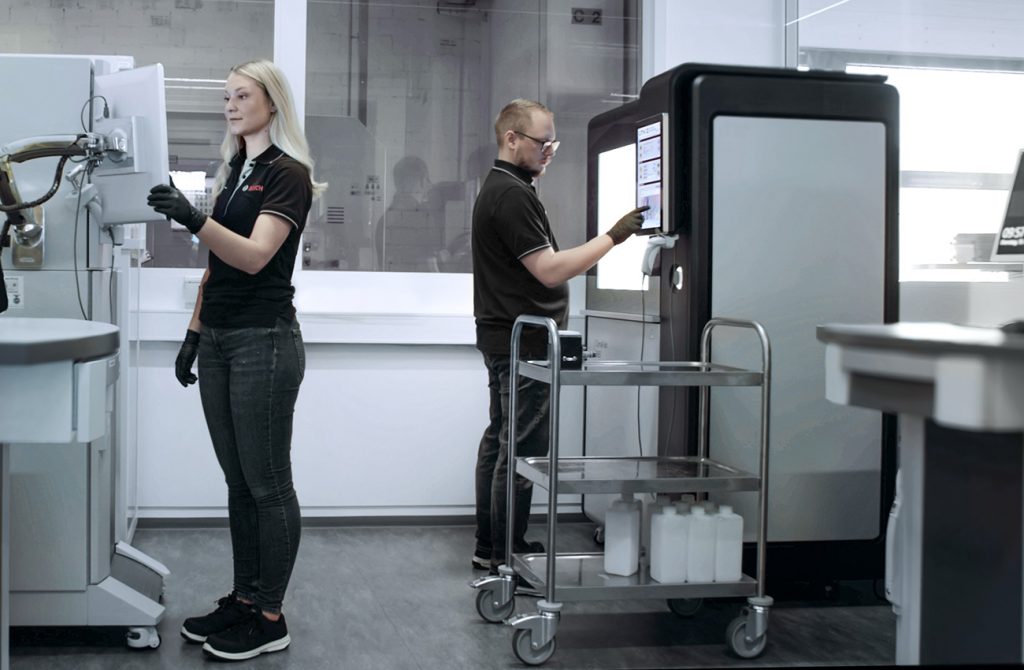
One of the most technically challenging stages in the manufacturing process was the efficient and gentle cleaning of the complex, curved channels after the build is completed. Bosch Advanced Ceramics has developed its own automated and process-optimised cleaning processes for this purpose. These ensure that the still fragile ‘green parts’ are freed of excess material without damage and that the required geometric accuracy of the design is maintained. These proprietary cleaning methods are crucial to ensuring the high quality, functionality, and durability of the end product, enabling the realisation of such demanding geometries in series production.
Performance gains and higher efficiency in use
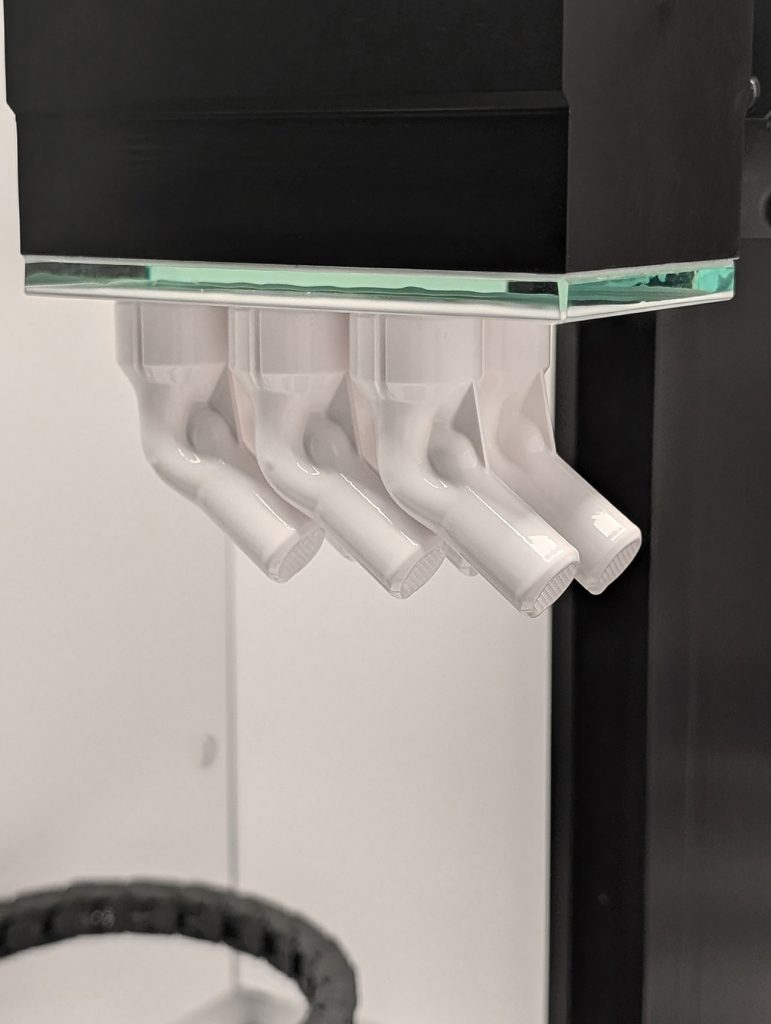
The ceramic gas injector is entering series production with an annual output of 1,000 units (six parts per build), offering users in semiconductor manufacturing significant and multifaceted advantages. The single, functionally integrated part significantly reduces assembly complexity and simplifies the logistics chain, including the procurement and storage of spare parts.
The improved precision of gas flow achieved by the flow-optimised design minimises process variance in the etching process. This directly results in a significant reduction in wafer production scrap, which increases the overall efficiency and profitability of the manufacturing process.
In addition, the superior chemical resistance of aluminium oxide ensures an exceptionally long service life for the injector, even under extremely corrosive conditions and at high temperatures. This extends maintenance intervals, reduces unplanned downtime, and increases the operational reliability of the equipment.
For service technicians, the optimised and self-contained design also makes it much easier to replace the component in case of wear, resulting in faster service times and higher availability of expensive production equipment.
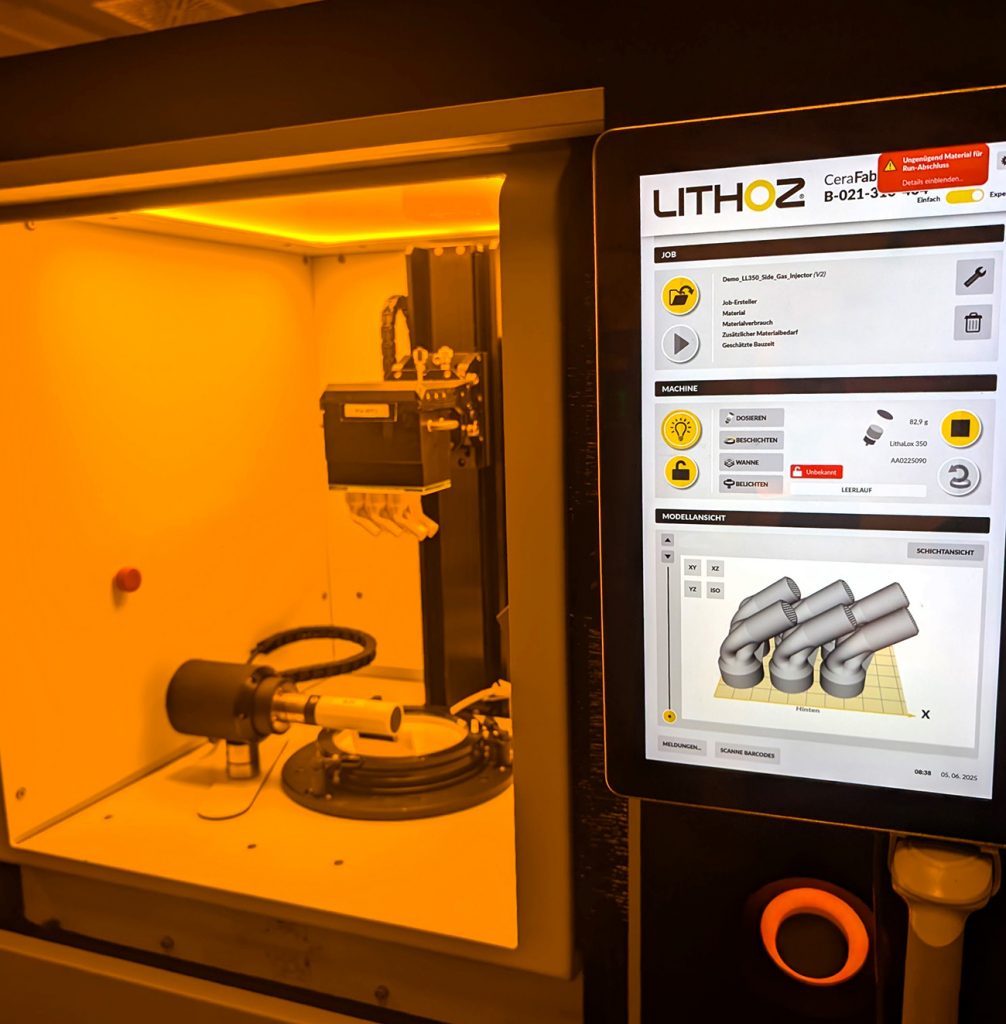
Ceramic AM: Driving innovation in the semiconductor industry
This gas injector is a prime example of how ceramic Additive Manufacturing is influencing component production for the semiconductor industry. Using ceramic AM to process materials, such as aluminium oxide, enables components that meet the demands of modern chip fabrication, including unparalleled thermal stability, cleanroom compatibility, and corrosion resistance. The material’s high purity and wear resistance help to minimise particle contamination, while the process supports the production of complex, functionally integrated components in a single build. This reduces potential sources of error and improves overall process efficiency and reliability.
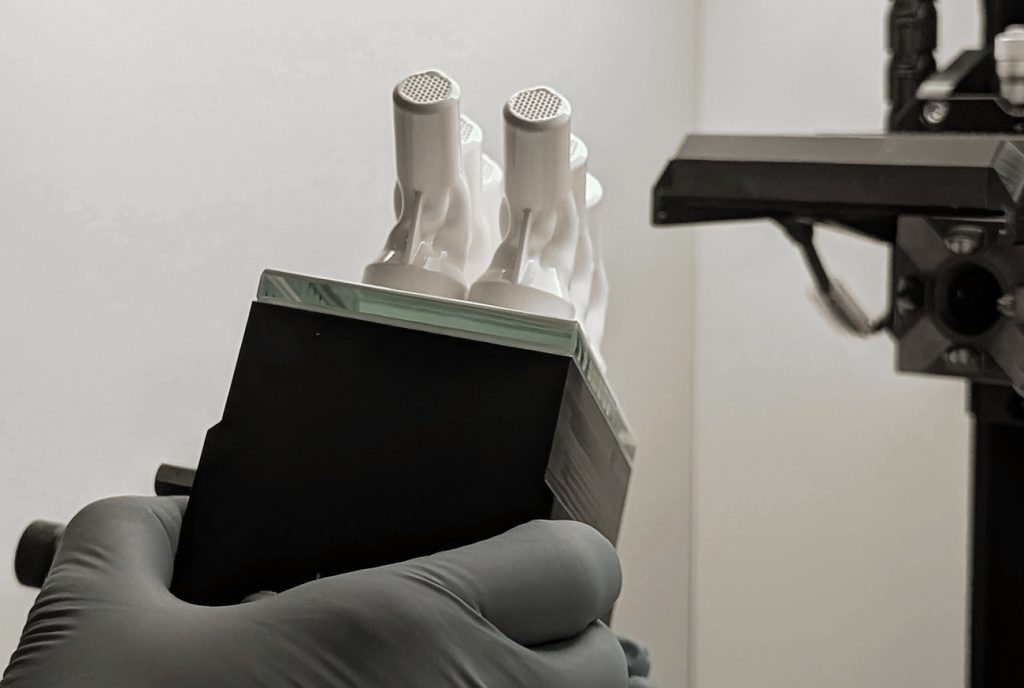
Through this project, Bosch Advanced Ceramics demonstrates how material expertise, process optimisation and Lithoz technologies combine to manufacture specialised components for semiconductor applications. The work also highlights the contribution ceramic AM can make as the industry advances toward future chip generations. Bringing design freedom, material purity and functional integration into a single workflow enables higher precision and improved performance.
Contact
Bosch Advanced Ceramics
Frohwald Heller (Head of Global Sales)
[email protected]
+49 8323 20 4254
www.bosch-advanced-ceramics.com
Lithoz GmbH
Mollardgasse 85a
1060 Vienna
Austria
[email protected]
www.lithoz.com
Authors
Sabine Tulachan (Bosch Advanced Ceramics)
Norbert Gall (Lithoz GmbH)