

Ceramic precision meets analogue performance: How Additive Manufacturing enables design freedom in high-end audio
There is a beauty in ceramics that has captivated us for thousands of years. Today, Additive Manufacturing (AM) is giving this material class renewed appeal by enabling the creation of forms previously impossible to produce, while preserving the mechanical, aesthetic and tactile qualities that make ceramics so valued. A new award-winning Hi-Fi turntable cartridge – developed by HiFiction AG and Steinbach AG using Lithoz GmbH’s AM technology – showcases not only design innovation but also how AM eliminates tooling barriers, making advanced technical ceramics more accessible to smaller businesses. [First published in Powder Injection Moulding International Vol. 19 No. 3, Autumn 2025 | 10 minute read | View on Issuu | Download PDF]
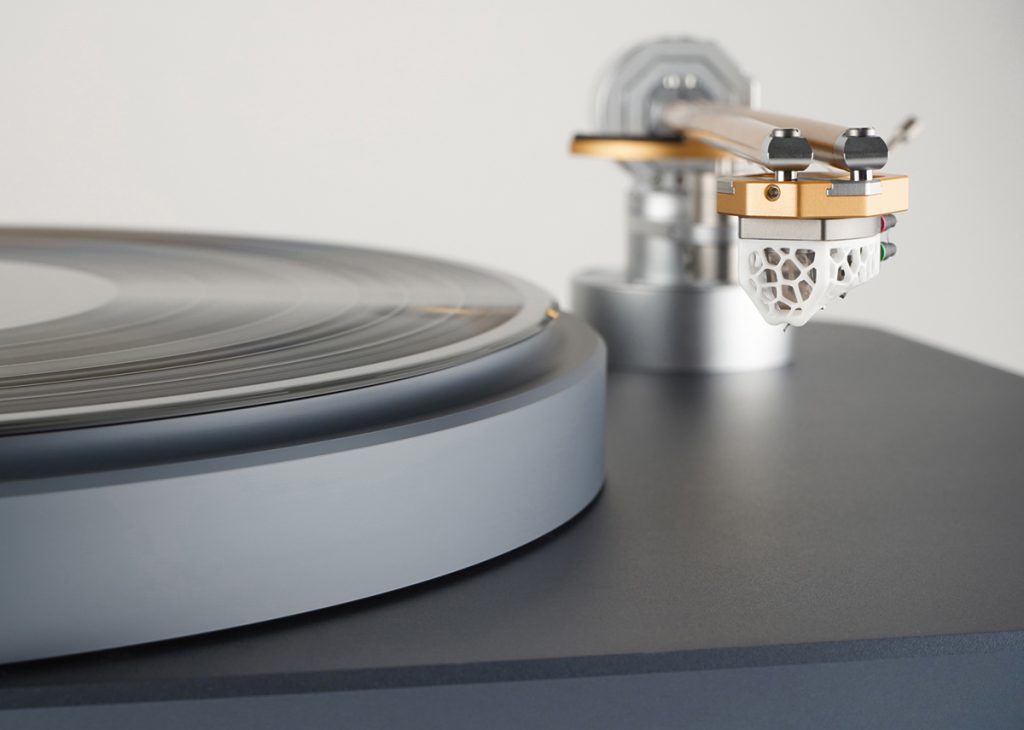
The Thales Voro is the world’s first moving-coil turntable cartridge with a skeletonised zirconia housing, manufactured using ceramic Additive Manufacturing technology. Produced by Germany’s Steinbach AG using Lithoz’s Lithography-based Ceramic Manufacturing (LCM) process, a Vat Photopolymerisation (VPP)-based technology, the design achieves wall thicknesses below 1 mm and dimensional tolerances of ±50 µm without supports or post-processing.
To explore the development of this striking application, we spoke with Ramona Huber of HiFiction, a company based near Winterthur, Switzerland, that develops exclusive high-end audio products; Volker Steinbach, CEO of Steinbach AG; and Johannes Homa, CEO of Lithoz, about how design, manufacturing and technology came together to turn a vision into a reality.
What becomes clear is that ceramic Additive Manufacturing frees application developers from both the high cost of the tooling required for Ceramic Injection Moulding (CIM) and from the expense of modifying designs once tooling is made. In doing so, Additive Manufacturing opens the world of advanced technical ceramics to small and medium enterprises – such as HiFiction – that would once have considered such investment unviable.
This application brings ceramic Additive Manufacturing into the world of high-end audio and the technology’s unique benefits delivered the structural precision, design freedom, and small-series production capabilities needed.

Designed for the discerning high-end ‘audiophile’ market, the turntable cartridge houses HiFiction’s patented generator – the transducer that converts stylus motion into an electrical signal – featuring a double-layer iron core. The design delivers distortion-free signal conversion and exceptional dynamic performance, while its high output efficiency ensures compatibility with a broad range of moving-coil (MC) phono stages.
The skeletonised ceramic AM housing encases this generator. Its design is based on a naturally recurring Voronoi pattern – a geometric structure named after the Ukrainian mathematician Georgy Voronoy. The organic, lattice-like form combines maximum rigidity with minimal sensitivity to airborne noise, enabling optimal resonance behaviour.
The application’s successful development was achieved through close collaboration between HiFiction and Steinbach. Originally launched under the X-quisite brand and now part of the Thales range, the Voro clearly exemplifies how ceramic AM can enable series production of high-precision components. In recognition of this achievement, it received a 2025 iF Design Award.
Developing a low-volume ceramic AM application: From vision to design

When HiFiction set out to create its new cartridge, its ambition was to combine acoustic performance goals with the design freedom of Additive Manufacturing. Despite the striking appearance of the final product, the goal was never purely aesthetic; the housing needed to combine structural rigidity with low airborne sound sensitivity, while matching the precision of its generator technology.
The company’s engineers saw ceramic as the ideal structural material for balancing rigidity and acoustic neutrality. HiFiction’s Ramona Huber stated, “The cartridge structure needed to be rigid to suppress vibrations, but at the same time, the surface area had to be minimised so that no microphonic effects occur in the sound field.”
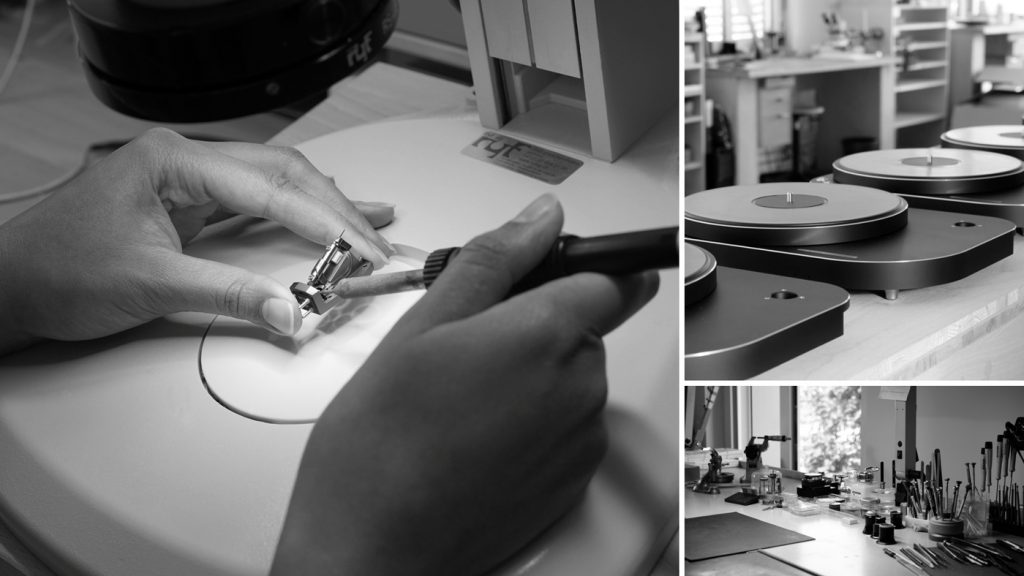
Until now, HiFiction had only used Additive Manufacturing for prototyping. Ramona Huber explained, “In the past, the accuracy of AM technology had always been insufficient for our needs. That changed with the dimensional precision of additively manufactured ceramic parts, which provided the breakthrough, and aligned seamlessly with our overall concept.”
Alternative materials, such as metal and polymers, were considered early in the design phase but were ultimately ruled out for failing to offer the required balance of weight, rigidity, and acoustic behaviour. She continued, “Using a traditional housing made of plastic or metal for the innovative generator would have been inconsistent with our vision, which was for a state-of-the-art housing, a unique and striking design, and outstanding performance.”

However, the housing’s delicate structure introduced a challenge in final assembly: “We also had to address the challenge of assembling the cartridge without screws, as the geometry is too fragile for threads. This was solved using advanced adhesive technology and custom dismantling tools.”
Parallel to its acoustic and structural demands, the housing was conceived as a visual centrepiece – a nature-inspired, skeletonised form that celebrates the design freedom of Additive Manufacturing. “We are very happy that we were able to realise our vision of a skeletonised ceramic sculpture,” stated Ramona Huber.
Refining feasibility into production at Steinbach AG
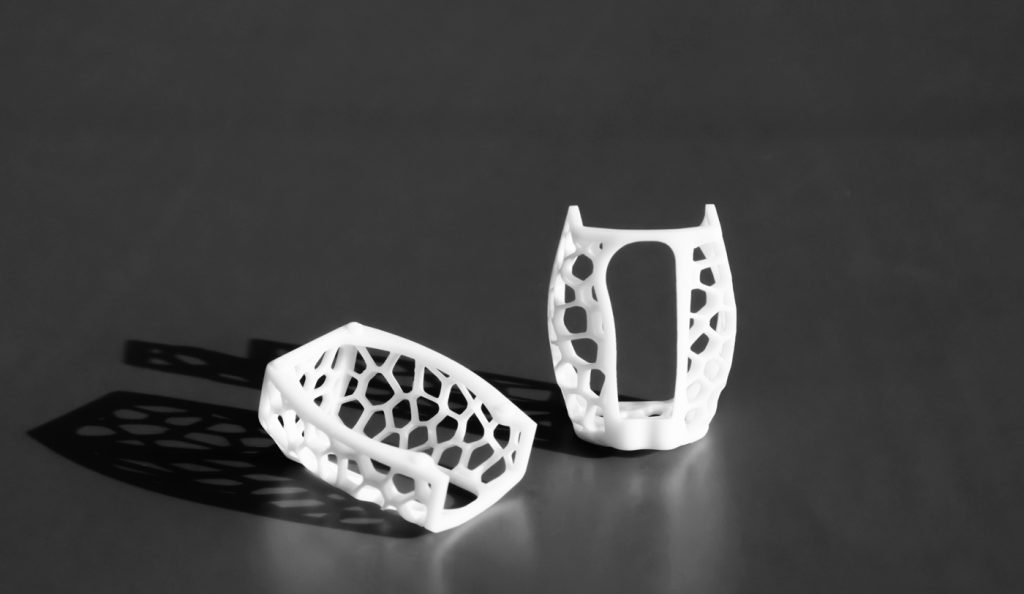
HiFiction approached Germany’s Steinbach AG, a long-standing specialist in technical ceramic processing, with the challenge of manufacturing the complex, Voronoi-inspired housing in zirconia. Turning the vision into a manufacturable and functional part required new thinking.
Volker Steinbach recalled how the collaboration began, following the enquiry from HiFiction’s founder, Micha Huber, who was keen to determine whether the ambitious design was even feasible in ceramic. “Following an initial review of the data by Steinbach, basic feasibility was confirmed and a customised quote was submitted. Even at this early stage, we openly communicated that a support structure would be required at a specific point during production and that this would then be removed, but it could potentially leave visible marks.”
“Subsequently, Mr Huber expressed great interest in optimising the design for production and, in particular, we explored the relationship between overhangs and the necessary support structures, the tolerances that could be achieved in pre-series and series production, the material properties, and possible design changes.”
“Various solutions were proposed to minimise the visual impact of the support structure and design adjustments were made, including adding a rounded edge and reducing a critical overhang. Mr Huber adapted his design accordingly and submitted new data for the quotation. It was also checked whether further elements, such as additional pins on the base surface, could be implemented without affecting the production process negatively.”
“The entire project, from initial enquiry to final delivery of the component, took around three months. During this time, several iterations were carried out to optimise the coordination of the functions, design and manufacturing processes.”
Steinbach concluded, “Both Mr Huber and our team were extremely satisfied with the final result,” said Steinbach. “We take great pride in being part of this groundbreaking project, enabled exclusively by Additive Manufacturing.”

The role of Lithoz’s Additive Manufacturing technology
Steinbach AG, a long-standing Lithoz partner, used the company’s LCM AM technology to build the cartridge housings in zirconia. Lithoz’s Johannes Homa stated, “The use of zirconia and the complex Voronoi structure presented significant manufacturing challenges that traditional ceramic forming methods cannot easily overcome. LCM was developed specifically to handle this kind of complexity, enabling not only fine details and excellent surface quality, but also the mechanical strength needed for demanding end-use applications.”
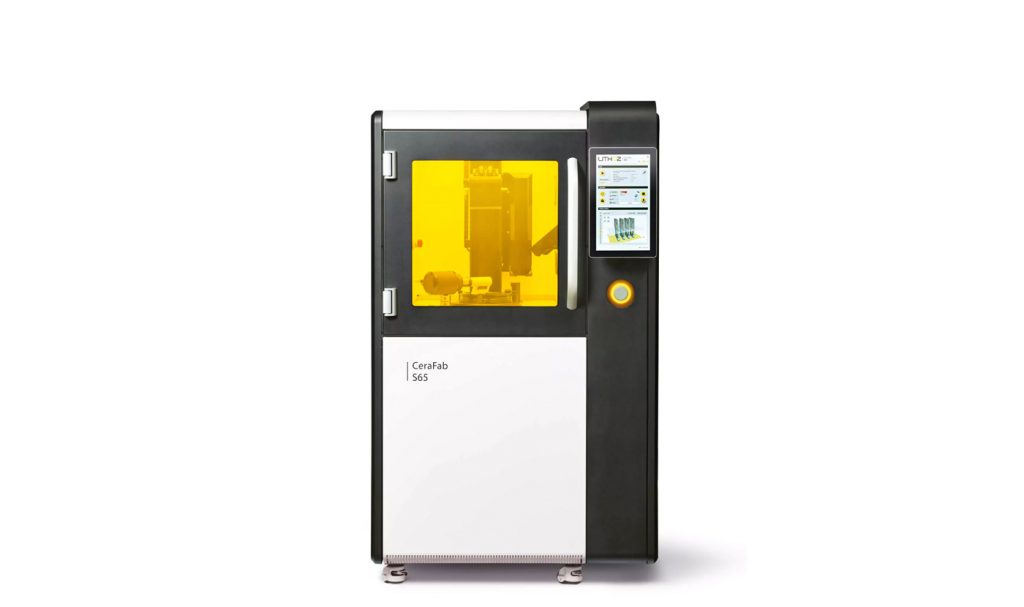
“This product represents a precise and thoughtful use of technical ceramics – enabled by Additive Manufacturing. It reflects the increasing demand for advanced design freedom, accuracy, and functional materials in small, high-value components.”
Each housing is built with a layer thickness of just 25 µm and achieves wall thicknesses below 1 mm, with dimensional tolerances of ±50 µm – critical for maintaining both mechanical precision and acoustic performance. With external dimensions of 17.70 × 21.90 × 11.45 mm, the component demonstrates the resolution and repeatability required for production-scale ceramic AM. Up to fifteen units can be produced in a single build, with around a hundred housings produced in the initial production series.
For Lithoz, however, the Voro represents more than a breakthrough in audio. “This collaboration demonstrates how ceramic AM can support true innovation across industries,” explained Homa, “In this case, we’ve moved beyond simple prototypes and into the production of fully functional, performance-critical parts.”
“Audio is a particularly interesting field for ceramics, where experts can hear and appreciate even the smallest improvements in material behaviour and structural dynamics. This application highlights the increasing demand for advanced ceramic AM solutions across diverse acoustic and precision engineering sectors.”
He added: “We were especially impressed by the synergy between HiFiction’s creative approach and Steinbach AG’s deep manufacturing expertise. It’s through partnerships like this that AM can reach its full potential, delivering reliable, scalable solutions that meet exacting quality standards.”
Ceramic precision and analogue sound
While the skeletonised housing is the most visible outcome of this collaboration, the cartridge also incorporates another innovation: a monobloc ceramic cantilever and coil former, realised from a single piece of high-strength ceramic. Traditionally, these components are made from two different materials bonded together, introducing a weak point in the vibration pathway. Ramona Huber refers to this integration as monobloc ceramic. The result is extremely high rigidity and a precise transmission of vibrations from the stylus tip to the coil, without artefacts – a key factor in the cartridge’s acoustic transparency.
In addition to winning the 2025 iF Design Award, the Voro has also been recognised within the audiophile community. In its 2024 review, Mono & Stereo awarded the cartridge its Upper Echelon Product Award, praising both its innovative material use and its acoustic transparency. In the review, Matej Isak highlighted the cartridge’s ability to extract fine detail across the frequency spectrum, attributing this performance to the technical execution of the monobloc ceramic structure.
Isak praised both its material innovation and acoustic transparency, stating, “It quickly becomes clear that Voro is not just another materialised idea of an esoteric ultra-high-end cartridge theoretical escapade. It has a fascinating and definite technical background, and its conceptualisation in a finalised form allows the music to fully unfold across the entire frequency spectrum” [1].
From prototype to production: What the Thales Voro reveals about ceramic AM
While the Thales Voro cartridge is firmly positioned within the world of high-end audio, the project offers interest well beyond its immediate market. For PIM International readers, the value lies in what it demonstrates about ceramic Additive Manufacturing as a production technology.
The housing’s skeletonised zirconia structure could only be realised through AM, and crucially, not just as a prototype but as a repeatable, series-produced component meeting tight tolerances. It shows that AM can move from feasibility to production even in small-series, high-value applications where the requirements for precision, reliability, and functional performance are no less exacting than in larger-scale industries.
Such examples also help counter the perception that AM is a technology reserved for aerospace primes, medical device multinationals, or other major OEMs. Here, a design-driven small business, working with expert partners, brought a technically ambitious concept into production and into the hands of consumers.
Homa captured this trajectory, describing the cartridge as “a precise and thoughtful use of technical ceramics, made possible by Additive Manufacturing.” But the deeper relevance lies in the collaborative model: creative design paired with industrial know-how, a combination that enabled HiFiction, Steinbach AG, and Lithoz to move from vision to repeatable production.
Looking ahead, Homa positioned the Voro project within a wider market trajectory, emphasising Lithoz’s long-term view: “As more companies explore the capabilities of ceramic 3D printing, we will continue to evolve our technologies and materials to meet new demands, whether in electronics, medical devices, or precision engineering like the Voro cartridge.”
Micha Huber: Combining engineering and music

Founder of HiFiction AG, Micha Huber is both a trained mechanical engineer and a professional musician. After early work in Swiss watch development and music teaching, Huber sought to unite his passions through precision audio design. This ambition led to the invention of the Thales Tonearm, based on a geometric solution using Thales’ circle, resulting in the 2004 patent CH 694567 Tangential Pivoted Tonearm.
Huber founded HiFiction AG in 2008 to advance the Thales brand, combining micromechanical Swiss craftsmanship with high musical standards. While most Thales products are traditionally manufactured in Turbenthal, Switzerland, the X-quisite VORO (now Thales Voro) was produced using Lithoz’s LCM ceramic AM technology by Steinbach AG in Germany, before final assembly in Turbenthal.
Contact
www.hifiction.ch
www.steinbach-ag.de
www.lithoz.com
References
[1] Isak, Matej. (2024), ‘X-quisite VORO cartridge review’ Mono & Stereo, Available at: https://www.monoandstereo.com/x-quisite-voro-cartridge-review/#