

Apple confirms metal Additive Manufacturing adoption – is this Binder Jetting’s big break?

On September 9, Apple announced that metal Additive Manufacturing is being used in three of its new products, the Apple Watch Series 11, the Apple Watch Ultra 3 and the new iPhone Air. This is the first time that Apple has officially confirmed its use of the technology.

The company stated that Additive Manufacturing is used for the titanium cases of the Apple Watch 11 and the Apple Watch Ultra 3, as well as a titanium USB-C charging port housing in the new iPhone Air.
The specific metal Additive Manufacturing processes used have yet to be confirmed; however, both Binder Jetting (BJT) and Laser Beam Powder Bed Fusion (PBF-LB) are believed to be used.
Binder Jetting requires parts to be sintered to achieve dense metal parts, similar to Metal Injection Molding (MIM), a process widely used by Apple. A current job posting, for a Manufacturing Design Engineer (MDE) – Additive Manufacturing at Apple in the US, clearly suggests that Binder Jetting is one of the processes being adopted by the company for high-volume aesthetic products.
The job description states that the role entails optimising “Additive Manufacturing processes for Apple cosmetic, dimensional quality, reliability, and throughput requirements, develop methods to model and characterise key performance indicators in Additive Manufacturing,” and “Support Product Design in development of metal alloys for Additive Manufacturing utilising knowledge of 3D printing systems, powdered metallurgy, binding systems, and debind-sinter-HIP processes.”
A further job posting, for an Additive Manufacturing Subject Matter Expert in Shenzhen, Guangdong, China, leans more towards the PBF-LB process. It requires “First-hand experience in laser powder bed fusion process development, including use of material characterisation tools to aid in process DOE,” and “Knowledge of secondary operations including powder handling and recycling, automation, heat treatment and stress relief processes.” The job’s travel requirements include China, Vietnam, Germany, India and the US.
The watch cases
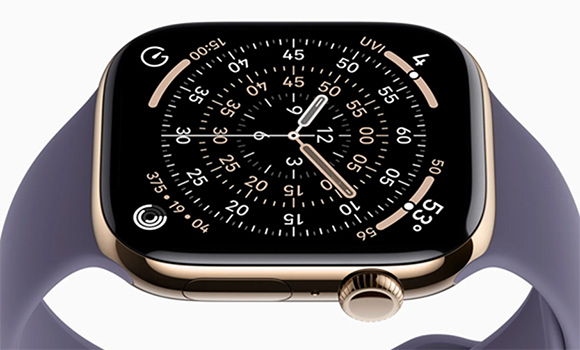
The company stated that the additively manufactured titanium Apple Watch Series 11 and Ultra 3 cases are produced with 100% recycled titanium and, thanks to a reduction in machining steps, just half the raw material is required compared to previous generations. Production is powered by 100% renewable electricity across the supply chain.
The iPhone Air USB-C port
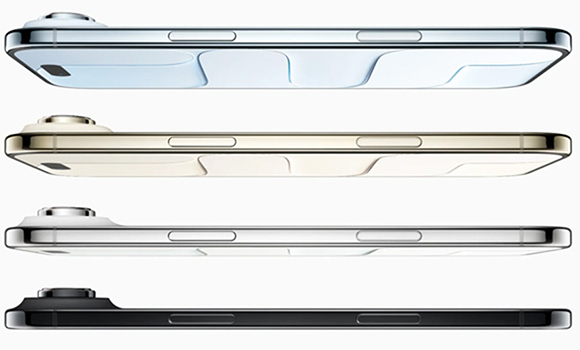
The new titanium USB-C housing for the iPhone Air is reported to be thinner and stronger, thanks to production by metal Additive Manufacturing. It also uses 33% less material than other production processes.
Apple has significant experience in manufacturing small, precision charging port components using metal powder-based processes, with its Lightning connector, in production from 2012 to 2024, being produced by Metal Injection Molding. Over this period, hundreds of millions of MIM parts were manufactured.
AM technology and materials supply chain
Apple has not confirmed its AM technology partners. As with the vast majority of the company’s component manufacturing, AM production is likely outsourced to specialist suppliers close to where its products are assembled. With China’s Additive Manufacturing capabilities and materials supply chain widely regarded as being on par with those in Europe and North America, its suppliers are as likely to be from China as they are from other countries.
This is in sharp contrast to when Apple confirmed its adoption of MIM technology in 2012. At that time, it had to establish an entirely new supply chain in China, relying on local MIM suppliers equipped with Western technology and materials.
The critical role of post-processing
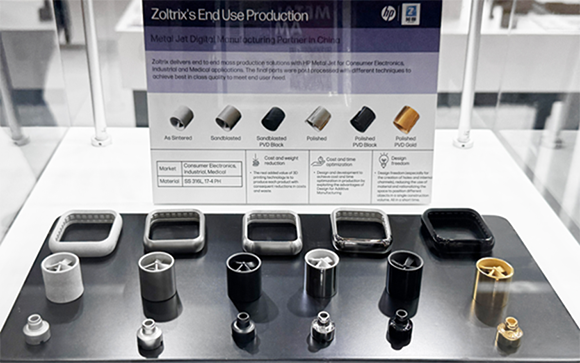
As-built PBF-LB parts and as-sintered BJT parts lack the surface finish required for visible consumer electronics applications – specifically those with complex internal structures and polished surfaces. As with MIM, components must undergo significant post-processing, from CNC machining to surface treatments, polishing and coating in order to obtain the desired finish.
As reported by PIM International in December 2024, the BJT process has been successfully used to produce high volumes of consumer electronics parts.
Why Apple is leveraging metal Additive Manufacturing
The use of Additive Manufacturing to produce watch cases is not new. Whilst it may not have been used at the volume expected to be seen with Apple, a number of watchmakers are taking advantage of the AM process.
Compared to conventional production methods, building parts layer by layer, as in the Additive Manufacturing process, reduces reliance on costly machining processes and minimises material waste, making it more sustainable and cost-efficient.
The technology also provides unprecedented design freedom, enabling the creation of complex internal geometries and lightweight structures that are difficult or impossible to achieve with conventional manufacturing. Together, these benefits allow Apple to optimise performance, streamline production, and bring innovative product designs to market more quickly.
Importantly, the technology also supports Apple’s broader environmental commitments. The company’s Apple 2030 plan aims to achieve carbon neutrality across its entire footprint by the end of the decade.