

AFRL study examines carbon fibre-reinforced zirconium diboride AM
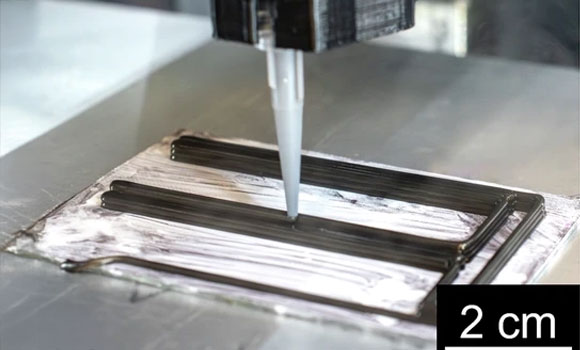
Researchers from the Air Force Research Laboratory, Dayton, Ohio, USA, have published research in npj Advanced Manufacturing focused on the effect of carbon-fibre reinforcement and sintering temperature on the component properties of additively manufactured components.

In the research, two aqueous zirconium diboride (ZrB2) inks, one monolithic and one reinforced with 11 vol % milled carbon fibre, were developed for use with Material Extrusion (MEX) Additive Manufacturing. According to researchers, both materials exhibited nearly identical shear-thinning, yield-stress rheological profiles, allowing for consistent printing parameters.
Three pressureless sintering temperatures (1850°C, 1950°C, and 2150°C) were investigated to understand their effect on density, mechanical properties, and thermo-oxidative performance (thermal shock and oxidation resistance). Increasing sintering temperature generally increased the density of both monolithic and carbon fibre-reinforced components, though the latter consistently reported lower densities.
As reported in the paper, mechanical testing revealed that at lower tested sintering temperatures, monolithic samples had higher flexural strengths due to greater density, while carbon fibre reinforcement improved Weibull modulus, indicating enhanced reliability. At 2150°C, both material types showed high Weibull moduli and similar flexural strengths, attributed by the researchers to microstructural changes such as carbon fibre degradation.
Carbon fibre reinforcement was said to have significantly improved thermal shock resistance during oxyacetylene torch testing to simulate a representative extreme environment. The 1850°C carbon fibre-reinforced build survived the test while the monolithic counterpart cracked instantly. Additionally, the carbon fibre-reinforced samples maintained oxide scale adherence, unlike the monolithic ZrB2 which experienced severe oxide scale cracking and spallation. This improved oxidative performance was attributed to fibre-like pores formed by carbon fibre oxidation within the oxide scale, accommodating volume contraction of zirconia (ZrO2).
The paper, ‘Effect of carbon fibre reinforcement and sintering temperature on mechanical properties, thermal shock resistance, and oxidation behaviour of zirconium diboride formed via material extrusion Additive Manufacturing,’ aims to present a rapid, low-cost method for developing near-net shapes of carbon fibre-reinforced ZrB2 with survivability in extreme environments, while offering insights into how carbon fibre incorporation and sintering temperature affect the resulting ceramic properties.
The open-access article is available here.