

AFT-Hungary scales MIM production for high-performance defence components in Europe
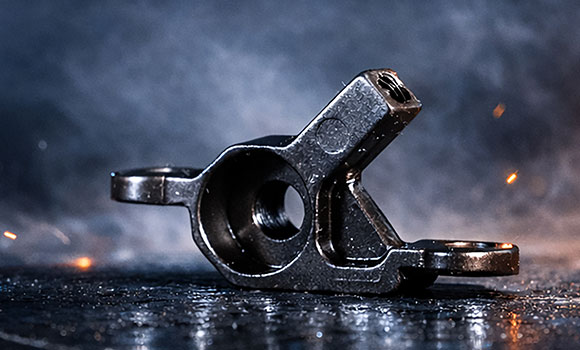
AFT-Hungary, part of ARC Group Worldwide, has reported significant growth in demand for firearm components produced by Metal Injection Moulding, driven by rising defence investment across Europe and increasing geopolitical pressures globally. According to Ádám Kurusa, General Manager of AFT-Hungary, the current security environment has led to renewed focus on domestic defence production capacity, particularly within Hungary.
“Due to the current geopolitical situation in Europe and beyond, the firearms market has seen a remarkable increase in volume,” stated Kurusa. “Many countries are strengthening their domestic defence capabilities and production capacity. Hungary is one of those countries, and we have seen a greater national focus on developing local firearms manufacturing capability.”
Kurusa said the company has been involved in supporting local firearms manufacturing development through MIM. “While Hungary has had some domestic firearms production, this issue has received a greater focus lately,” he said. “AFT had been part of that development cycle to help Hungarian firearms establish a base using the Metal Injection Moulding process.”
“The Metal Injection Moulding process can be used for parts in medium to high volumes – above 20,000 pieces per year – with complex designs and using low alloy steel and stainless steel,” Kurusa explained. “Our previous experience in this industry has given us strong leverage in helping to establish a domestic base for MIM firearm components.”
Among the components being produced are triggers, hammers, safeties and magazine releases. These are typically manufactured from 4140 low-alloy steel and subsequently heat-treated. Protective surface treatments such as black oxide, black phosphate or QPQ coatings are applied to provide corrosion resistance and durability in service conditions.
TRUSTED BY INDUSTRY’S BIGGEST NAMES
Discover how we help leading brands shape the industry conversation
| Contact us |
European expansion and NATO-related growth
AFT-Hungary also reported increased activity with European customers, which it linked to NATO procurement requirements and rising defence budgets. “Moving into Europe, we have seen demand for MIM firearms components with other European customers due to the fact that AFT is NATO certified and these parts can go to the militaries inside Europe,” Kurusa said.
“As NATO countries are increasing their defence spending, we have nearly doubled the amount of part numbers with a current customer, and their volume has increased fivefold,” he added. “Even non-NATO customers have shown an increase, as we went from three part numbers with a customer to over twenty.”
Kurusa noted that the newer programmes are increasingly focused on rifle components, explaining that customers have “invested in upgrades from single cavity tooling to multi cavity tooling to cover the new demand.”
Middle East demand and optics components
Beyond Europe, AFT-Hungary also pointed to growth in the Middle East. “In regions beyond Europe to the Middle East, there have also been increases in the demand for MIM parts in the firearms industry for both optics and the firearms components themselves,” Kurusa said. “The Middle East is ramping up its demand for parts, and we have seen a renewed interest in using parts that take advantage of the Metal Injection Moulding technology for defence components.”
Optics components, the company notes, frequently utilise 17-4 stainless steel, combined with heat treatment and QPQ coating to deliver the required strength and corrosion resistance for field use.
Technical challenges in MIM firearm components
Despite the growth opportunities, manufacturing firearm components via MIM presents specific technical challenges. “Regardless of the region in which the parts are produced, they all present the same set of issues,” said Alan Bird, Engineering Manager at AFT-Hungary. “The parts have complex geometry with many thin sections and strict hole position tolerances that do not lend themselves well to the geometrical variation that comes from the MIM sintering process.”
“While firearms parts rely more on functional gauging than other parts for the MIM market, they still require correct and agreed-upon measuring techniques,” he continued, “to make sure that the customer is aligned with how the parts will assemble correctly.”
He added that sintering staging and tray design are critical for numerous components. “Many internal components do not have flat and easy-to-establish sintering surfaces for the parts, so these need custom sintering trays.”
“One example had a tray design go through thirteen iterations,” Bird added, “before ultimately achieving the required angle in the part to meet specification.”
“Going forward, MIM parts are making inroads into the European firearms market and beyond,” Kurusa said. “Increasingly complex geometries, variation in base metals, heat treatments, post-sintering and coating options make MIM a process that is well tailored to this growing market.”
www.arcw.hu