

Bodycote brings ADM stainless steel hardening services to North America
Bodycote plc, headquartered in Macclesfield, UK, has introduced S3P ADM (Austenitic, Duplex, Martensitic) to its range of services in the USA, expanding its Specialty Stainless Steel Processes (S3P) portfolio and providing local access to advanced stainless steel surface hardening.
TRUSTED BY INDUSTRY’S BIGGEST NAMES
Discover how we help leading brands shape the industry conversation
| Contact us |
The addition of the process in North America is intended to reduce transportation costs and tariff exposure for regional customers, while strengthening Bodycote’s global S3P network.
The ADM capability has been installed at the company’s facility in Mooresville, North Carolina. The treatment vessel can process components up to 2 m in length and 1.2 m in width, enabling the surface hardening of larger stainless steel components than previously possible in North America. Target sectors include oil and gas, food and beverage, and medical technology.
The process can also treat martensitic stainless steels, which are commonly used in high-strength and load-bearing applications.
Temitope Oluwafemi, S3P Technical Manager for North America at Bodycote, stated that demand is increasing for stainless steel components capable of operating for longer periods in harsh environments without the risks associated with coatings.
According to the company, introducing ADM in the USA will enable shorter lead times for regional customers while expanding processing capability for larger stainless steel components across multiple industries.
Austenitic, Duplex, Martensitic
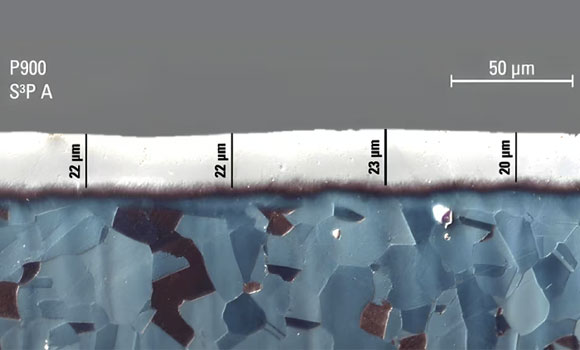
ADM is described by Bodycote as a low-temperature, diffusion-based surface hardening process for stainless steels. Performed below 500°C, the treatment reportedly increases surface hardness while maintaining the corrosion resistance of the base material.
Unlike coatings or plating processes, ADM forms a hardened diffusion zone within the stainless steel surface rather than creating a separate surface layer. As a result, the treatment avoids risks associated with coating delamination, cracking or chipping during service.
The process is also said to maintain dimensional stability, allowing finished components to be treated without significant impact on part geometry or tolerances.