

ORNL and Dimensional Energy demonstrate leak-tight ceramic components
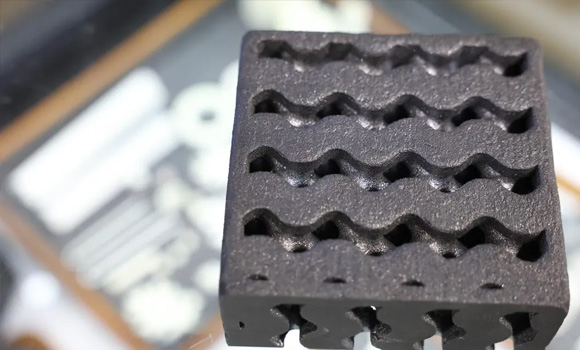
Scientists at the US Department of Energy’s Oak Ridge National Laboratory (ORNL), Tennessee, have collaborated with Dimensional Energy, Ithaca, New York, to integrate Binder Jetting (BJT) Additive Manufacturing with a post-processing method to produce leak-tight ceramic components. ORNL reports that this is the first known additively manufactured leak-tight joint.
TRUSTED BY INDUSTRY’S BIGGEST NAMES
Discover how we help leading brands shape the industry conversation
| Contact us |
While ceramic components can perform exceptionally well in extreme environments, as they exhibit high temperature resistance, chemical stability and mechanical strength, current methods of ceramic 3D Additive Manufacturing may fall short on scalability, states ORNL. This limits their use in critical applications such as high-throughput chemical reactors, which are used for pharmaceutical or chemical processing, where large, leak-proof parts are essential.
ORNL has stated that its solution offers a scalable method for creating complex ceramic structures by leveraging a joining technique that enables smaller AM pieces to be assembled.
“Ceramic 3D printing allows fabrication of intricate and high-performance components that are difficult to achieve with traditional manufacturing methods,” said researcher Trevor Aguirre with ORNL’s Extreme Environment Materials Process Group. “This advancement provides a validated methodology to produce high-quality components — and enable the development of next-generation reactors.”
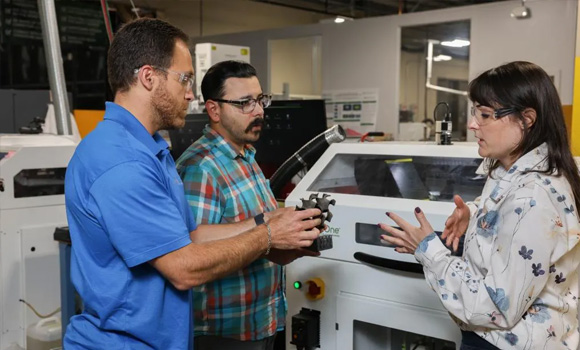
ORNL partnered with the originator of the joining method, Dimensional Energy, to perform a comprehensive case study. The team evaluated multiple design configurations to pinpoint optimal structures that inherently ensure gas-tight integrity. In addition, the team developed advanced post-processing techniques to improve the bonding and sealing of ceramic segments.
The technique assists in meeting the demand for large-scale components and enables manufacturers to leverage cost-efficient Binder Jetting. By adopting this Additive Manufacturing technology, ORNL anticipates that its solution will pave the way for broader industrial adoption of ceramic Additive Manufacturing in other high-performance applications, including aerospace.
“Dimensional Energy believes that ceramics have the potential to fill niche applications as components of a chemical refinery, with many properties vastly superior to metal alloys,” stated Bradley Brennan, chief science officer for Dimensional Energy and study PI. “However, manufacturing of large and complex parts is a challenge, and sealing parts together to form a robust and leak-tight connection is equally difficult. Dr Bhargavi Mummareddy, award-winning Additive Manufacturing expert at Dimensional Energy, was tasked with pushing the boundaries of what is possible, and she surpassed all our goals alongside the talented ORNL team.”
The collaborative team received SME’s 2025 Dick Aubin Distinguished Paper Award for its research. The team has published related research in Ceramics International.