

Lithoz develops aluminium nitride heat exchangers for hydrogen-powered aircraft
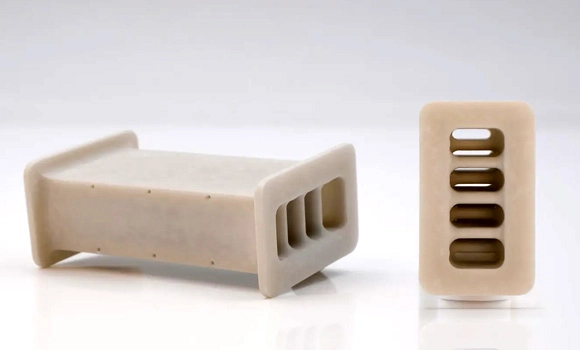
TRIATHLON is a project funded by the European Union’s Horizon Europe Research and Innovation Action (RIA) programme, coordinated by Stichting Materials Innovation Institute (M2i) and Delft University of Technology (TU Delft). The consortium of eight partners aims to overcome the challenges associated with scaling up hydrogen powertrain technology to megawatt-class aircraft.
TRUSTED BY INDUSTRY’S BIGGEST NAMES
Discover how we help leading brands shape the industry conversation
| Contact us |
As part of the TRIATHLON project consortium, Lithoz, based in Vienna, Austria, is developing an additively manufactured ceramic heat exchanger (HEX) made from aluminium nitride (AIN) for aircraft hydrogen-electric propulsion systems. These heat exchangers are expected to contribute to eliminating the need for cryogenic hydrogen pumps, significantly improving system efficiency and sustainability in aviation, while reducing maintenance and saving hundreds of thousands of euros in costs.
Designed by Ergon Research, a consulting and research firm in the mechanical, energetic and informatics engineering field based in Florence, Italy, this application is based on thermodynamics-driven control management. It leverages the precision and scalability of Lithoz’s Lithography-based Ceramic Manufacturing (LCM) CeraFab System AM machines and materials.
Aluminium nitride is believed to be a suitable material for addressing the thermal management of these high-performance components due to its excellent thermal expansion coefficient and conductivity (211 W/mK). This boosts thermal efficiency and supports the compact, lightweight design essential for electrified aviation.
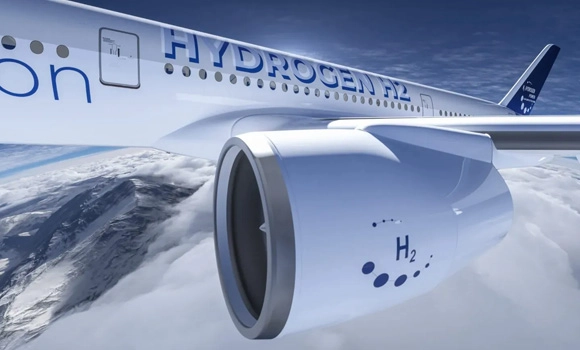
LCM printed high-performance materials such as AIN, with its excellent thermal and mechanical resistance as well as stable behaviour below 600 °C against hydrogen, enable unmatched precision, a high surface-area design and superior thermal conductivity – all of which are crucial for next-generation hydrogen-electric systems.
“This is a breakthrough application of our ceramic 3D printing technology in a completely new field. Aerospace and sustainability are key growth areas for Lithoz, so achieving serial production with aluminium nitride is a significant milestone for these sectors,” stated Dr Johannes Homa, CEO of Lithoz. “This material opens up design and application possibilities that no one else can currently realise, making a decisive contribution to a greener future in aviation through ceramic AM.”