

Novel hydrogel-infused ceramic Additive Manufacturing process
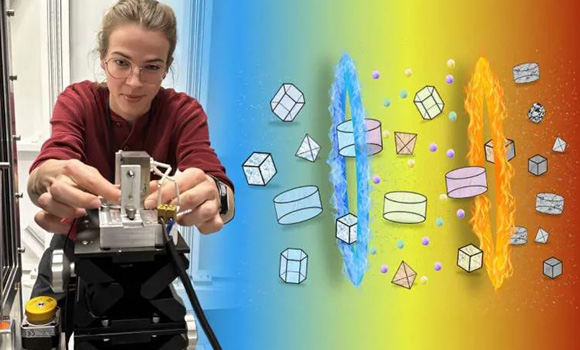
US Department of Energy Nuclear Energy University Program fellow, Natalie Yaw, has published a paper based on her findings during a summer internship at Lawrence Livermore National Laboratory (LLNL). The paper, published in Inorganic Chemistry Frontiers, explores hydrogel-infused Additive Manufacturing (HIAM) of ceramics, which are essential materials in industries such as aerospace because of their high thermal stability, chemical resistance and mechanical strength. In particular, additively manufactured ceramics offer design flexibility, reduce material waste, accelerate production and support tailored applications.
TRUSTED BY INDUSTRY’S BIGGEST NAMES
Discover how we help leading brands shape the industry conversation
| Contact us |
To address the challenges associated with traditional ceramic manufacturing, HAIM separates the manufacturing step from the ceramic material. The process begins with a viscous orange resin, which is used to additively manufacture an initial gel, that is then converted into a hydrogel via several processes, including infusion with a metal salt solution. From there, much like the firing of traditional ceramics, the hydrogel is heated to burn off organic components and convert the metal salts into metal oxides.
The study shows that the hydrogel formulation and the type of metal salts both play key roles in determining the ceramic’s quality, density, porosity and strength. By evaluating the impacts of these precursors, the work provides valuable insights for optimising ceramic quality and shape, creates a foundation for expanding HIAM to new materials and applications, and addresses a knowledge gap in the HIAM space.
Throughout this research, Yaw found the collaborative environment and wide-ranging expertise at LLNL to be an asset.
“I had several ‘aha’ moments when talking to people in different disciplines who had completely different perspectives on my work and ideas I would never have considered,” Yaw shared. “It really highlighted the importance of interdisciplinary collaboration.”
Yaw worked closely with LLNL research scientist Maryline Kerlin on the project.
“This was Natalie’s first experience as a lead author, and together we navigated the challenges of writing, revising and addressing feedback, including conducting additional experiments to strengthen the paper,” said Kerlin. “I believe her story reflects the incredible opportunities LLNL provides for young scientists.”
The full article, ‘Precursor design for additive manufacturing of ceramics through hydrogel infusion’, is available here.