

Network established to develop process chain for sinter-based nickel Additive Manufacturing
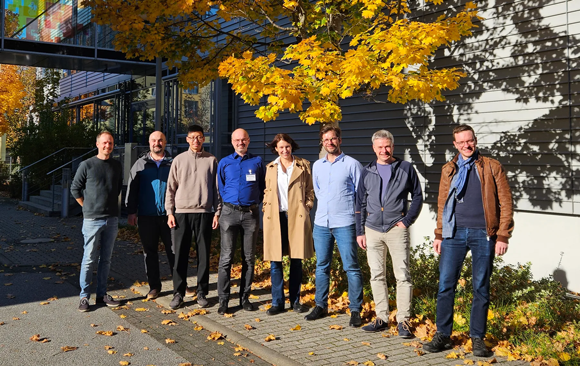
The Fraunhofer Institute for Manufacturing Technology and Advanced Materials (IFAM), Dresden University of Applied Sciences (HTW), and the Fraunhofer Institute for Material and Beam Technology (IWS) are collaborating on the ‘Simsalabim’ project to design a continuous process chain for the sinter-based Additive Manufacturing of nickel-based alloys. Alongside the process chain, the project aims to establish new materials and processes in order to offer future industrial partners a broader range of solutions.
The end goal of the project is to reach TRL 5 whilst keeping resource efficiency in mind. The partners are aiming to save two to three development cycles and accelerate the calibration of new materials by a factor of five. In the long term, the project is also intended to serve as the nucleus for a regional network for sinter-based Additive Manufacturing processes. Based on the results of this project, other material classes (e.g. tool steels and cobalt-based alloys) are also to be investigated in the future.
TRUSTED BY INDUSTRY’S BIGGEST NAMES
Discover how we help leading brands shape the industry conversation
| Contact us |
The growth of sinter-based Additive Manufacturing
To date, metal Additive Manufacturing has primarily focused on laser-based processes. Although these are characterised by a high level of technological maturity, they can’t meet certain challenges in the realms of materials, geometries and productivity. This gap is why the industry’s interest in sinter-based additive processes is growing; the technology’s advantages include the ability to process difficult-to-weld materials, high productivity, good surface quality and cost-effective production.
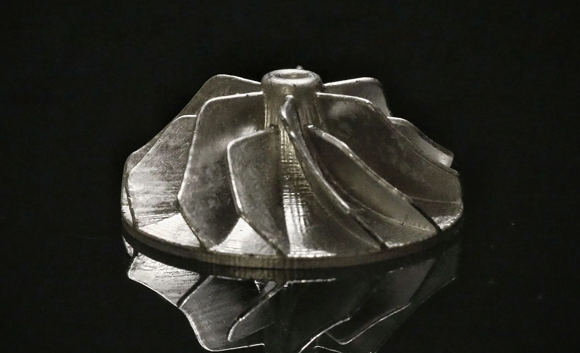
Sinter-based Additive Manufacturing processes metal powder without complete melting, reducing thermal gradients and the formation of residual stresses as well as susceptibility to cracking and the formation of harmful phases.
This offers a great potential for high-strength nickel-based superalloys in particular, as these alloys cannot be processed crack-free using laser-based processes. Characterised by high strength and corrosion resistance at high temperatures, these alloys are often the first choice for high-temperature applications in the energy, transport and hydrogen industries.
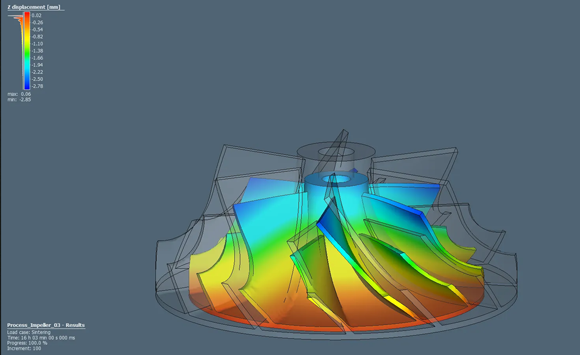
The lower degree of maturity of sinter-based Additive Manufacturing processes compared to laser-based processes is causing reservations on the part of the industry with regard to the achievable properties, such as proximity to the final shape and material microstructure. There is, therefore, a need to digitally predict the sintering shrinkage of complex structures and the adjustment of material properties in particular.
Invitation to exchange ideas within a network
Manufacturers and users of high-temperature materials are invited to an initial network meeting on November 27-28, 2024, in order to incorporate the specific requirements, needs and applications of the industry into the developments right from the start. The continuing network exchange will work to jointly advance the cost-effective production of components using sinter-based Additive Manufacturing.
With the Saxon scientific institutions Fraunhofer IFAM, Fraunhofer IWS and HTW Dresden — three research partners with distinctive expertise and in-depth experience in aviation, energy technology, Additive Manufacturing and Powder Metallurgy — are available on the development side.