

Additively manufactured high-performance ceramics project receives $4.5 million DoD grant
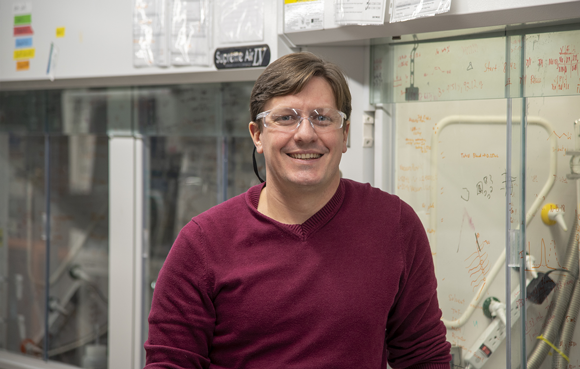
An additively manufactured high-performance ceramics project, titled “Photochemical and Photothermal Additive Manufacturing of Preceramic Polymers,” has been awarded a five-year, $4.5 million Multidisciplinary University Research Initiative grant by the US Department of Defense (DoD), through the Office of Naval Research (ONR). The project is led by Penn State and Michigan State researchers, Robert Hickey, Michael Hickner, but the team also includes the Massachusetts Institute of Technology (MIT) and the University of Southern California (USC).
Priya Vashishta, a professor of chemical engineering and materials science, and Aiichiro Nakano, a professor of computer science, both at the USC, along with Alexander Radosevich, a professor chemistry at the MIT, are co-PIs on the project. Also contributing is Jon-Paul Maria, a professor of materials science and engineering from Penn State.
TRUSTED BY INDUSTRY’S BIGGEST NAMES
Discover how we help leading brands shape the industry conversation
| Contact us |
The project seeks to create a one-step process to produce ultra-high-temperature ceramic materials without bulk heating. The team is focusing on the potential of using light to convert polymer precursor molecules – easy–to–process starting materials – into the final ceramic product.
“The big problem currently in forming ceramics is the high temperatures and high energy required,” Hickey said. “That has been a detriment, especially for 3D printing, which is currently very hard to do precisely with these materials.”
Converting polymer precursors to ceramics currently involves heating the materials in bulk to high temperatures – a process that can lose as much as 50% of the precursor material. The process can also change the geometry of the finished ceramic parts, contributing to the trickiness of precise Additive Manufacturing, Hickey said.
Using high-intensity lasers, the scientists estimate that they can produce chemical reactions in the precursor materials that will allow them to rapidly densify into hardened ceramic materials without bulk heating. This would enable rapid, high-fidelity Additive Manufacturing, the researchers said, because heating materials with light leads to faster processing than traditional thermal methods.
“There’s a major need to try to reduce the energy necessary to convert or make these ceramics and to prevent major geometry changes after printing and processing,” Hickey shared. “So, really, we are looking at how to convert polymers into ceramics using light with the ultimate goal of 3D printing high-performance ceramics.”
The MURI programme involves teams of researchers investigating high-priority topics and opportunities that intersect more than one traditional technical discipline. According to the ONR website, this multidisciplinary approach stimulates innovations, accelerates research progress and expedites the transition of results into naval applications for many military problems.
“This project funding is critical to bring together a world-class team with partners that have unique skills and that have displayed outstanding results in their individual programs and through existing and previous collaborations, including Penn State with our decades-long traditions in ceramic science and materials chemistry and our long history of participating in DoD-focused research,” stated Benjamin Lear, professor of chemistry at Penn State and a co-principal investigator (PI) on the project. “Penn State, Michigan State, MIT and USC are ideal partners in this work and already have existing ties between computational and experimental researchers on this team.”
The researchers said that the project will involve synthesising novel precursors, exploring different ways to promote light-based ceramic conversion, gaining computational insights into the reaction conversion pathways and feeding the insights back to precursor design and synthesis.
“It’s a combination of experiment and simulation theory,” Hickey added. “We will feed our initial results into our simulations, which can then predict new polymer precursors that will provide even better results. And so, this feedback loop where we’re being informed by theory and simulation will help us to redesign new polymer materials. Simulation can also point the way towards chemistries that we haven’t considered experimentally.”
The scientists said the findings could impact future DoD efforts in advanced hypersonic vehicles. The ability to additively form ceramic materials that can perform at ultra-high temperatures into new shapes significantly opens the design window for advanced re-entry vehicles.
“This programme will open new avenues to Additive Manufacturing ceramic materials across a number of high-temperature metal carbides, such as tungsten carbide, and silicon-based ceramics, such as silicon carbide and silicon nitride,” said Adri van Duin, Penn State distinguished professor of mechanical engineering and a co-PI. “Additionally, new computational capability will be built to predict high-energy reaction intermediates, which will be used to design new precursors and processing regimes.”