

First additively manufactured ceramic subperiosteal jaw implant success

Lithoz GmbH, based in Vienna, Austria, has reported the successful implantation of an additively manufactured zirconia subperiosteal jaw structure in a patient for the first time. Developed as part of the EU-funded INKplant project, the ceramic implant was additively manufactured by Lithoz to address the issue of atrophic jaws, a common problem in older patients.
The INKplant project is made up of nineteen interdisciplinary partners led by Profactor GmbH. The aim is to create additively manufactured patient-specific implants to treat various pathologies affecting the elderly.
TRUSTED BY INDUSTRY’S BIGGEST NAMES
Discover how we help leading brands shape the industry conversation
| Contact us |
The loss of teeth can cause the erosion of the jawbone, resulting in atrophic jaws and rendering the use of dentures impossible. With severe atrophy, conventional dental implants require additional lengthy operations to graft new bone to anchor the implants. Such operations are difficult for elderly patients who cannot undergo bone grafting due to health issues.
Made of biocompatible high-strength zirconia using Lithoz’s LCM technology, a form of Vat Photopolymerisation Additive Manufacturing, the implant did not require any bone augmentation and required only one procedure, reducing healing time by an estimated 75% and avoiding excess trauma for the patient.
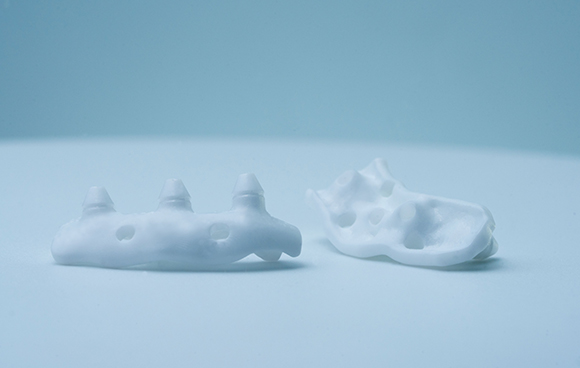
The design of the customised implant was led by the Centre of Medical Physics and Biomedical Engineering at the Medical University of Vienna in collaboration with Dr Staudigl. During the design process, BTI Biotechnology Institute and BioMed Centre Innovation GmbH were also said to have contributed significantly.
The design of the customised implant was pioneered by the Centre of Medical Physics and Biomedical Engineering at the Medical University of Vienna in collaboration with Dr Staudigl. During the design process, BTI Biotechnology Institute and BioMed Centre Innovation GmbH also contributed significantly with their expertise. The implant will be patented and adopted as a medical device by BioMed Centre spin-off Agensmed GmbH and will be manufactured using Lithoz Additive Manufacturing machines. A clinical trial is being prepared to systematically validate its efficacy.