

Sintering of cemented carbides discussed in online guide from TAV Vacuum Furnaces
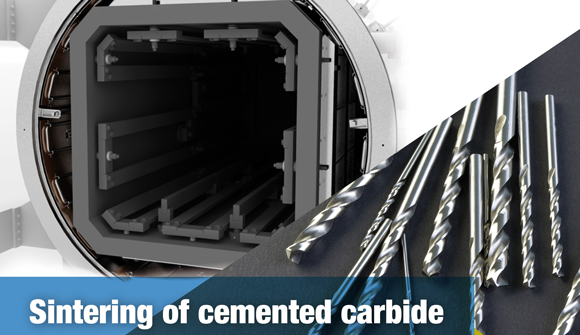
TAV Vacuum Furnaces, based in Caravaggio, Italy, has published an introductory guide to the sintering and production of cemented carbides. Divided into two parts, the first section explains the terminology used in the industry, the powders and the importance of a proper dewaxing cycle. The second part looks deeper into the sintering process, discussing the difference between vacuum sintering and sinter-HIP for cemented carbide.
Hard metal, or cemented carbide, refers to a class of materials consisting of carbide particles dispersed inside a metal matrix, TAV explains. In most cases, the carbide of choice is tungsten carbide, but other carbide forming elements can be added such as tantalum (in the form of TaC) or titanium (in the form of TiC).
TRUSTED BY INDUSTRY’S BIGGEST NAMES
Discover how we help leading brands shape the industry conversation
| Contact us |
The metal matrix, or binder, is usually cobalt, but nickel and chromium are also used, adds TAV. This matrix is acting as a cement, keeping together the carbide particles (hence the term cemented carbide). To form hard metal, carbide powders are milled with the metal binder to obtain a powder that is consolidated through pressing, extrusion or Metal Injection Moulding (MIM), followed by sintering.
In that sense, cemented carbide is not a metal but, more properly, a composite material. If titanium carbide prevails in the composition instead of tungsten carbide, a different material called cermet is formed. If the components are melted and alloyed instead of sintered, stellite is formed; a cobalt-chromium alloy containing tungsten and molybdenum.
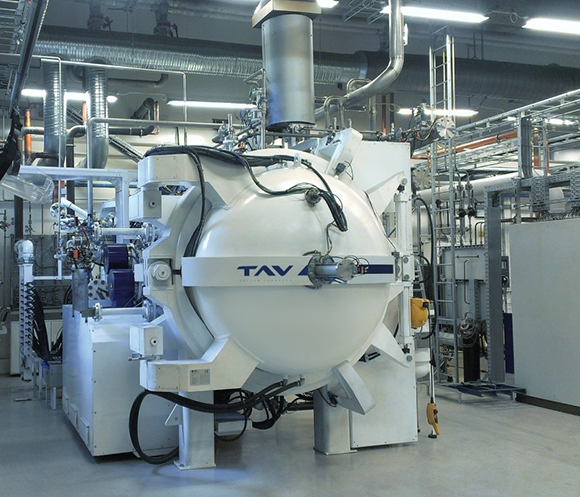
The production process, and importance of the sintering stage, is discussed in more detail in both parts of the online guide. It is stated that consolidation is a critical step in the production process and will ultimately determine the performance of the hard metal tool; all the stages, from dewaxing to sintering, must be carefully selected according to the material characteristics.
TAV continues to explain that vacuum furnaces are versatile machines and can be configured to operate in different conditions during different stages of the process. There are, however, design features that should be kept into consideration during the engineering of the furnace, based on the requirements. For that reason, adds TAV, relying on experts is the only way to be sure you can always get the most out of your cemented carbide parts.
Sintering of cemented carbide: A user-friendly overview– pt.1
Sintering of cemented carbide: A user-friendly overview – pt.2