
Metal Injection Molding in the consumer electronics and IT sectors
The demand for small, precision, high volume components has allowed MIM to thrive in the electronics sector
The electronics industry is a major user of Metal Injection Molded parts, resulting in Asia accounting for more than 50% of global MIM parts sales. Smartphone camera housings, buttons, hinges for folding phones, and connectors of complex geometries are now staple MIM products.
The ongoing miniaturisation of electronic devices calls for ever smaller parts with better performance at lower cost. This is where Metal Injection Moulding can put forward its strengths.
Lightning connector for Apple devices
Metal Injection Molding is used to produce Apple’s Lightning connector, a component that is produced in the tens of millions per week at peak production. Such small, complex, high volume components can be produced in multi-cavity molds to net-shape.
Few other technologies can compete with Metal Injection Molding’s combination of high volume capability and tight tolerances. This is just one of many MIM applications that can be found in smartphones and mobile devices produced by a wide range of OEMs.
Fibre optic connector housings
Thin thin-wall (<1 mm or 0.04 in.) intricate fibre optic connectors housings are often made from 17-4 PH stainless steel. The parts are used in a parallel optical module for ultra-high-speed transceivers in networking and telecom equipment. In addition to the very thin walls, the MIM housing are able to integrate numerous complex details.
Cold plates and heatsinks
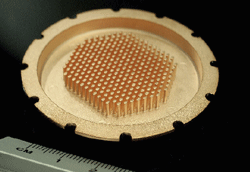
Copper coldplates produced by Metal Injection Moulding leverage the full benefits of the MIM process, with shaping capability that gives designers maximum flexibility for innovative design concepts. In this type of pin geometries, which provides optimum thermal performance.
The sheer number of small cooling pins in such applications, all packed within a small confined space, maximise the overall surface area and hence optimise thermal efficiency.
The thermal performance of the MIM coldplate therefore bring a competitive edge when compared with other manufacturing processes.
Mobile and smartphone parts

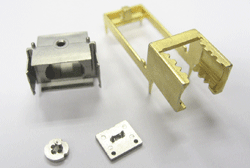
Although from a long discontinued mobile phone, this flip slider and hinge barrel are two parts which mark a milestone in MIM’s adoption in the consumer electronics sector. This mechanism allowed a clamshell style phone cover to slide up and down and flip open in a single movement.
The parts were made from 17-4 PH stainless steel and the MIM process allowed very thin walls, overhanging structures and a complex overall design. The parts also demonstrated the high quality polished finish that can be achieved.
Suggested reading
Metal Injection Moulding in Asia: A story of continuing success for the world’s largest MIM region
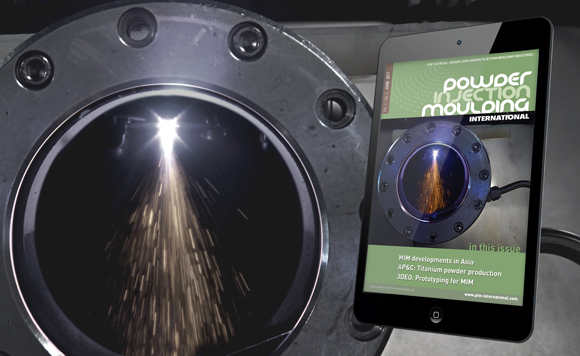
As published in Vol. 11 No. 2, June 2017 (download PDF here)
The MIM industry in Asia is the world’s largest, whether considered in terms of number of parts produced, sales turnover or production volume. China alone is reported to offer half of the world’s installed MIM capacity, with production predominantly focused on 3C applications.
In this report, Dr Paul A Davies, Sandvik Osprey Ltd, provides an overview of the evolution of the region’s MIM industry from a powder producer’s perspective. With selected application examples and data from the recent APMA 2017 conference, the report offers insights into the drivers for growth and how these have stimulated continued investment in capacity.
Next page: Applications: The Aerospace Industry
Download PIM International magazine