
Binders and binder removal techniques in Metal Injection Molding
Essential in the forming of MIM parts, challenging to remove
The most difficult challenge in the early days of Metal Injection Molding technology was to find suitable binder compositions.
The binder is the most important part of the entire process and has to fulfil several tasks. The binder must:
- Be able to incorporate a high volume of fine metal or ceramic powders, typically 60% or more by volume
- Form a coherent mass that can be plastified and injection moulded at elevated temperature
- Allow removal of the main binder constituent in a reasonably short and environmentally friendly process
- Still provide enough strength after debinding by means of the ‘backbone binder’
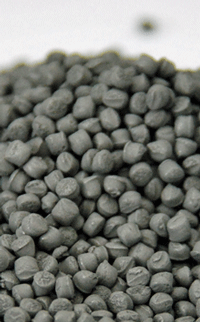
- Be supplied in a regular granular form that can easily be fed into an injection moulding machine
- Have consistent, uniform properties from batch to batch
- Allow for the recycling of runners and green scrap
- Be cost effective
The development of Metal Injection Molding technology was, to a great extent, the development of binder compositions and the corresponding debinding technologies. The development can be traced from the late 1970s when the potential of Raymond Wiech’s basic invention of the MIM process was recognised by the PM community, to the beginning of the 1990s when the real industrialisation of the technology began.
Thermal debinding
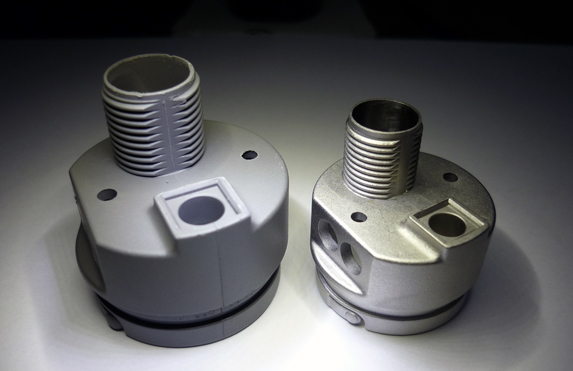
Generally speaking, the binders developed in the original MIM process were mixtures of a polymer such as polyethylene or polypropylene, a synthetic or natural wax and stearic acid. Many of these types of binder systems are still successfully used today.
The feedstocks based on this type of binder were easy to mould, but the removal of the binder required very careful heating in a thermal process lasting 24 or more hours before a network of interconnected porosity was created, through which the remaining binder could easily evaporate without destroying the part.
Catalytic debinding
A significant progress towards a reliable MIM manufacturing process for volume production was made by the invention of the Catamold system by BASF SE, based on polyoxymethylene (POM). This so-called polyacetal binder system provides good mouldability and excellent shape retention.
Binder removal is done in a gaseous acid environment, i.e. highly concentrated nitric or oxalic acid, at a temperature of approximately 120°C, which is below the softening temperature of the binder. The acid acts as a catalyst in the decomposition of the polymer binder. Reaction products are burnt in a natural gas flame at temperatures above 600°C. The process yields parts with an interconnected porosity in approximately 3 hours.
Today, a significant proportion of MIM parts are produced according to this process, particularly in the consumer electronics sector, and a number of feedstock manufacturers offer catalytic systems.
Solvent debinding
Other binder removal techniques have been developed, among which the most successful is solvent debinding. The binder composition includes a constituent that can be dissolved in a liquid at low temperature so that a network of interconnected porosity is formed in the part while immersed in the solvent.
Acetone or heptane is sometimes used as the solvent, although water soluble binder compositions are preferred since the handling of aqueous solvents is easier than that of organic solvents. The solvent, which is contaminated with the binder after debinding, is distilled and recycled. Fig. 8 shows several tanks for solvent debinding.
Although solvent debinding may take longer than catalytic binder removal, the investment and operating costs are lower so that the total processing costs are competitive. There are also environmental advantages compared to other debinding processes.
> Next page: Feedstock for Metal Injection Moulding
Download PIM International magazine