

Dou Yee advances micro MIM for miniaturised parts
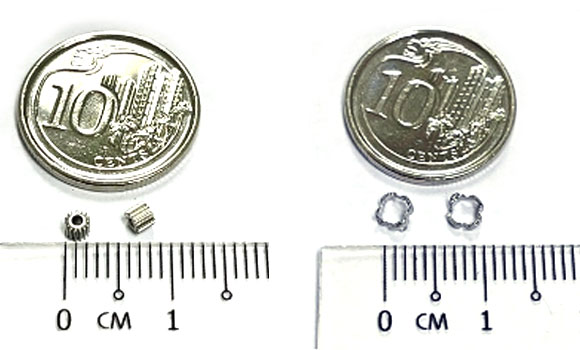
Dou Yee Technologies (DYT), based in Singapore, has advanced its micro-Metal Injection Molding (µMIM) capability in collaboration with the Singapore Institute of Manufacturing Technology (SIMTech), enabling scalable production of ultra-small, complex parts that can be difficult to achieve using conventional methods.
TRUSTED BY INDUSTRY’S BIGGEST NAMES
Discover how we help leading brands shape the industry conversation
| Contact us |
Micro-MIM is an extension of traditional Metal Injection Molding, designed to produce very small parts, often weighing less than 0.1 g, with fine features measured in microns. Compared to machining or other microfabrication methods, µMIM offers a more efficient route for high-volume production, especially for parts with intricate geometries.
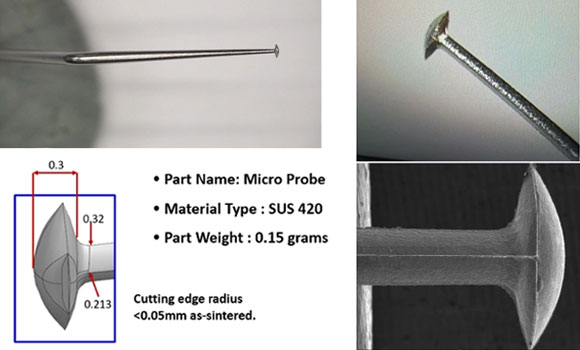
A key highlight of DYT’s capability is reportedly the production of micro medical probes and other precision components with feature radii of 0.03–0.06 mm and linear tolerance control up to ±0.005 mm. At this scale, conventional machining often results in burrs and requires additional finishing. In contrast, µMIM produces clean, near-net-shape parts directly after sintering, reportedly eliminating the need for secondary processing.
The process has been optimised to ensure stable production, good dimensional control, and consistent quality across batches. This makes µMIM well suited to industries that require both precision and scalability.
Applications and outlook
The company states that the ability to produce burr-free, high-precision micro metal parts opens new opportunities across several industries. In electronics and telecommunications, µMIM supports continued miniaturisation of devices by enabling compact mechanical components.
In the medical field, µMIM is especially promising for minimally invasive surgical instruments. These applications require extremely small, smooth, and reliable components to ensure patient safety and performance.
DYT has demonstrated the production of micro medical probes and similar components used in minimally invasive procedures. These parts benefit from the µMIM process by achieving very fine features, smooth surfaces, and consistent quality without additional machining.
The company states that with these advancements µMIM is emerging as a practical manufacturing solution for next-generation micro devices. DYT’s development highlights how the technology can bridge the gap between precision engineering and cost-effective mass production.
Key process capabilities (DYT µMIM) include:
- Minimum feature radius: 0.03–0.06 mm
- Dimensional tolerance: up to ±5–10 µm
- Part weight: down to ~0.01 g
- Materials: SUS316L, 17-4PH, 420 stainless steel (expandable to other alloys)
- Surface finish: near-net shape, burr-free
- Production: scalable for mass manufacturing